 Bellingham Window
 Installation Is Where a Window Job Succeeds or Fails
A window is only as good as the opening it sits in. Whatever brand or frame material you choose, the thing that actually determines whether that window stays dry, operates smoothly, and lasts its full service life is how it was set, flashed, and sealed into the wall. That's true anywhere, but it matters more in Blaine than in most inland Whatcom County towns. Salt-tinged air moving off the water, driving rain that arrives sideways instead of straight down, and a moss season that can run most of the year all put a sloppy installation under pressure faster than a drier, more sheltered climate would. A missing sill pan, a fastener pattern that got skipped, a bead of caulk asked to do a flashing detail's job — none of that shows up on install day. It shows up two or three winters later as a soft sill, a stained wall, or a warranty claim that gets denied because the install didn't follow spec.
This page is specifically about window installation for Blaine homes — new openings, full-frame replacements, and insert replacements — and what separates a correct job from one that just looks finished on the day the crew packs up.
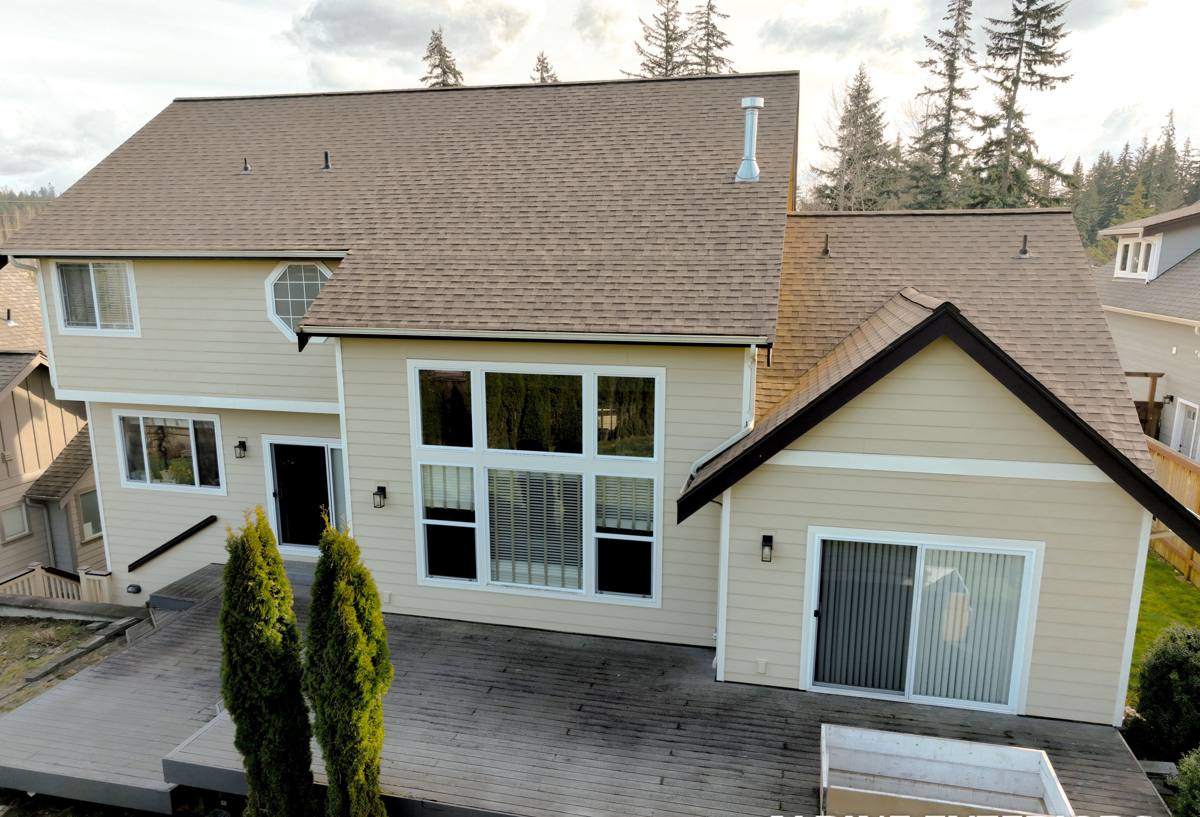
What Blaine's Climate Demands From a Window Installation
Salt Air and Hardware Corrosion
Blaine sits right on the water, and the salt-laden marine air that comes with that location works on window hardware, fasteners, and lower-grade flashing metal faster than it would further inland. An installation that uses budget fasteners or flashing not rated for a marine environment can show pitting, stiff hardware, or early seal failure years before it should, regardless of how good the window unit itself is.
Driving Rain and Sill Drainage
Rain here rarely falls straight down. Wind pushes it sideways and even upward into window openings, which means the sill beneath every window needs a real pitch and a clear path to drain outward, not a flat surface with caulk asked to hold back water indefinitely. This is one of the most common places an installation goes wrong, because it's invisible once trim and siding go back on.
Moss, Shade, and Long-Term Moisture
Shaded walls and window trim that don't drain well hold moisture longer here than they would in a drier climate, which feeds moss and mildew growth and, over years, slow rot at the sill and lower corners of a frame. Getting the drainage plane right at install is the single most effective way to keep that moisture out of the wall in the first place, since it's far harder to correct after the fact.
New Windows vs. Replacement: Getting the Distinction Right
Not every window job in Blaine is the same kind of job, and treating them as interchangeable is where a lot of installs go sideways. A new-construction window has a nailing fin built into the frame that fastens directly to stud framing before the weather-resistive barrier and siding go on, and it relies on a specific flashing sequence integrated with that barrier. A full-frame replacement removes the old window down to the rough opening on an existing home, which lets us rebuild the sill pan and flashing correctly even though the surrounding siding is already in place. An insert replacement fits a new window into the existing frame without disturbing the surrounding wall — faster and less invasive, but it depends entirely on the condition of that existing frame and flashing, since none of it gets rebuilt.
We'll tell you honestly which approach fits your situation. If the existing frame or sill shows any sign of water damage, an insert replacement just seals old problems behind a new window rather than fixing them — and on a home this close to the water, that's a bet we're not willing to make on your behalf.
What a Correct Window Installation Actually Involves
Opening Inspection and Prep
Before anything gets set, the opening needs to be checked for square, plumb, and correct sizing, and on replacement work, for any hidden rot or moisture damage in the framing that has to be dealt with before a new window ever goes in. Setting a new window into a compromised opening just buries the problem.
Sill Pan Flashing
A properly formed and pitched sill pan goes in first, sloped to carry any water that gets past the window outward and away from the framing rather than letting it pool. This is the detail that matters most in a driving-rain climate, and it's also the one that's easiest to skip because it's invisible once the window is in.
Setting the Window
The unit gets leveled, plumbed, squared, and shimmed correctly before fastening. A window that's slightly out of square will bind, won't seal evenly, and puts uneven stress on hardware over time.
Flashing and Weather-Barrier Integration
Flashing tape and the surrounding weather-resistive barrier or building paper have to be integrated in the correct shingle-lap order — sill first, then jambs, then head flashing lapped over the top — so any water that reaches the wall behind the trim or siding drains down and out instead of getting trapped behind the frame. This is the step that separates a correct install from a caulk-and-hope shortcut.
Head Flashing
A head flashing or drip cap above the window sheds water outward before it can run down behind the top of the frame, which matters more here given how much of Blaine's rain arrives wind-driven rather than vertical.
Interior Sealing and Trim
Once the exterior sequence is complete and inspected, the gap between the frame and rough opening gets sealed and insulated from the inside without trapping moisture against the framing, and trim goes back on clean.
Frame Materials: What Actually Holds Up on the Water
Budget, sun exposure, and how long you plan to stay in the home all factor into the right frame choice. Here's how the common options perform specifically in a marine, high-moisture climate like Blaine's.
| Frame Material | Moisture & Corrosion Behavior | Typical Maintenance | Realistic Lifespan Here |
|---|---|---|---|
| Vinyl | Won't rot; performs well with correct installation and quality hardware | Low; occasional track and weep-hole cleaning | 20-30 years |
| Fiberglass | Dimensionally stable, resists moisture and corrosion very well | Low | 30-40+ years |
| Wood, clad exterior | Attractive interior finish; clad exterior shields the wood from direct marine weather | Moderate; interior finish upkeep | 20-30+ years depending on cladding |
| Aluminum | Can corrode over time in salt-influenced air unless well-finished; conducts cold | Moderate | 20-30 years |
We'll walk you through which material fits your home's exposure — a wall that takes direct weather off the water and a sheltered, shaded elevation on the same house don't always call for the same answer.
Installation Mistakes That Fail Fastest This Close to the Water
- Caulk used in place of flashing: Sealant is a supplement to a correct flashing sequence, not a replacement for one — it degrades and cracks well before the wall assembly should need attention.
- Flat or missing sill pans: Without pitch to drain outward, any water that gets past the window sits against the framing instead of leaving.
- Reused old flashing or trim: Swapping the window but leaving degraded flashing behind just puts a new frame on an old problem.
- Under-spec fasteners: Fasteners not rated for a marine environment corrode and loosen faster here than they would inland.
- Skipped shingle-lap order: Flashing installed out of sequence can direct water into the wall instead of away from it, even when every individual piece looks correct.
How Our Process Works
- Assessment and measurement: We inspect the existing opening or rough framing, take precise measurements, and identify the right installation approach — new construction, full-frame, or insert.
- Product selection: We go over frame material, glazing, and performance ratings suited to your home's specific exposure, not a one-size-fits-all package.
- Removal and opening prep: On replacement work, the old unit comes out and we check the framing underneath for hidden rot or moisture damage before proceeding.
- Sill pan, set, and flashing: Each opening gets a pitched sill pan, a squared and leveled window, and flashing integrated in the correct order at sill, jambs, and head.
- Interior finish and quality check: We seal and trim the interior, then check every window for smooth operation and even seals before we call the job done.
A Practical Checklist for Window Installation Work
- Is the sill pan pitched to drain outward, not left flat?
- Is flashing integrated with the wall's weather barrier in the correct shingle-lap order?
- Are fasteners and flashing metal rated for a marine, salt-air environment?
- Has the rough opening or existing frame been checked for hidden rot before the new window goes in?
- Is a head flashing or drip cap installed above each window?
- Does the window operate smoothly and seal evenly on all sides once set?
- Will the installer put the flashing and drainage details in writing, not just the window's product warranty?
Why Hiring a Crew That Already Works Blaine Windows Matters
A crew that regularly installs windows in and around Blaine has already seen how salt air corrodes underspecified hardware, how driving rain finds its way through a flat sill pan, and which elevations on a waterfront or near-waterfront home take the most direct weather. That's practical knowledge that shows up in small decisions throughout an install — decisions a crew unfamiliar with this specific stretch of coastline might not think to make at all. It also means working with someone who's still around and reachable years later if a question comes up about how a window was flashed or sealed.
If you're planning a window installation in Blaine — new construction, a full-frame replacement, or an insert job — we're glad to take a look and give you an honest read on what your home needs. Use the form below to request a free, no-pressure estimate.