 Bellingham Window
 Building a Deck That Actually Holds Up in York
York is one of the older, more established neighborhoods close to Bellingham's core, and a lot of the homes here have decks that were built decades ago under very different assumptions about lumber, fasteners, and finish schedules. A deck built the way it's always been built in drier parts of the country doesn't last here. Whatcom County sits right on Bellingham Bay, which means salt-laden air, long stretches of driving rain from fall through spring, and a moss season that can run five or six months if a deck sits in shade or under trees. A correctly built deck in York has to be engineered around those three things from the ground up, not patched against them after the fact.
This page covers what a deck in York actually needs, what we look at during design and framing, and why it matters that the crew building it already knows this neighborhood's soil, drainage patterns, and exposure.
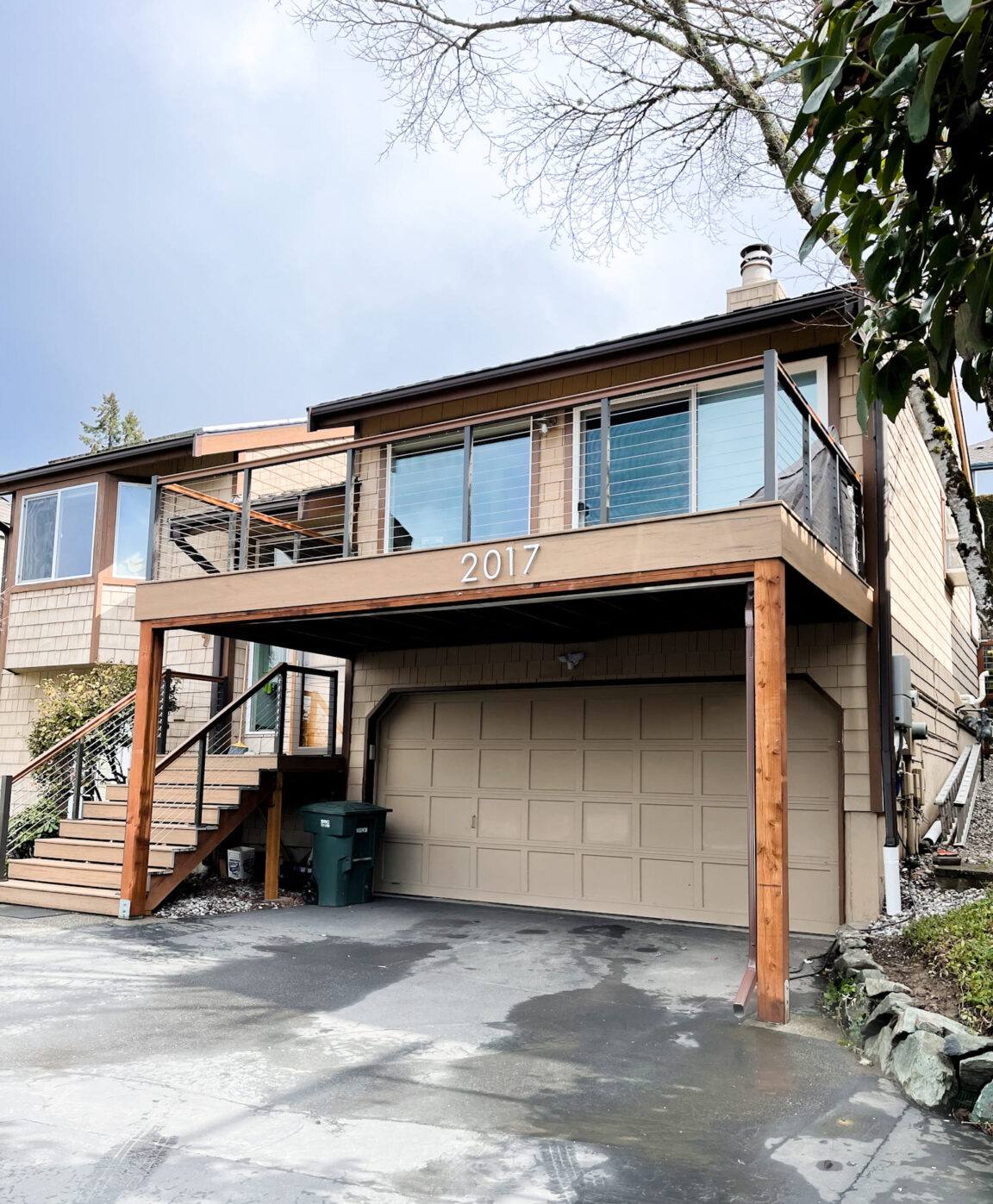
What This Climate Does to a Deck
Three things do most of the damage to decks in this part of Bellingham, and they compound each other:
- Salt air: Proximity to the bay means airborne salt accelerates corrosion on any fastener, bracket, or hardware that isn't rated for it. Standard interior-grade screws and joist hangers can start rusting within a season or two.
- Driving rain: Wind-driven rain doesn't just fall on a deck, it gets pushed sideways and up under railings, into end grain, and behind ledger boards where flashing is thin or missing. Water that can't shed and dry quickly is what rots framing.
- Moss and algae: Long wet seasons plus shaded lots (common under the mature tree canopy in and around York) mean moss and algae get a real foothold on horizontal wood and composite surfaces, and they hold moisture against the deck surface far longer than open sun ever would.
None of these are exotic problems, but they're the reason a deck spec that works fine in a dry inland climate can fail early here — usually starting with soft spots near the ledger board, rusted hardware, or a slick, moss-covered surface within the first couple of wet seasons.
Getting the Structure Right
Ledger and Ledger Flashing
The ledger board — where the deck attaches to the house — is the single most common failure point we see on older York decks. If it wasn't flashed correctly when the house was built, or the flashing has failed over the years, water tracks behind it and rots the rim joist and sheathing before anyone notices. Any deck we build or rebuild gets proper ledger flashing with a drip edge and a clear gap for water to escape, not just caulk covering a gap.
Footings and Framing
Whatcom County's building code sets minimum footing depth and size based on soil bearing and frost conditions, and older York decks were sometimes built on undersized concrete pads or posts set directly in the ground, which shift and rot over time. We size footings to code, use post bases that keep wood off concrete and out of standing water, and use joist hangers and structural screws rated for exterior, corrosive-resistant exposure — not standard hot-dip galvanized that can still corrode near the bay.
Fastener and Hardware Grade
This is worth calling out on its own because it's an easy corner to cut and a hard one to fix later. Stainless steel or high-grade coated fasteners cost more up front than standard exterior screws, but in a salt-air environment the price difference over the life of the deck isn't close. We spec hardware based on proximity to the bay and site exposure, not a one-size-fits-all standard.
Decking Material Comparison for This Climate
There's no single "best" decking material — the right choice depends on budget, how much maintenance the homeowner actually wants to do, and how shaded or exposed the site is. Here's how the common options hold up specifically against salt air, rain, and moss:
| Material | Moisture & Rot Resistance | Moss/Algae Behavior | Maintenance |
|---|---|---|---|
| Pressure-treated wood | Good if sealed regularly; end grain and fastener holes are vulnerable | Grows moss readily if not cleaned; absorbs and holds moisture | Annual cleaning and re-sealing recommended |
| Cedar | Naturally rot-resistant but still needs finish upkeep in this climate | Better natural resistance than PT wood but still needs periodic cleaning | Sealing every 1-2 years to hold color and resistance |
| Composite decking | Excellent — doesn't absorb water or rot | Can still grow surface algae/moss film in shaded, wet spots; needs washing | Occasional washing, no sealing or staining |
| PVC/capped decking | Excellent, fully sealed surface | Least prone to surface growth of the group but still needs periodic washing in deep shade | Lowest — mostly rinsing |
In heavily shaded York lots we lean homeowners toward composite or capped decking when budget allows, simply because it removes the wood-rot variable entirely. Where a homeowner wants real wood for the look or cost, we're upfront that it means a real annual maintenance commitment — not optional, given how long surfaces stay damp here.
Railings, Stairs, and Guardrail Code
Guardrail height, baluster spacing, and stair rail requirements are set by the International Residential Code as adopted locally, and inspectors check these closely on any permitted deck work. Beyond code minimums, railing hardware is another spot where salt air and driving rain cause early failure if the wrong fasteners or post connections are used — loose or rusted railing posts are one of the more common repair calls we get on older decks in this area. We build railing posts with through-bolted, corrosion-resistant hardware rather than surface-mounted brackets alone, because that connection takes the most repeated stress and weather exposure on the whole structure.
Drainage and Deck Surface Design
How a deck sheds water matters as much as what it's built from. Small details make a real difference in a climate with this much sustained rain:
- Consistent gapping between boards so water doesn't pool and wick into edges
- Slight slope away from the house so water runs off rather than back toward the ledger
- Joist tape or protective flashing on top of joists to keep standing water off framing lumber
- Clear space under the deck for airflow, so the underside can actually dry between rain events
- Gutter or drip-edge detailing where a deck sits under an eave, so roof runoff isn't dumping directly onto the deck surface
None of these add much to the cost of a build, but skipping them is exactly how a deck that looks fine on day one develops rot and moss problems by year three.
Our Process, Start to Finish
- On-site assessment: We look at sun exposure, tree cover, existing drainage, and (for rebuilds) the condition of the ledger and framing before quoting anything.
- Design and material selection: We walk through decking, railing, and hardware options against the homeowner's budget and maintenance appetite, with the climate trade-offs laid out plainly.
- Permitting: Most new decks and many rebuilds in Whatcom County require a permit; we handle that process rather than leaving it to the homeowner.
- Demolition (for rebuilds): Old decking, damaged framing, and any compromised ledger flashing come out so we're not building on top of hidden problems.
- Framing: Footings, posts, beams, and joists go in to code, with corrosion-resistant hardware throughout.
- Decking and railing installation: Boards, gapping, and railing systems installed per the chosen material's manufacturer specs.
- Final inspection and walkthrough: We review the finished deck with the homeowner, including what maintenance (if any) the chosen materials will need going forward.
Permits and Local Code Considerations
Deck permitting in Bellingham and unincorporated Whatcom County depends on the deck's height, size, and attachment to the house — a low, freestanding deck may fall under different rules than one attached at height to a second story. Setback requirements also come into play on smaller York lots where property lines sit close to the house. We check this during the design phase, not after materials are ordered, so there are no surprises partway through a build.
Maintenance Checklist for Existing York Decks
For homeowners with a deck already in place, a few checks each fall and spring go a long way toward catching problems before they're expensive:
- Check the ledger board area for soft wood, staining, or gaps in flashing
- Look under the deck for standing water or soil that never dries between rain events
- Inspect railing posts for any looseness or movement when pushed
- Sweep debris and moss off the surface before it has a chance to build up over winter
- Check fastener heads for rust streaking, which usually means the hardware isn't rated for this exposure
- Re-seal wood decking on the schedule the product calls for, not just when it looks faded
Catching a soft ledger board or a rusted joist hanger early is a repair. Catching it late is a rebuild.
Why Local Experience on This Specific Job Matters
Deck framing and material choices that work fine twenty miles inland, away from salt air, aren't automatically right for a York lot facing the bay. Knowing which fastener grade actually holds up here, how much shade a given lot really gets across the seasons, and where the drainage problems tend to show up on this style of home comes from having built and repaired decks in this specific area — not from a generic spec sheet. A crew that already works in York isn't guessing at exposure conditions; they've seen how the last several decks they built in the neighborhood have held up over multiple wet seasons.
If you're planning a new deck or need an honest look at an aging one, we're happy to come out, walk the site, and give you a straightforward assessment. There's a free, no-pressure estimate form below — reach out and we'll get you a clear picture of what your project actually needs.