 Bellingham Window
 Why York Homes Need a Roof Built for This Specific Climate
York sits close enough to Bellingham Bay and the broader Whatcom County weather pattern that roofs here take a different kind of beating than roofs twenty miles inland. It's not one big storm that wears a roof out — it's the daily grind of salt-laden air off the water, long stretches of driving rain that never quite lets up, and a moss season that can run eight or nine months out of the year in shaded, north-facing sections of a roof. A roof that's merely "adequate" in a drier climate can start showing real problems here within a decade. Metal roofing, installed correctly, is one of the few systems that holds up to all three of those stresses at once instead of just one.
We're not going to pretend every metal roof performs the same way. The metal, the coating, the fastening system, and the flashing details all matter more here than they would in a mild, dry climate. Get those details right and a metal roof on a York home can outlast two or three cycles of asphalt shingles. Get them wrong and you've just installed an expensive way to have the same leaks.
Salt Air and Corrosion
Homes closer to the water deal with airborne salt that settles on every exterior surface, including the roof. Over years, that salt accelerates corrosion on fasteners, flashing, and any metal panel that isn't properly coated or isn't the right alloy for a coastal-influenced environment. This is one of the main reasons we're selective about which metal roofing products we install near the water — not every "metal roof" on the market is built with a coastal environment in mind.
Driving Rain and Wind-Driven Water
Bellingham doesn't usually get violent storms, but it gets long, sideways rain that finds every gap a roof has to offer. Wind-driven rain doesn't just fall — it pushes up under laps, around penetrations, and into any seam that wasn't sealed or fastened correctly. Metal roofing sheds water fast, which helps, but only if the underlayment, seams, and flashing details are done right the first time.
Moss and Trapped Moisture
Shaded roof sections in York, especially under mature trees, stay damp far longer than sections that get direct sun. That moisture is exactly what moss needs to establish itself, and once moss gets a foothold it holds water against the roof surface and works into seams and fastener penetrations. Metal roofing doesn't stop moss from landing on it, but it gives moss far less to grip onto compared to a shingle or shake roof, and it dries out faster once the sun does come back out.
What a Correctly Installed Metal Roof Actually Involves
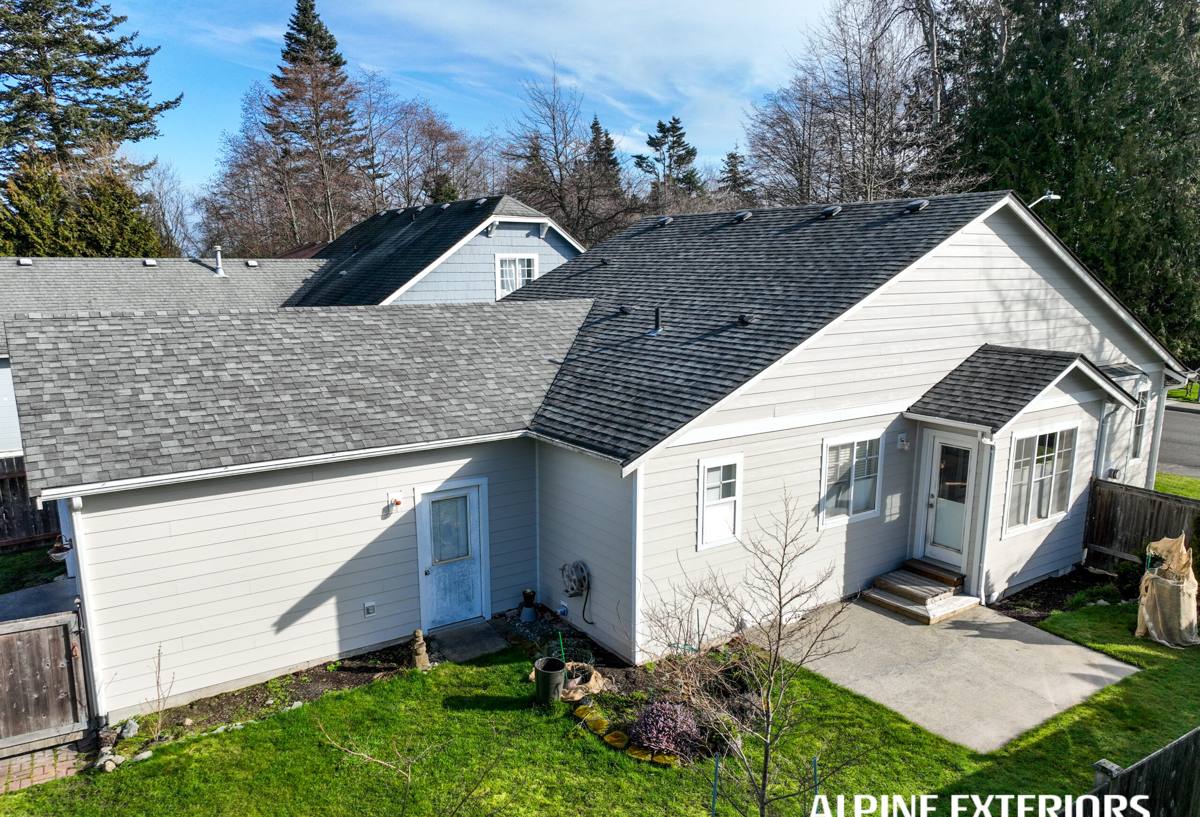
"Metal roof" covers a wide range of systems, and the difference between a good installation and a mediocre one usually isn't visible from the ground — it's in the details underneath.
- Underlayment: A high-temperature, self-adhering underlayment at eaves, valleys, and penetrations, with a synthetic underlayment across the field — not just a single layer of felt.
- Panel or shingle type: Standing seam for a clean, low-maintenance look with concealed fasteners, or metal shingles/shakes for homes where a more traditional roofline is preferred.
- Fastening: Concealed clip systems for standing seam so the panel can expand and contract with temperature changes without stressing the fasteners — exposed-fastener systems have their place but need more long-term maintenance attention.
- Flashing: Custom-formed flashing at every valley, chimney, skylight, and wall transition. This is where most roof leaks actually originate, metal or otherwise.
- Ventilation: Proper ridge and soffit ventilation so moisture from inside the home doesn't get trapped against the underside of the roof deck.
- Ice and water protection: Extra protection at eaves and low-slope transitions, which matter more here than people expect given how often the region gets sustained cold rain.
Comparing Metal Roofing Approaches for York Properties
| Factor | Standing Seam Metal | Metal Shingle/Shake | Asphalt Shingle (for reference) |
|---|---|---|---|
| Typical lifespan | 40-70 years | 30-50 years | 15-25 years |
| Moss resistance | Very good | Good | Fair — moss gains grip easily |
| Coastal/salt-air suitability | Excellent with correct coating/alloy | Good with correct coating | Fair |
| Maintenance needs | Low | Low to moderate | Moderate to high |
| Upfront cost | Higher | Higher | Lowest |
| Roofline appearance | Modern, clean lines | Mimics traditional shingle/shake look | Traditional |
Neither metal option is automatically "better" — it depends on the roofline, the home's style, and the homeowner's priorities. What matters more than the category is the specific product and how it's detailed at the flashing and fastener level.
Our Process for a York Metal Roofing Project
1. On-Site Assessment
We walk the roof, not just the yard. That means checking deck condition, existing ventilation, moss buildup patterns, and any spots where past water intrusion has already left evidence — stained sheathing, soft spots, or rust streaks around old flashing.
2. Honest Scope and Written Estimate
You get a written estimate that spells out the panel or shingle system, underlayment, flashing approach, and ventilation plan — not just a single lump-sum number. If deck repair or additional ventilation is needed, we tell you before the work starts, not after we've already opened up the roof.
3. Tear-Off and Deck Inspection
Once the old roofing is off, we inspect the deck for rot or soft sheathing, which is common on older York homes where moss and trapped moisture have been a long-term issue. Any deck repairs are addressed before a single panel goes on.
4. Underlayment and Flashing First
The underlayment and all flashing details go in before the metal itself, since these are the layers doing most of the actual waterproofing work. Rushing this step is the single most common cause of a metal roof that leaks despite looking fine.
5. Panel or Shingle Installation
Panels or shingles are installed to the manufacturer's fastening spec, with attention to expansion allowances, seam alignment, and clean terminations at ridges, eaves, and rakes.
6. Final Walkthrough
We walk the finished roof with you, review the ventilation and drainage points, and go over basic care — mainly what to watch for during moss season and how to handle debris buildup in valleys.
Why Hiring a Crew That Already Works in York Matters
A roofing crew that only occasionally works this specific pocket of Whatcom County is guessing at how much moss pressure a given roofline gets, how much wind-driven rain a particular exposure sees, or how nearby mature tree cover affects drying time after a storm. A crew that regularly works York homes has already seen how these microclimate factors play out on rooflines similar to yours, and builds the underlayment, ventilation, and flashing plan around that — not around a generic spec sheet.
Local familiarity also matters for permitting and code requirements specific to Bellingham and Whatcom County, and for knowing which manufacturer coatings and alloys actually hold up near the water versus which ones are marketed as coastal-rated without much local track record.
Maintenance: What Metal Roofing Still Needs
Metal roofing is low-maintenance, not no-maintenance. A few things go a long way toward getting the full lifespan out of the system:
- Clearing debris and needle buildup out of valleys once or twice a year, especially before the wet season ramps up.
- Keeping overhanging branches trimmed back to reduce shade-driven moss growth and physical abrasion on panels.
- Checking sealant at penetrations (vents, chimneys) every few years, since sealant wears out well before the metal does.
- Addressing any scratched coating promptly, since exposed bare metal is where corrosion gets started, particularly this close to salt air.
Common Mistakes We See on Prior Metal Roof Installs
We get called out to look at metal roofs installed by other crews often enough to see the same handful of mistakes repeat:
- Reusing old flashing instead of custom-forming new pieces to match the new panel profile.
- Under-fastening or over-fastening standing seam panels, which restricts the expansion and contraction the system is designed to handle.
- Skipping high-temp underlayment at eaves and valleys to save cost, which shows up later as leaks in exactly those spots.
- Ignoring attic or roof-deck ventilation, which leads to condensation issues underneath a roof that otherwise looks perfect from outside.
Every one of these is avoidable with a careful installation. None of them are things you can inspect from the ground after the fact — which is exactly why the installation process matters as much as the product choice.
Get a Straight Answer for Your York Home
If you're weighing metal roofing against a re-roof in another material, or your current roof is showing moss, rust streaks, or age, we're glad to take a look and give you a straightforward assessment — no pressure, no inflated urgency. Request a free estimate using the form below and we'll walk you through what your specific roof actually needs.