 Bellingham Window
 Why South Hill Roofs Wear Differently
South Hill sits up in the weather in a way that flatter parts of Bellingham don't. The elevation and exposure mean homes here take a steadier beat of wind-driven rain off Bellingham Bay, along with the salt-laden air that comes with living close to Puget Sound. Add in the deep shade from mature Douglas fir and cedar canopy on many South Hill lots, and you get a roofing environment that's genuinely tougher on asphalt shingles than what you'd find a few miles inland in Whatcom County.
None of this means asphalt shingles are the wrong choice for a South Hill home — they're still one of the most cost-effective, proven roofing materials available, and a huge share of the neighborhood's rooflines are shingle for good reason. It means the installation details matter more here than they would in a drier climate, and a roof that was installed correctly for South Hill's conditions will simply outlast one that wasn't.
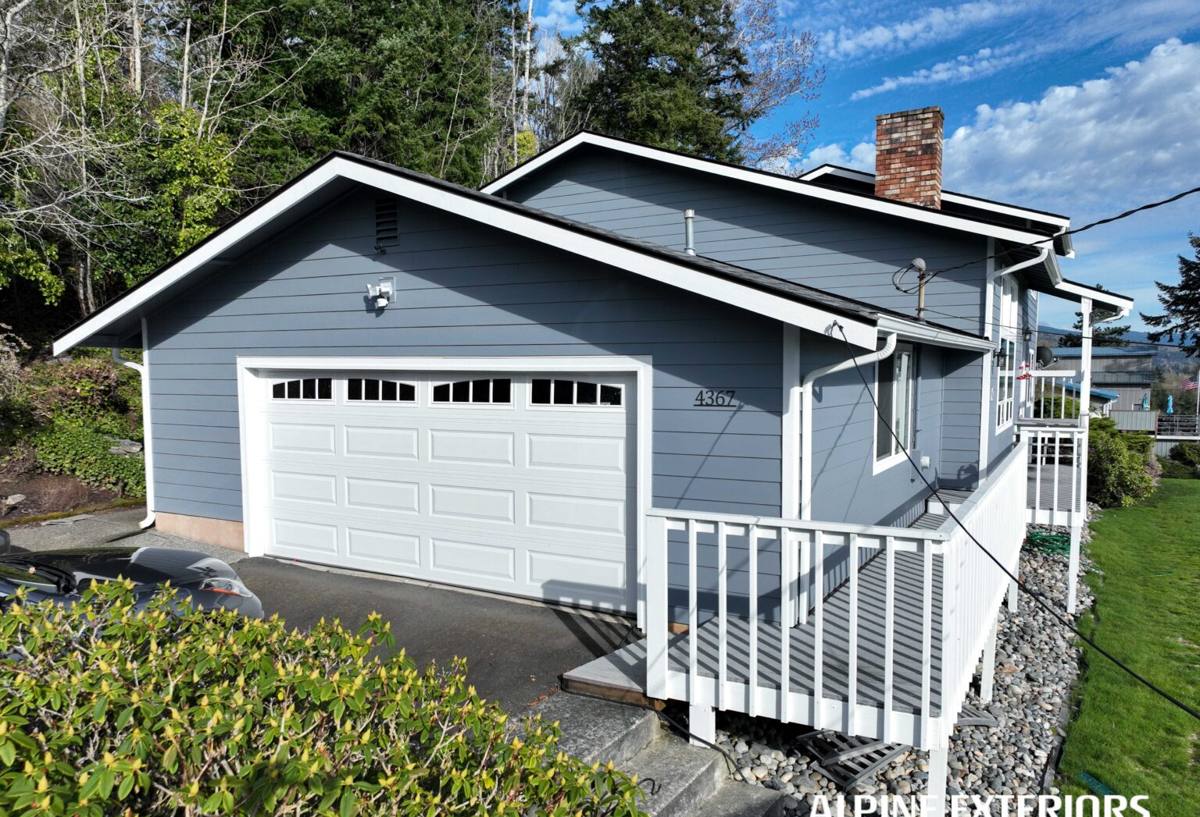
What Bellingham's Marine Climate Actually Does to a Roof
Driving Rain
Wind off the water doesn't just fall on a roof — it pushes rain sideways and up under shingle edges, especially at eaves, valleys, and anywhere two roof planes meet. A roof that relies on the shingles alone to keep water out, without proper underlayment and flashing behind them, will eventually leak in exactly these spots.
Salt Air
Salt-laden air accelerates corrosion on any exposed metal — nail heads, flashing, vent stacks, and gutter hardware. Over years, this is a slow, quiet failure mode: fasteners and flashing corrode faster than the shingles themselves wear out, and a roof can develop leaks around metal components well before the shingle field is due for replacement.
Moss and Algae Season
Whatcom County's long wet season, combined with shade cover on many South Hill lots, gives moss and algae months at a time to establish themselves. Moss holds moisture against the shingle surface, works its way under shingle tabs as it grows, and can lift edges enough for wind and rain to get underneath. Algae staining is mostly cosmetic, but heavy moss growth is a genuine cause of premature shingle failure if it's left unmanaged.
What a Correct Asphalt Shingle Installation Involves
A roof that holds up in this climate isn't just about the shingle brand on the wrapper. Every layer underneath the visible shingle does real work, and skipping or shortcutting any one of them is where most premature roof failures start.
- Deck inspection and repair — any soft, delaminated, or water-damaged sheathing gets replaced before anything goes back on, not covered over.
- Ice-and-water shield at vulnerable zones — self-adhering membrane at eaves, valleys, and roof-to-wall transitions, the spots where wind-driven rain is most likely to get under the shingle field.
- Synthetic underlayment across the field — a second line of defense under the shingles, more consistent and more tear-resistant over time than older felt products.
- Proper flashing at every penetration — chimneys, skylights, vent stacks, and wall intersections, using corrosion-resistant metal given the salt air exposure.
- Balanced attic ventilation — intake at the eaves and exhaust at the ridge, sized to the attic volume, so moisture doesn't condense against the underside of the deck.
- Correct nailing pattern and shingle exposure — matched to the manufacturer's specification and to our local wind exposure, not just "enough nails to hold it down."
Ventilation deserves its own mention. In a climate this wet, an attic that can't breathe traps moisture, which shortens the life of the roof deck from underneath — a failure mode that has nothing to do with the shingles themselves and everything to do with what's happening below them. We check and correct ventilation on every roof we touch in South Hill, because it's one of the most common gaps we find on roofs we're asked to look at.
Signs a South Hill Roof Needs Attention
Most asphalt shingle roofs don't fail all at once — they show warning signs first. Homeowners in this neighborhood are often dealing with one or more of the following:
- Moss visibly growing on the roof surface, especially on north-facing or shaded slopes
- Granules collecting in gutters or at downspout outlets
- Shingle edges that look curled, cupped, or lifted
- Dark streaking (algae) across the roof field
- Soft spots or sagging when walked on or viewed from a ladder
- Daylight visible through the attic roof deck, or water stains on attic framing
- Rusty streaking near vent stacks, flashing, or fasteners
Any single item on this list usually isn't an emergency. Several of them together, or a leak that's already reached the interior ceiling, means it's time for a real inspection rather than a wait-and-see approach.
Our Process for South Hill Roofing Projects
1. On-Site Inspection
We walk the roof and the attic, not just one or the other. Ground-level or drone photos alone miss deck condition, ventilation problems, and flashing detail — the things that actually determine whether a roof will hold up here.
2. Honest Scope and Written Estimate
We tell you what actually needs to happen — full replacement, partial repair, or targeted flashing and ventilation fixes — and put it in writing before any work starts. If a repair is genuinely the right call instead of a full tear-off, we'll say so.
3. Tear-Off and Deck Prep
Old roofing comes off down to the deck so we can actually see what's underneath. Any damaged sheathing gets replaced, not papered over.
4. Underlayment, Flashing, and Ventilation
This is the layer that determines whether the roof leaks in year three or holds tight for decades. We install ice-and-water shield, underlayment, and flashing to spec, and correct ventilation as part of the job — not as an upsell after the fact.
5. Shingle Installation
Shingles go down to manufacturer nailing and exposure specifications, which is also what keeps most product warranties valid. Skipping this step is one of the most common reasons a warranty claim gets denied later.
6. Final Walkthrough
We walk the finished roof with you, cover care and moss-prevention basics for the local climate, and make sure gutters and downspouts are clear and functioning before we consider the job done.
Choosing Shingles for a Marine, Shaded Climate
Not every asphalt shingle product handles Bellingham's combination of moisture and shade equally well. Here's how the main options compare for a South Hill roof specifically:
| Shingle Type | Typical Lifespan Here | Moss/Algae Resistance | Best Fit |
|---|---|---|---|
| 3-Tab (standard) | 15–20 years | Standard — no built-in resistance | Budget-conscious re-roofs on less shaded exposures |
| Architectural / Dimensional | 25–30 years | Standard, unless algae-resistant granules specified | Most South Hill homes — better wind rating, better look |
| Algae-Resistant (copper/zinc granules) | 25–30 years | Significantly better — actively resists staining and growth | Shaded lots, north-facing slopes, tree cover |
| Premium/Designer Architectural | 30+ years | Typically includes algae-resistant granules | Homeowners prioritizing longevity and curb appeal |
For most South Hill properties with any real tree cover, we recommend at minimum an architectural shingle with algae-resistant granules. The upfront cost difference over a standard shingle is modest compared to the cost of a moss-related repair or an early re-roof.
Moss and Algae: Prevention Beats Removal
Once moss has taken hold on a shingle roof, scraping it off can do more damage than the moss itself — it lifts granules and can tear shingle tabs. The better approach is prevention:
- Zinc or copper strips installed near the ridge, which release trace metal ions that discourage moss growth as rain washes over them
- Algae-resistant shingles from the start, rather than retrofitting protection later
- Keeping tree limbs trimmed back from the roof surface to reduce shade and debris
- Clearing gutters and valleys of needles and leaf litter each fall, before the wet season sets in
- A gentle low-pressure wash on an established schedule, rather than infrequent aggressive cleaning
We can install zinc strips as part of a new roof or as a standalone add-on to an existing shingle roof that's showing early moss growth.
Why a Crew That Already Works South Hill Matters
Roofing crews that mostly work drier, more sheltered parts of Whatcom County sometimes underbuild for what South Hill's wind and rain exposure actually demands — lighter underlayment, standard shingles on a heavily shaded lot, or ventilation sized for a different microclimate. A crew that regularly works this specific neighborhood knows which slopes take the worst of the weather, which lot conditions call for algae-resistant products, and where flashing tends to fail first on homes built to this area's older construction standards. That local pattern recognition is the difference between a roof that's technically installed and one that's actually built for where it sits.
Maintenance That Extends the Life of a South Hill Roof
A correctly installed shingle roof still needs basic upkeep in this climate. A simple annual routine goes a long way:
- Clear gutters and downspouts before the fall rains arrive
- Trim back overhanging branches to cut down on shade, debris, and moss pressure
- Do a visual check for lifted shingles, moss patches, or granule loss in gutters each spring and fall
- Check attic ventilation isn't blocked by insulation or storage
- Address small leaks or flashing issues immediately rather than waiting for the next dry spell
What Drives the Cost of a South Hill Roof
Every roof is different, but the main cost factors on South Hill projects tend to be the same few things: roof size and pitch, how many layers of old roofing need to come off, deck repair needs found once the old roofing is removed, the number of penetrations and valleys requiring flashing, and the shingle grade chosen. A steep, complex roofline with multiple valleys and a chimney will always cost more to do correctly than a simple gable roof — the extra cost is almost entirely in flashing labor and material, which is exactly the detail that keeps a roof watertight in this climate.
If you're seeing moss, granule loss, or the early signs of wear on a South Hill roof, we're glad to take a look and give you a straightforward, no-pressure estimate — no obligation, just an honest read on where your roof actually stands. Use the form below to get started.