 Bellingham Window
 Why Edgemoor Roofs Wear Differently Than Other Bellingham Neighborhoods
Edgemoor sits close to Bellingham Bay, under a heavier tree canopy than you'll find in a lot of the newer subdivisions around Whatcom County. That combination changes how a roof ages here. Salt-laden air off the water accelerates corrosion on exposed metal — nail heads, flashing, gutter hardware — faster than it would a few miles inland. Add the shade from mature trees and you get a roof surface that stays damp longer after every rain, which in this climate is most days from October through May.
That dampness is what drives moss and algae growth, and Edgemoor's tree cover means more organic debris landing on the roof year-round: needles, leaf litter, seed pods. Left alone, that debris holds moisture against the shingle surface and works its way into valleys and behind flashing. It's not a dramatic failure — it's a slow one, and it's the single biggest reason older shingle roofs in this part of Bellingham fail early even when the shingles themselves were a decent product.
None of this means Edgemoor needs an exotic roofing solution. It means the installation details — underlayment choice, ventilation, flashing, and how the job handles valleys and transitions — matter more here than they would on a roof in a drier, more open part of the county. Get those details right and a quality asphalt shingle roof will do its job for decades. Skip them and you'll be dealing with soft decking and interior stains well before the shingles reach the end of their rated life.
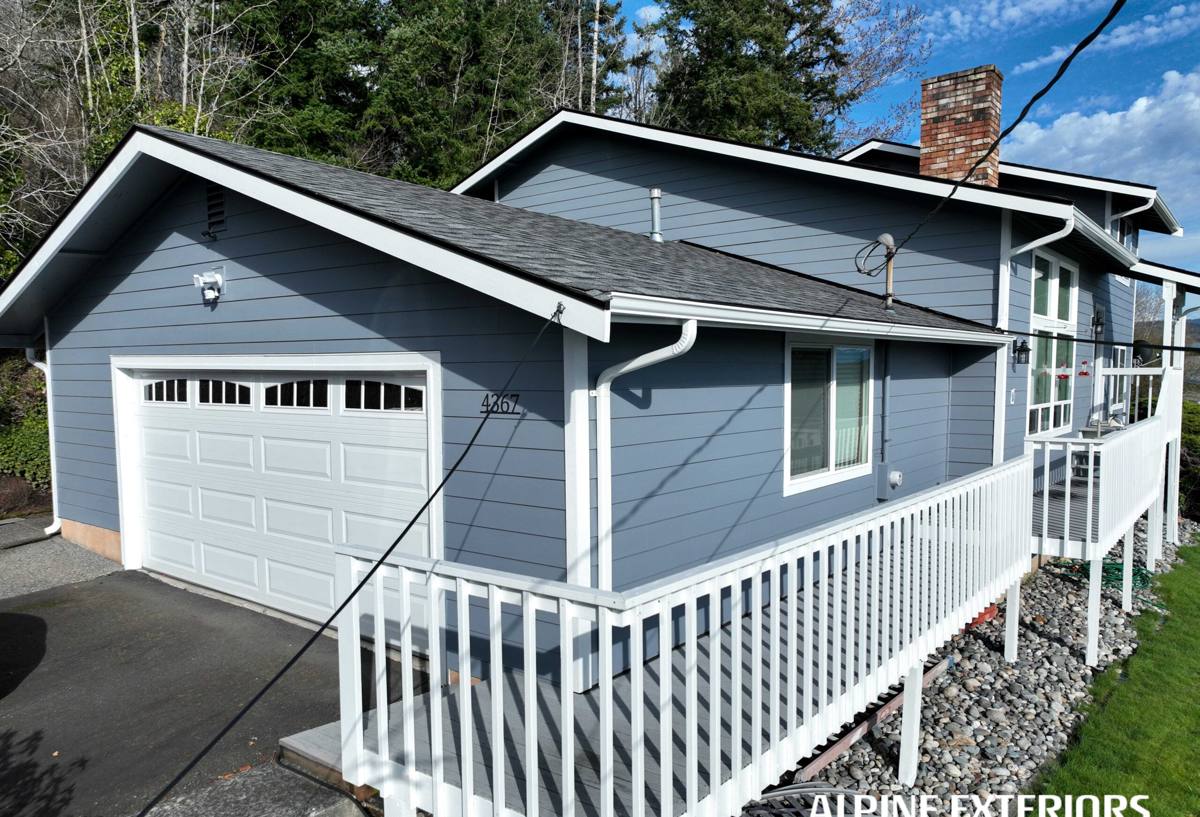
What a Correctly Installed Asphalt Shingle Roof Includes
Asphalt shingles themselves are a mature, well-understood product — reliable, repairable, and reasonably priced. Almost none of the roofs we see fail because the shingle brand was wrong. They fail because something underneath or around the shingles was cut short. In a marine climate like ours, three things matter more than the shingle label on the wrapper.
Underlayment and Ice/Water Protection
The underlayment is the roof's backup system — what keeps water out if wind-driven rain gets under a shingle tab, which happens more often here than in calmer inland climates. We use synthetic underlayment across the full roof deck rather than the older asphalt-felt approach, because it holds up better to the repeated wet-dry cycling Bellingham weather puts it through during installation and over the life of the roof. Along eaves, valleys, and any low-slope transitions, we add self-adhered ice-and-water membrane. It's not primarily an ice concern this close to the water — it's protection against the driving, sideways rain that comes off the Bay during winter storms.
Ventilation
A roof that can't breathe traps moisture in the attic, and trapped moisture rots decking from underneath — often before it ever shows up as a visible leak. Proper ventilation means balanced intake at the soffits and exhaust at the ridge, sized to the attic volume, not just whatever vent was already there. On older Edgemoor homes we frequently find undersized or blocked intake vents, which is a quiet contributor to premature roof failure that has nothing to do with the shingles at all.
Flashing Details
Flashing around chimneys, skylights, sidewalls, and roof-to-wall transitions is where the great majority of leaks actually start — not in the open field of shingles. We install new step flashing, counter-flashing, and valley metal on every full replacement rather than reusing old pieces, and we seal penetrations with materials rated for continuous coastal moisture exposure rather than standard-grade caulk that chalks and cracks within a couple of seasons.
Choosing a Shingle Line for Edgemoor Conditions
Most manufacturers offer three general tiers of asphalt shingle. The right choice depends on how long you plan to own the home, your tolerance for periodic cleaning, and budget — not on which one is "better" in the abstract.
| Shingle Tier | Typical Lifespan | Algae/Moss Resistance | Best Fit |
|---|---|---|---|
| 3-Tab / Economy | 15–20 years | Standard — needs regular cleaning | Rentals, budget-driven projects, shorter ownership horizon |
| Architectural / Dimensional | 25–30 years | Algae-resistant granules available; still benefits from cleaning | Most Edgemoor homes — best balance of cost, appearance, and durability |
| Premium / Designer | 30+ years, often with enhanced wind rating | Best available algae resistance, heavier granule coverage | Homes with heavy tree cover, steep or complex rooflines, longer ownership plans |
For most homes in this neighborhood, we recommend an architectural shingle with algae-resistant granules as the baseline — the added upfront cost is modest relative to a 15-year roof, and the granule treatment meaningfully slows the black streaking that shows up fast under tree cover near salt water. Homes with unusually heavy shade or a north-facing slope that rarely sees direct sun are the strongest candidates for stepping up to a premium line.
Our Process, Start to Finish
Inspection and Estimate
We start with a full roof inspection, not a drive-by. That means getting on the roof to check the deck for soft spots, evaluating existing ventilation, checking flashing condition, and looking at attic-side moisture signs where accessible. You get a written estimate that separates out what's actually needed versus what's optional, so you're not guessing at what you're paying for.
Tear-off and Deck Prep
We remove existing roofing down to the deck rather than layering over old shingles — that's the only way to properly inspect and repair the decking underneath, and it's the only way to get flashing and underlayment installed correctly. Any soft or delaminated plywood gets replaced before anything new goes down; we won't install a new roof over a compromised deck and call it done.
Installation
Underlayment, ice-and-water membrane, flashing, and shingles go down in that order, following manufacturer specifications for nailing pattern and exposure — details that directly affect wind rating and warranty validity. Valleys, ridge caps, and vent boots get particular attention, since those are the spots most likely to leak on a poorly executed install.
Cleanup and Final Walkthrough
We run a magnetic sweep for stray nails, clear debris from gutters and landscaping, and walk the finished roof with you before calling the job complete. Any warranty paperwork — manufacturer and workmanship — is handed over at that point, in writing.
Moss, Algae, and Salt Air: Ongoing Maintenance
Even a well-installed roof in Edgemoor benefits from periodic upkeep, given the tree cover and moisture. This isn't heavy maintenance — it's a few basic habits that meaningfully extend a roof's service life:
- Clear gutters and valleys of needle and leaf debris at least twice a year, more often under dense tree cover
- Have moss treated (not scraped or power-washed, which damages granules) as soon as it appears rather than letting it establish
- Keep overhanging branches trimmed back to reduce shade, debris, and physical abrasion on the shingle surface
- Check flashing and sealant around chimneys and vents annually — these fail well before the shingle field does
- Address any interior ceiling stains promptly; they almost always trace back to a flashing or ventilation issue, not the shingles themselves
We recommend against pressure washing a shingle roof under any circumstances — it strips the granules that protect the shingle from UV and weather, which shortens the roof's life rather than extending it. Chemical moss treatments applied correctly, combined with basic debris clearing, do the job without the damage.
What Roof Replacement Costs Depend On
We don't quote prices without seeing the roof, but the factors that move the number are consistent from job to job:
| Factor | Why It Matters |
|---|---|
| Roof size and number of squares | Material and labor scale directly with total roof area |
| Pitch and complexity | Steep or multi-plane roofs take longer and require more safety setup |
| Number of layers to remove | Tear-off of multiple existing layers adds labor and disposal cost |
| Deck condition | Rotted or soft plywood sections require replacement before shingles go down |
| Shingle tier selected | Material cost rises with warranty length and algae/wind resistance |
| Access and site conditions | Tree cover, landscaping, and driveway access affect setup and cleanup time |
Any estimate we hand you breaks these out so you can see what's driving the total, rather than a single lump-sum figure.
A Homeowner's Pre-Project Checklist
If you're starting to think about a roof project — whether it's a repair, a partial replacement, or a full tear-off — a few things are worth knowing before you get quotes:
- Get a written scope of work, not just a price — know exactly what underlayment, flashing, and ventilation work is included
- Ask whether tear-off to bare deck is included, or whether an overlay is being proposed
- Confirm licensing, bonding, and insurance, and ask to see current certificates rather than taking it on faith
- Ask how deck repairs are priced if rot is found once tear-off starts — this should be a per-sheet rate agreed up front, not a surprise
- Get the manufacturer's warranty terms in writing, and understand what workmanship warranty the contractor stands behind separately
- Ask how debris, magnetic nail sweeps, and landscaping protection are handled
Why Hiring a Crew That Already Works Edgemoor Matters
A roofing crew that regularly works Edgemoor and the surrounding Bellingham waterfront neighborhoods has already seen how these conditions actually play out over years, not just on paper. That means knowing which flashing details tend to fail first in salt air, which shingle lines actually hold up under heavy tree shade instead of just claiming to, and how to sequence a tear-off around a wooded lot without turning the job into a mess for your landscaping. It also means being realistic about Whatcom County's weather windows — planning tear-off and dry-in around the wetter stretches of the year rather than leaving a deck exposed and hoping the forecast holds.
That local familiarity shows up in small decisions throughout a project: how tightly valleys get sealed, how much attention ventilation gets before it becomes a moisture problem, how debris and moss risk get talked through with the homeowner instead of glossed over. None of it is complicated, but it's the accumulation of those details — done right, every time — that determines whether a shingle roof in this climate lasts fifteen years or thirty.
If you're weighing a repair versus a full replacement, or just want an honest read on where your current roof stands, we're happy to take a look. The estimate is free, there's no pressure attached to it, and you'll get a straight answer either way — use the form below to get started.