 Bellingham Window
 Storm Damage Roof Repair for Barkley Homes
Barkley sits close enough to Bellingham Bay to catch salt-laden air off the water, and far enough into the tree cover that shade and moisture linger on rooflines for most of the year. That combination is hard on roofs. When a windstorm rolls through Whatcom County, or a few weeks of driving rain sit on top of a roof that already has moss buildup, small problems turn into leaks fast. This page covers what storm damage roof repair actually looks like for homes in the Barkley area — what to check for, what a proper repair involves, and how we approach the work.
This is not a generic roofing overview. It's written for the specific conditions Barkley homeowners deal with: wind off the bay, long wet seasons, and roofs that need more moss and moisture management than a roof in a drier part of the state.
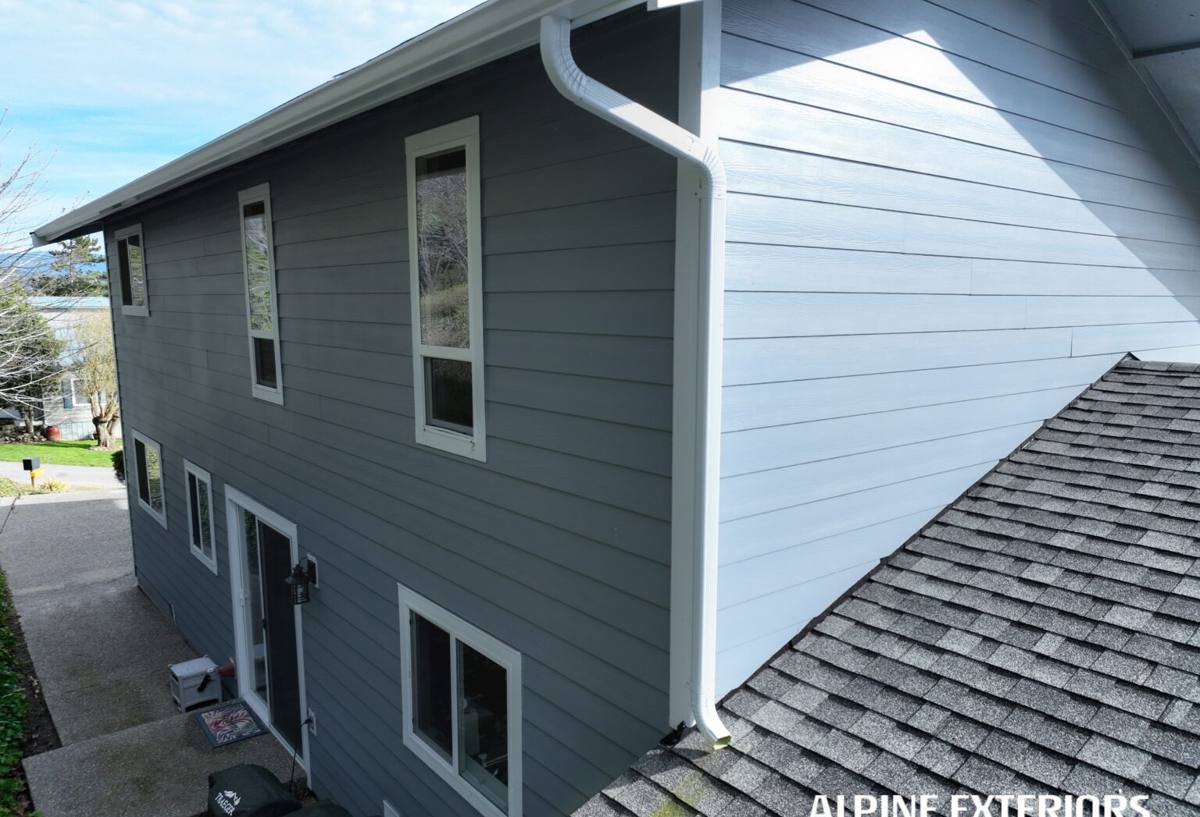
Why Barkley Roofs Take a Different Kind of Beating
Wind and driving rain
Storms coming off the Strait of Georgia and Bellingham Bay tend to bring sideways rain rather than straight-down rain. That matters for a roof, because driving rain finds its way under shingle edges, around flashing, and into anywhere a seal has started to fail — even on a roof that looks fine from the ground. A storm doesn't have to be dramatic to cause damage; a few hours of sustained wind-driven rain on a roof with marginal flashing is enough to start a leak that shows up inside the house days later.
Salt air
Proximity to the water means metal roof components — flashing, vent caps, fasteners, gutter hardware — corrode faster than they would further inland. Corroded metal is weaker metal, and weaker metal is exactly what gives out first in a windstorm. On a lot of Barkley roofs, the flashing is the first thing to fail, not the shingles themselves.
Moss and prolonged moisture
Whatcom County's moss season is long — often eight months or more of conditions moss actually likes. Moss holds moisture directly against the roofing material, which accelerates granule loss on asphalt shingles and can lift shingle edges over time, creating entry points for wind and rain. A roof with heavy moss going into a storm is at higher risk than a clean one, because the moss has already compromised the surface before the wind even arrives.
Signs of Storm Damage Worth Checking For
Not all storm damage is obvious. Some of it only shows up as a stain on a ceiling weeks later. After any significant wind or rain event, it's worth doing a quick check — from the ground, not on the roof yourself — for the following:
- Shingles that look curled, lifted, or missing entirely, especially near ridges and edges
- Granules collecting in gutters or at the base of downspouts
- Visible gaps or bent sections in flashing around chimneys, vents, or skylights
- Sagging or uneven sections of roofline
- Dented or dislodged gutters and downspouts
- New water stains on interior ceilings or upper walls
- Debris — branches, needles, moss clumps — piled against a valley or behind a chimney
- Daylight visible through the roof deck from the attic, if accessible
If you see two or more of these after a storm, it's worth having someone look before the next rain event, not after.
What a Correct Storm Damage Repair Actually Involves
A lot of storm repair work in this region gets done as a quick patch — a few shingles swapped, some sealant smeared around a flashing edge — without addressing why the damage happened in the first place. That approach tends to fail again within a season or two, especially on a roof that already deals with moss and salt exposure. A repair that actually holds involves a few things:
Finding the real entry point, not just the visible damage
Water travels. A stain on a ceiling is often several feet away from where the water actually got in. A proper repair traces the path back to the source — usually a flashing seam, a nail pop, or a shingle edge lifted by wind — rather than just patching where the damage is visible from inside.
Matching materials correctly
Shingle color and profile matter, but so does compatibility — mixing incompatible underlayment or flashing materials can create new problems, including galvanic corrosion between dissimilar metals in a salt-air environment. A repair should use materials that work with what's already on the roof, not just whatever is on hand.
Addressing the underlying cause
If moss contributed to the failure, a repair that doesn't also address the moss just resets the clock on the same problem. Same with clogged gutters that caused water to back up under an eave, or ventilation issues that trap moisture in the attic and weaken the roof deck from underneath.
Our Process for Storm Damage Repair
- Inspection. We walk the roof (not just look from the ground) and check attic access where possible, so we can see both the surface damage and what's happening underneath it.
- Documentation. We photograph damage in a way that's useful if you're filing an insurance claim — clear, dated, and organized by area of the roof.
- Honest assessment. We tell you plainly whether this is a repair situation or whether the damage is extensive enough that repair would just be a short-term fix. We don't upsell a full replacement when a repair will genuinely hold.
- The repair itself. Matching materials, correct flashing technique, and attention to the underlying cause — not just the visible patch.
- Cleanup and check. We clear debris, check gutters and downspouts are flowing correctly, and confirm there's no secondary damage we missed on the first pass.
Repair or Replacement: What Actually Determines It
Homeowners often ask this before we've even looked at the roof. The honest answer is that it depends on a handful of specific factors, not the age of the roof alone.
| Factor | Repair Usually Sufficient | Replacement Worth Considering |
|---|---|---|
| Extent of damage | Localized to one section or a few shingles | Spread across multiple roof planes |
| Roof deck condition | Solid, no soft spots or rot | Soft decking, visible sagging |
| Age relative to expected lifespan | Well within expected service life | Already near or past it |
| Moss/moisture history | Isolated incident, otherwise well-maintained | Chronic moss and moisture problems across the roof |
| Flashing condition | Localized failure, rest intact | Widespread corrosion or aging flashing |
Costs for storm damage repair vary widely depending on how many areas are affected, roof pitch and access, and whether flashing or decking work is involved — a small, single-area repair is a very different job from one that touches several roof planes. We give a firm number after inspection rather than guessing over the phone.
Insurance and Storm Damage Claims
Many storm damage repairs in this area are at least partially covered by homeowners insurance, particularly when the damage is tied to a specific wind or rain event rather than gradual wear. A few things that help the process go smoothly:
- Documenting damage as soon as it's noticed, before further weather makes it worse
- Getting a written, itemized assessment rather than a verbal estimate
- Understanding the difference between "storm damage" and "deferred maintenance" in your policy's language — insurers draw a real distinction, and moss-related deterioration is often treated differently than sudden wind damage
We're not your insurance adjuster and won't pretend to be, but we can give you documentation that makes your claim conversation more straightforward.
Why It Matters That We Work Barkley Regularly
A crew that only occasionally works in this part of Whatcom County can miss things that are obvious to one that's here often — how quickly moss comes back on a shaded north-facing slope, which flashing details tend to fail first in salt-exposed areas, or how a particular storm pattern off the bay tends to hit roofs from a certain direction. None of that is exotic knowledge, but it's the kind of thing that only comes from doing this work locally and repeatedly, rather than from a single visit.
It also means faster response. Storm damage that's left exposed to the next rain event gets worse quickly, and a local crew can typically get eyes on a roof sooner than one working across a much wider region.
Get a Straight Assessment
If your Barkley home has visible or suspected storm damage, the right first step is a straightforward inspection — not a sales pitch. We'll tell you honestly what we find, whether it's a repair or something bigger, and what it will cost to fix it right. Use the form below to request a free, no-pressure estimate.