 Bellingham Window
 Why Birch Bay Siding Takes More Punishment Than Most
Birch Bay sits right on the water, and that changes what siding has to deal with day in and day out. Salt-laden air moves inland off the bay and settles on every exterior surface, including the walls of a house. Add Whatcom County's long wet season, frequent wind-driven rain coming off the water, and the shade and dampness that keep moss and algae going for most of the year, and you have a climate that's genuinely harder on exterior materials than a typical inland Bellingham lot just a few miles away.
None of that means siding is doomed to fail — it means the material and the installation both have to be matched to the exposure. A product that performs fine in a dry, sheltered yard can struggle on a waterfront lot in Birch Bay. This is the reasoning behind everything we recommend for homes in this area, and why we're specific about both the product and the way it goes on the wall.
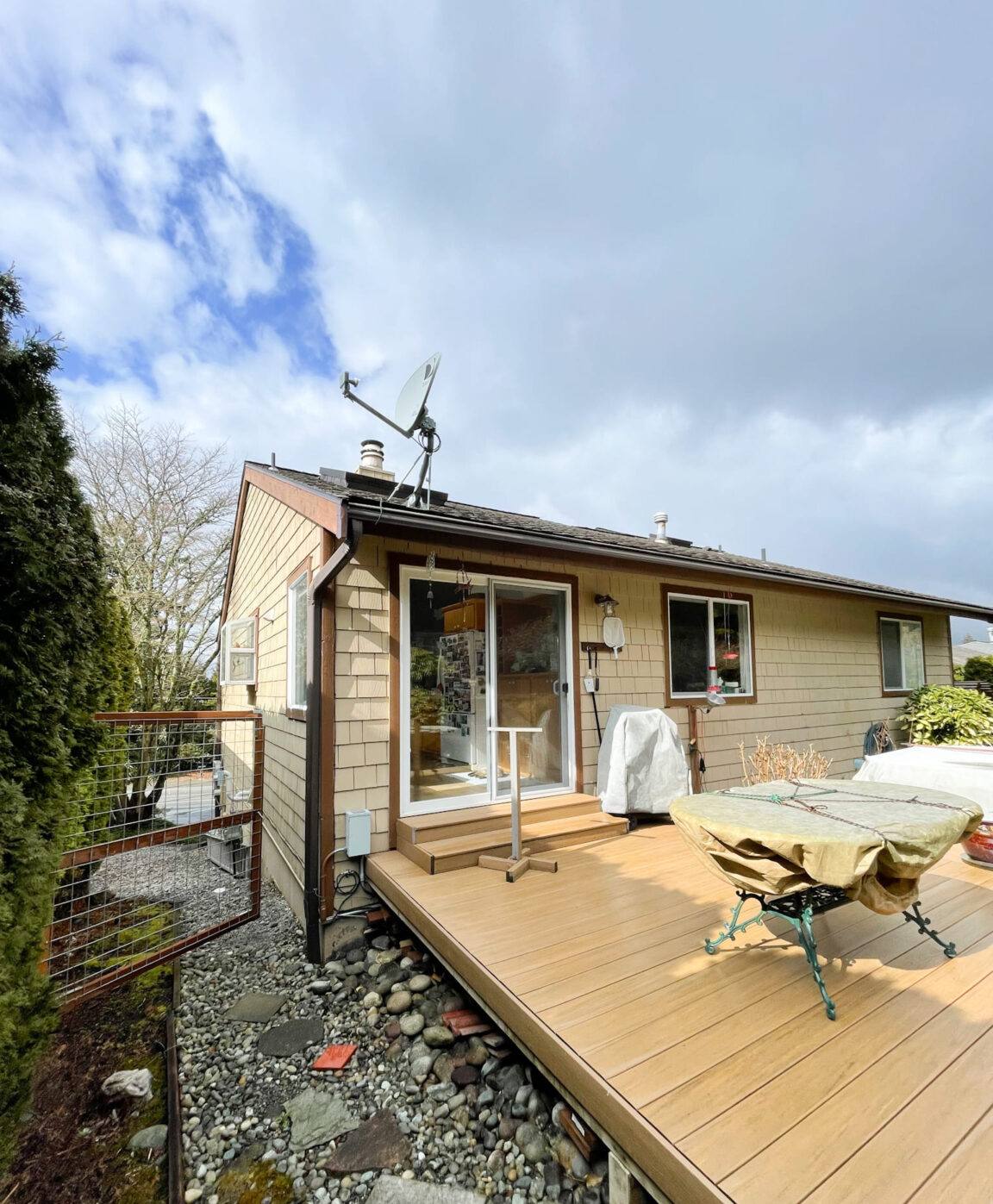
What Salt Air and Moisture Actually Do to a Wall
Salt Air
Airborne salt is corrosive to metal and can accelerate the breakdown of finishes that aren't built to resist it. Fasteners, flashing, and trim hardware are all exposed to this over years, not days — it's a slow, cumulative effect rather than something that shows up after one storm.
Driving Rain
Wind off the bay doesn't just drop rain straight down — it pushes it sideways and upward into laps, joints, and trim edges. Siding systems that rely on caulk alone to keep water out, rather than a real drainage path behind the cladding, tend to show problems first at these pressure points.
Moss and Algae
Shaded, damp exterior walls in this part of Whatcom County can stay wet for extended stretches, especially on north- and west-facing elevations. Organic growth on siding isn't just a look problem — it holds moisture against the surface longer than it would otherwise sit there, which matters more for some materials than others.
Why Fiber Cement Handles This Better Than the Alternatives
Fiber cement is dimensionally stable and doesn't absorb and release moisture the way wood-based products do, so it isn't prone to the swelling, cupping, or edge softening that shows up on engineered wood or primed wood siding after a few wet seasons near the water. It's also non-combustible, which matters everywhere but is simply a better long-term bet in a coastal, high-moisture setting where you want a material that isn't fighting the climate every winter.
That said, fiber cement isn't magic on its own. It's only as good as the installation behind it — the flashing, the gap details, the fastening pattern — and the factory finish protecting its face. That's where a lot of the real difference between a siding job that lasts and one that doesn't gets decided.
Why We Only Install James Hardie
We standardized on James Hardie fiber cement and don't install LP SmartSide, vinyl, Cemplank, Allura, or bare primed wood siding. That's not a marketing position — it's a decision based on what holds up in this specific climate over the long run.
- ColorPlus factory finish: baked-on in a controlled environment rather than field-applied, so the color layer is more consistent and better bonded than a job-site paint coat, which matters when salt air is working on that finish year-round.
- Climate-engineered product lines: Hardie builds different formulations for different climate zones rather than one universal product, so we can match the panel to the moisture and temperature profile of a Pacific Northwest coastal site.
- Transferable warranty: a real, documented warranty structure that stays with the house if it's sold, which matters to a lot of Birch Bay owners thinking about resale.
- Track record when installed to spec: Hardie's own installation instructions are detailed and specific, and following them is what actually delivers the long service life the product is capable of.
We're upfront that this means we say no to some jobs. If a homeowner wants vinyl or LP SmartSide, we're not the right contractor for that project — but for anyone weighing fiber cement against those alternatives on a Birch Bay property, we think the reasoning above is worth hearing before deciding.
What a Correct Installation Involves
Drainage Plane and Rainscreen Gap
On an exposed, wind-driven-rain site like Birch Bay, we don't just rely on the siding's face to keep water out — we build in a drainage gap behind the panels so any moisture that does get past the surface has somewhere to go and can dry out instead of sitting against the sheathing.
Flashing at Every Transition
Windows, doors, roof lines, and deck ledgers are where water intrusion actually starts on most houses. Flashing at these transitions has to be sequenced correctly — installed in the right order relative to the weather barrier and siding — not just caulked over after the fact.
Fastening and Clearances
Hardie specifies fastener type, spacing, and minimum clearances from grade, decks, and roof surfaces for good reason — get those wrong and you create the exact moisture entry points the material is otherwise built to resist. We follow the manufacturer's installation guidelines as the baseline, not a suggestion.
Caulking and Sealant Joints
Sealant is a backup to good flashing and shingling, not the main line of defense. We treat it that way, using it at the joints designed to need it rather than papering over gaps that shouldn't exist.
Our Process for a Birch Bay Project
- On-site inspection: we look at current siding condition, moisture staining, soft spots, and how the specific elevation is exposed to wind and rain off the water.
- Tear-off and sheathing check: once old siding is off, we can see the sheathing underneath — this is when hidden moisture damage from a previous installation, if any, actually gets found and addressed.
- Weather barrier and drainage gap: a proper water-resistive barrier goes on first, followed by the furring or rainscreen product that creates the drainage space behind the new siding.
- Flashing installation: windows, doors, and all roof and deck transitions get flashed before any siding goes up around them.
- Hardie siding installation: panels or lap siding go on to manufacturer fastening specs, with attention to clearances at grade, decks, and roof lines.
- Trim, caulking, and touch-up: finish trim goes on, sealant joints are placed where they're actually needed, and any factory-finish touch-up is done with matched product.
- Final walk-through: we go over the finished job with the homeowner before calling it done.
Signs Your Current Siding Is Losing to the Climate
If you're not sure whether your Birch Bay home's siding is still doing its job, these are the signs worth taking seriously:
- Persistent moss, algae, or dark staining that comes back soon after cleaning
- Soft, spongy, or crumbling spots, especially near the bottom of walls or under windows
- Paint that's peeling, bubbling, or chalking heavily rather than just fading evenly
- Visible gaps or separation at trim boards, corners, or window and door casings
- Warping, bowing, or panels that no longer sit flat against the wall
- A musty smell along interior walls that back up to exterior siding
Any one of these on its own isn't necessarily an emergency, but a few together on a waterfront-exposed wall usually mean moisture has been getting behind the siding for a while.
Cost Factors Specific to a Birch Bay Job
Every siding estimate is specific to the house, but a few factors tend to move the number more in Birch Bay than in a typical sheltered inland lot:
| Factor | Why It Matters Here |
|---|---|
| Extent of moisture damage found at tear-off | Waterfront and shaded lots more often have hidden sheathing damage that needs repair before new siding can go on |
| Wind exposure of the specific elevation | Sides of the house facing open water or prevailing wind need more careful flashing and drainage detailing |
| Access and site conditions | Bluff-adjacent lots, steep grades, or tight setbacks can affect staging and scaffolding needs |
| Trim and architectural detail | More corners, transitions, and trim profiles mean more flashing and cutting time |
| Existing siding removal | Tear-off of old wood, vinyl, or engineered siding adds labor before installation even starts |
Maintenance That Actually Matters Afterward
Fiber cement with a factory finish needs far less upkeep than painted wood, but "low-maintenance" isn't "no-maintenance." In Birch Bay, that mainly means an occasional gentle wash to keep salt residue and organic growth from building up on the surface, keeping gutters and downspouts clear so water isn't dumping directly onto walls, and having any caulking or trim checked periodically rather than waiting for a visible problem to show up.
Why Local Experience in This Area Matters
A crew that's worked houses on Birch Bay's shoreline knows which elevations take the worst of the wind-driven rain, where moss builds up fastest, and how differently a job on this stretch of coast needs to be detailed compared to a similar house a few miles inland in Bellingham. That's not something you can fully substitute for with a generic installation checklist — it comes from having done the work here, on this coastline, in this climate, more than once.
If you're weighing a siding replacement or repair on a Birch Bay home, we're glad to come take a look and talk through what your specific house and exposure actually need. Reach out for a free, no-pressure estimate using the form below.