 Bellingham Window
 Composite Decking Built for Sehome's Weather, Not Just Its Views
Sehome sits close enough to Bellingham Bay that salt-laden air is a fact of life, and close enough to the hillside tree cover that shade and moisture linger long after the rest of the county has dried out. A deck in this neighborhood does double duty: it has to shrug off driving rain for most of the year, resist the moss and algae that thrive in shaded, damp corners, and hold its color and structure through decades of Whatcom County winters. Composite decking, installed correctly, is one of the few products that handles all three demands without asking for constant upkeep from the homeowner.
This page focuses specifically on composite decking for homes in Sehome — what the local climate actually does to a deck, what a correctly built substructure and surface look like, and how our process works from first estimate to final walkthrough.
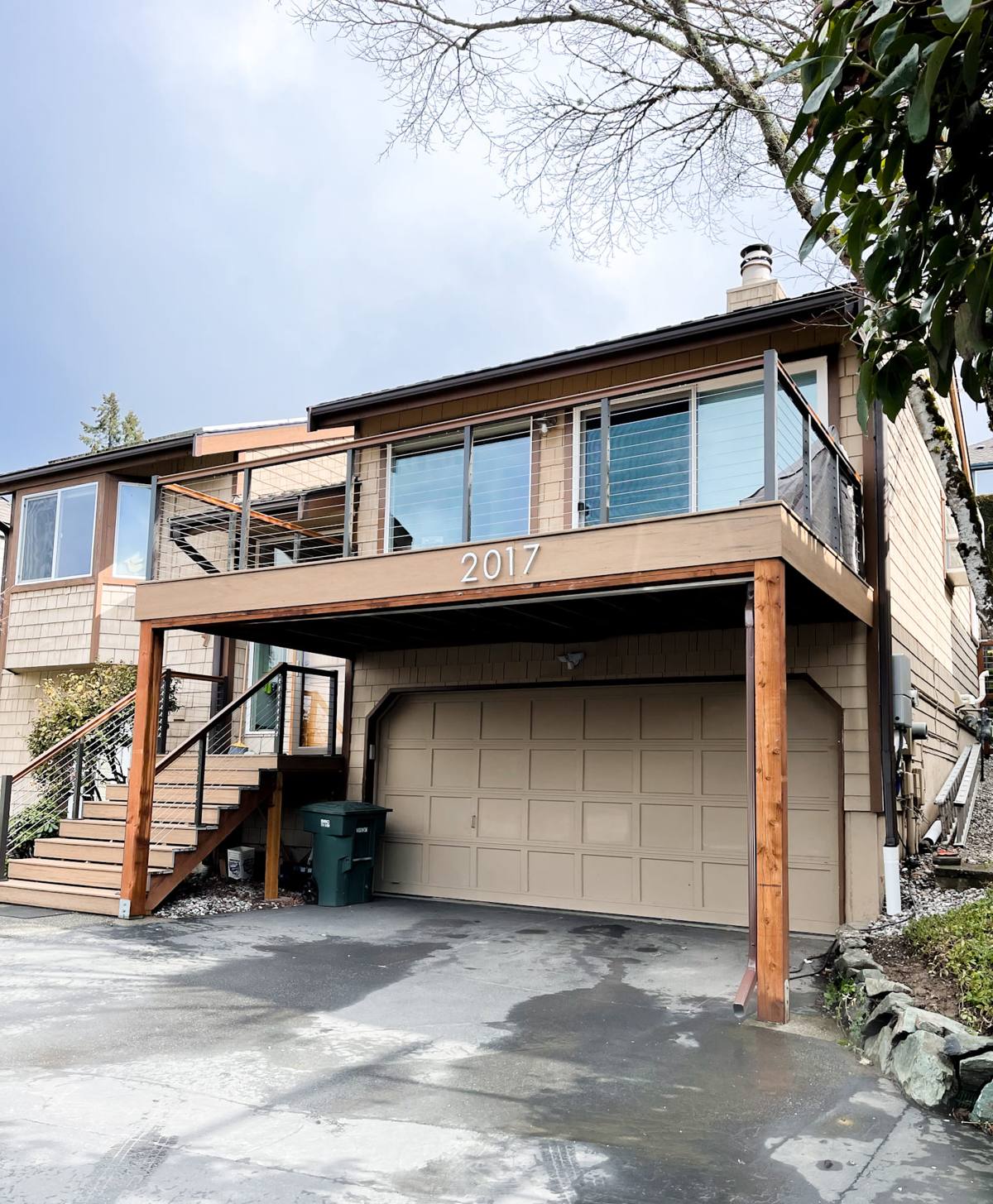
What Bellingham's Climate Does to a Deck Over Time
Most decking failures we see aren't about the surface material at all — they're about what's happening underneath it. In a wet coastal climate like Bellingham's, three factors do most of the damage:
Driving Rain and Standing Moisture
Sehome gets its share of wind-driven rain off the bay, which means water doesn't just fall straight down — it gets pushed sideways into fascia boards, ledger connections, and any gap in flashing. Without proper drainage planning underneath the deck surface, that moisture sits against framing and fasteners far longer than most people expect.
Salt Air and Metal Fasteners
Proximity to the water means airborne salt accelerates corrosion on any fastener, bracket, or hardware that isn't rated for it. This is one of the most overlooked failure points on older decks in this area — the boards look fine, but the hardware holding everything together has been quietly corroding for years.
Long Moss and Algae Season
Shaded, north-facing, or tree-covered sections of a lot hold moisture for weeks at a time during our fall-through-spring stretch. That's exactly the environment moss and green algae need to establish themselves on any decking surface, and it's a large part of why board selection and surface texture matter as much as the frame underneath.
Composite vs. Wood vs. Other Decking Materials
There's no single "best" decking material for every home — the right choice depends on how much maintenance a homeowner wants to take on and how exposed the deck is to shade, rain, and salt air.
| Material | Maintenance | Moisture Behavior | Typical Lifespan |
|---|---|---|---|
| Composite (capped) | Occasional washing | Resists rot; won't absorb water into the core if capped on all sides | 25–30+ years |
| Pressure-treated wood | Annual staining/sealing | Absorbs moisture; prone to splitting and rot if sealing lapses | 10–15 years before major repair |
| Cedar | Regular oiling/sealing | Naturally rot-resistant but still absorbs moisture over time | 15–20 years |
| PVC decking | Low | Fully moisture-proof but can flex more in temperature swings | 25–30 years |
For most Sehome homes, capped composite hits the best balance — it holds up to the rain and salt exposure without the annual sanding, staining, and sealing that wood requires. We'll walk through the honest trade-offs of each option during your estimate rather than push one product line.
What a Correctly Built Composite Deck Actually Involves
The composite boards get the attention, but the framing and hardware underneath determine whether the deck lasts 10 years or 30. A correct build for this climate includes:
Ledger Attachment and Flashing
Where the deck attaches to the house, proper flashing has to shed water away from the band joist and siding, not funnel it behind them. This is the single most common point of hidden rot on older decks we've inspected in wet coastal neighborhoods.
Corrosion-Resistant Hardware
Given the salt air common in Sehome, we use fasteners, joist hangers, and structural screws rated for coastal or treated-lumber exposure — not standard-grade hardware that corrodes faster than the boards it's holding up.
Joist Spacing and Ventilation
Composite boards typically require tighter joist spacing than wood, especially at angles or stair treads, per manufacturer specifications. Airflow underneath the deck also matters — a low-clearance deck built over damp soil holds moisture against the frame far longer than one with proper ventilation and ground clearance.
Hidden Fastening Systems
Most composite lines use a hidden clip system rather than face-screwing, which keeps water from pooling in screw heads on the walking surface — one of the more common spots for algae growth to start.
Our Process, From Estimate to Finished Deck
- On-site assessment — we look at drainage patterns, sun/shade exposure, existing structure (if replacing a deck), and how the space is actually used.
- Honest product walkthrough — we show you composite options across a few price points and explain the real differences in appearance, board profile, and warranty structure.
- Structural plan — framing, footings, ledger flashing, and hardware are specified for this climate and the local building code, not a generic template.
- Permitting — we handle the permit application and inspections required by the City of Bellingham or Whatcom County, depending on your parcel.
- Build — substructure first, then decking, railing, and any stairs, with inspections at the appropriate stages.
- Final walkthrough — we go over basic care so you know what (little) maintenance to expect going forward.
Moss, Mildew, and Salt Air: What Ongoing Care Looks Like
Composite decking cuts maintenance dramatically compared to wood, but "low-maintenance" doesn't mean "no-maintenance," especially in a neighborhood dealing with moss season and salt air. A short seasonal checklist keeps a composite deck looking and performing the way it should:
- Sweep debris and standing leaves off the surface regularly through fall — trapped organic matter is what feeds moss and algae growth.
- Rinse the deck periodically with a hose or soft-bristle brush; avoid high-pressure washing directly on board seams, which can force water into fastener points.
- Check railing posts and stair connections annually for any looseness — hardware is the first thing salt air affects, even when the boards look untouched.
- Keep gutters and downspouts near the deck clear so runoff isn't draining directly onto or under the decking surface.
- Trim back overhanging branches where practical to reduce the shaded, damp conditions moss prefers.
Permitting and Code Considerations Locally
Deck projects in Bellingham and unincorporated Whatcom County generally require a permit once you're dealing with structural framing, especially for anything attached to the house or elevated more than a modest height off grade. Requirements around railing height, guard spacing, stair geometry, and footing depth are set by the adopted building code and enforced through inspection. We factor permitting and inspection scheduling into the project timeline from the start rather than treating it as an afterthought — it's a normal part of doing this work correctly in this jurisdiction.
What Affects the Cost of a Composite Deck
| Factor | Why It Matters |
|---|---|
| Deck size and shape | Square footage and the number of angles, cutouts, or level changes directly affect labor and material |
| Substructure condition | Replacing an old deck's frame costs more than building fresh, but is often necessary for a safe, lasting result |
| Composite product line | Board profile, color, and warranty tier vary in price per square foot |
| Railing and stair complexity | Custom railing, glass panels, or multiple stair runs add both material and install time |
| Site access and grade | Steep lots or tight access around the home can increase labor time |
We don't quote broad per-square-foot numbers on this page because every Sehome lot and every existing structure is different — but we'll give you a clear, itemized number after the on-site assessment, with no pressure to decide on the spot.
Why It Matters That We Already Work in Sehome
A crew that's worked this neighborhood already knows which lots sit in heavier shade, where salt exposure runs highest closer to the bay, and how local drainage patterns behave through a wet Bellingham winter. That familiarity shows up in small decisions — flashing details, hardware selection, joist spacing — that don't show up on a spec sheet but decide whether a deck is still solid in fifteen years. It also means we're not guessing at what the City of Bellingham's inspectors expect to see; we've been through the process here before.
If you're weighing a new composite deck or replacing an aging one in Sehome, we're happy to come take a look and give you a straightforward, no-pressure estimate — just fill out the form below.