 Bellingham Window
 Composite Decking for Sudden Valley's Wet, Wooded Lots
Sudden Valley sits in the trees along Lake Whatcom, and that setting is exactly why decking choices matter more here than in a lot of Bellingham neighborhoods. Heavy tree canopy means shade that never fully dries out after a storm. Proximity to the lake means humidity that lingers into the afternoon even on days that never see rain. And Whatcom County's long fall-through-spring wet season means a deck surface here spends months at a time damp, not just occasionally soaked. Composite decking was built to handle exactly that kind of exposure, but only when it's specified and installed correctly for the site.
This page is about one job in one place: composite deck installation for Sudden Valley homes. Not a general decking overview — the specific decisions that matter when your lot has shade, slope, moisture, and tree litter working against the deck year-round.
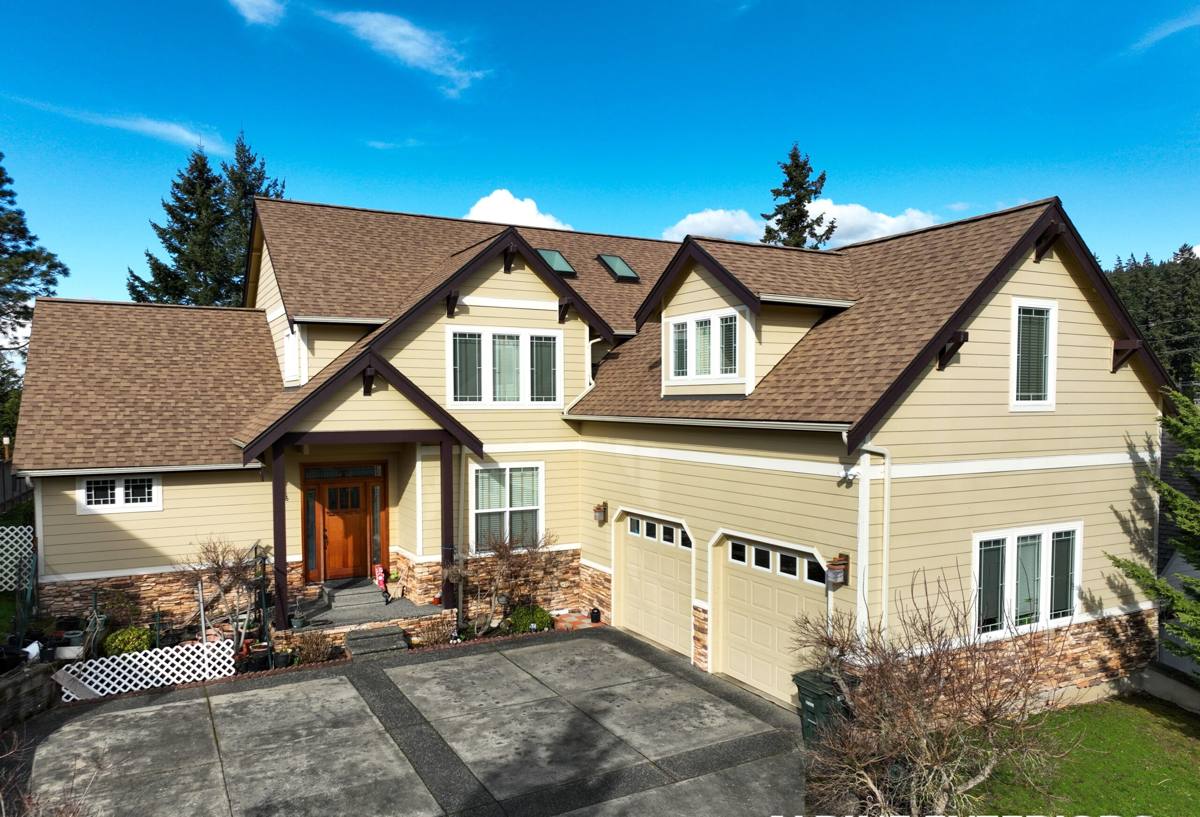
What Sudden Valley's Climate Actually Does to a Deck
Whatcom County's marine climate brings driving rain off and on for most of the year, and Sudden Valley's tree cover adds its own layer of moisture management problems on top of that. A few things we see consistently on decks in this area:
- Moss and algae growth in shaded sections that don't get direct sun or wind to dry them out, especially north-facing decks or ones tucked under fir and cedar canopy.
- Needle and leaf litter collecting in board gaps and against ledger boards, holding moisture against the structure long after a storm passes.
- Slower dry-out cycles than open, sunny lots elsewhere in Bellingham — a deck here can stay damp two or three days after a rain that a full-sun deck would shed in hours.
- Sloped, uneven terrain common around the lake, which changes footing depth, joist spans, and sometimes calls for a multi-level design instead of a single flat deck.
None of that makes composite decking a bad fit for Sudden Valley — it makes the installation details more important. A composite deck put in without accounting for shade and drainage will still grow moss and algae on its surface, just like wood would, because moss doesn't care what the board is made of. It cares about moisture sitting on a surface without airflow.
What a Correct Composite Deck Build Involves
Composite boards themselves resist rot, but the deck as a whole is only as good as what's underneath and around them. For a Sudden Valley property, a correct build means:
Substructure and Drainage
Pressure-treated or coated-steel framing set with proper joist spacing for the specific composite board being used — composite requires tighter joist spacing than wood in many cases, and manufacturers publish exact specs that we follow rather than guess at. Ledger board attachment to the house needs proper flashing so water is directed away from the wall, not funneled behind the composite decking into the framing.
Airflow Under the Deck
On shaded, low-clearance decks, we pay attention to under-deck ventilation. A deck built tight to grade with poor airflow underneath stays damp longer and speeds up moss growth on top, even with a moisture-resistant board. Where clearance allows, we build in enough gap for air movement.
Board Spacing and Fastening
Composite boards expand and contract with temperature more than wood does, so gapping has to be set correctly at install — too tight and boards can buckle later; too loose and debris collects faster. Hidden fastener systems keep the surface clean and reduce the screw-head pockets where moss and standing water like to start.
Railings and Stairs
Composite railing systems and stair treads should match the deck board's moisture and UV performance — mixing a premium deck board with a cheap railing kit just moves the maintenance problem to a different part of the same structure.
Composite vs. Wood vs. PVC: What's the Right Call for Sudden Valley
We get asked which material makes sense for a shaded, lakeside lot. Here's the honest comparison, not a sales pitch for one product:
| Material | Upfront Cost | Moisture/Moss Resistance | Maintenance | Typical Lifespan |
|---|---|---|---|---|
| Pressure-treated wood | Lowest | Fair — absorbs moisture, needs sealing | Annual cleaning, staining/sealing every 1-2 years | 10-15 years with upkeep |
| Composite (wood-plastic blend) | Mid to upper-mid | Good — won't rot, but surface can still grow moss/algae in shade | Periodic washing, no staining or sealing | 25-30 years typical warranty range |
| PVC / capped polymer | Highest | Very good — fully synthetic, minimal moisture absorption | Occasional washing | Similar or longer warranty range than composite |
For most Sudden Valley homes, composite hits the right balance — it holds up to the wet climate far better than untreated wood, costs less than full PVC systems, and comes in board profiles that handle shaded, tree-covered lots reasonably well when the install accounts for airflow and drainage. PVC is worth discussing for decks in the deepest shade or lowest clearance, where moisture sits the longest.
Cost Factors on a Sudden Valley Deck Project
We won't quote a number without seeing the site, but these are the factors that actually move the price on a project here, in rough order of impact:
| Factor | Why It Matters Here |
|---|---|
| Deck size and shape | Straightforward driver of material and labor cost |
| Site slope and access | Sudden Valley's terrain often means taller footings, stepped framing, or equipment access limits |
| Existing structure condition | Tear-off and reframe adds cost but is often necessary if old framing has taken on water damage |
| Board tier chosen | Entry-level composite vs. premium capped-composite vs. PVC spans a real price range |
| Railing and stair complexity | Multi-level lake-view decks common in this area add railing linear footage and stair runs |
| Ledger and flashing work | Proper flashing at the house connection is not optional, and older homes sometimes need extra correction here |
Our Process, Start to Finish
The same process applies whether it's a straightforward rebuild or a new deck on a sloped lot:
- Site visit and assessment — we look at sun exposure, tree cover, slope, and the condition of any existing structure before recommending a board or framing approach.
- Honest product conversation — we walk through composite tiers and, where it makes sense, PVC, with real trade-offs on cost, appearance, and how each performs in shade and moisture.
- Written estimate — clear scope, materials, and price before any work starts.
- Permitting — decks attached to the house or above a certain height typically require a permit; we handle that process rather than leaving it to the homeowner.
- Demo and framing — old decking removed, framing inspected and corrected or replaced as needed, proper flashing installed at the ledger.
- Composite installation — boards, fasteners, and gapping set to manufacturer spec for the specific product chosen.
- Railings, stairs, and finish details — matched material and hardware, final walkthrough with the homeowner.
Maintaining a Composite Deck in a Moss-Prone Climate
Composite is lower-maintenance than wood, but "low-maintenance" doesn't mean "no maintenance," especially on a shaded Sudden Valley lot. A basic seasonal routine keeps a composite deck looking right and prevents surface moss from getting a foothold:
- Sweep debris — needles, leaves, seed pods — off the deck regularly rather than letting it build up in board gaps
- Wash the surface with soap and water (or a composite-safe cleaner) once or twice a year, more often on shaded sections
- Rinse under railings and in corners where wind-blown debris tends to collect
- Check that gaps between boards and at the house ledger are clear so water keeps draining properly
- Trim back overhanging branches where possible to get a little more sun and airflow onto the deck surface
- Inspect fasteners and railing connections annually, especially after the first winter on a new deck
Avoid pressure washing composite boards at close range or high pressure — it can damage the cap layer on higher-end boards. A soft-bristle brush and a garden hose handle most moss and algae buildup just fine.
Permits and Code Considerations
Deck projects in and around Bellingham generally require a building permit when the deck attaches to the house, exceeds a certain height off grade, or involves structural changes — the exact thresholds depend on current local code, which we confirm at the time of your project rather than assume. What doesn't change is the need for proper footing depth, ledger flashing, and railing height and spacing to meet code, especially on a sloped Sudden Valley lot where a deck may sit well above grade on one side. We pull permits as part of the job so the finished structure is inspected and documented correctly.
Why a Crew That Already Works Sudden Valley Matters
Sudden Valley isn't a typical flat suburban lot. The slopes, tree cover, and lake-adjacent moisture patterns change how a deck should be framed and how it will behave over the next twenty years. A crew that has already built decks on similar lots in this specific area knows where the shade sits longest through the day, how the terrain usually breaks for footings, and which board profiles actually hold up once the tree canopy leafs out and the fall rains start. That's the difference between a deck that looks good on installation day and one that still looks good after its third wet Whatcom County winter.
If you're weighing options for a deck on your Sudden Valley property, we're glad to take a look and give you a straight answer on what your specific lot needs — no pressure, no upsell on a board tier you don't need. Request a free estimate using the form below and we'll set up a time to walk the site with you.