 Bellingham Window
 Decks in Barkley Face a Different Climate Than Decks Inland
Barkley sits close enough to the water and to Bellingham's marine weather pattern that decks here take on a specific kind of abuse: salt-laden air that accelerates corrosion on fasteners and hardware, long stretches of driving rain that push moisture sideways into places a dry-climate deck would never see it, and a moss season that can run most of the year on any surface that doesn't get direct sun or airflow. None of this is unusual for Whatcom County, but it means a deck built the way it might be built in a drier part of the country will show problems early — soft spots, rust streaks, slick green film on the boards, and railings that loosen at the post base before the wood itself has any right to fail.
A deck that's going to hold up in Barkley isn't built differently because of style preference. It's built differently because the materials, fasteners, and drainage details all have to account for water that doesn't just fall from above — it blows in at an angle, sits in shaded corners, and works its way into end grain and joints if those areas aren't protected on purpose.
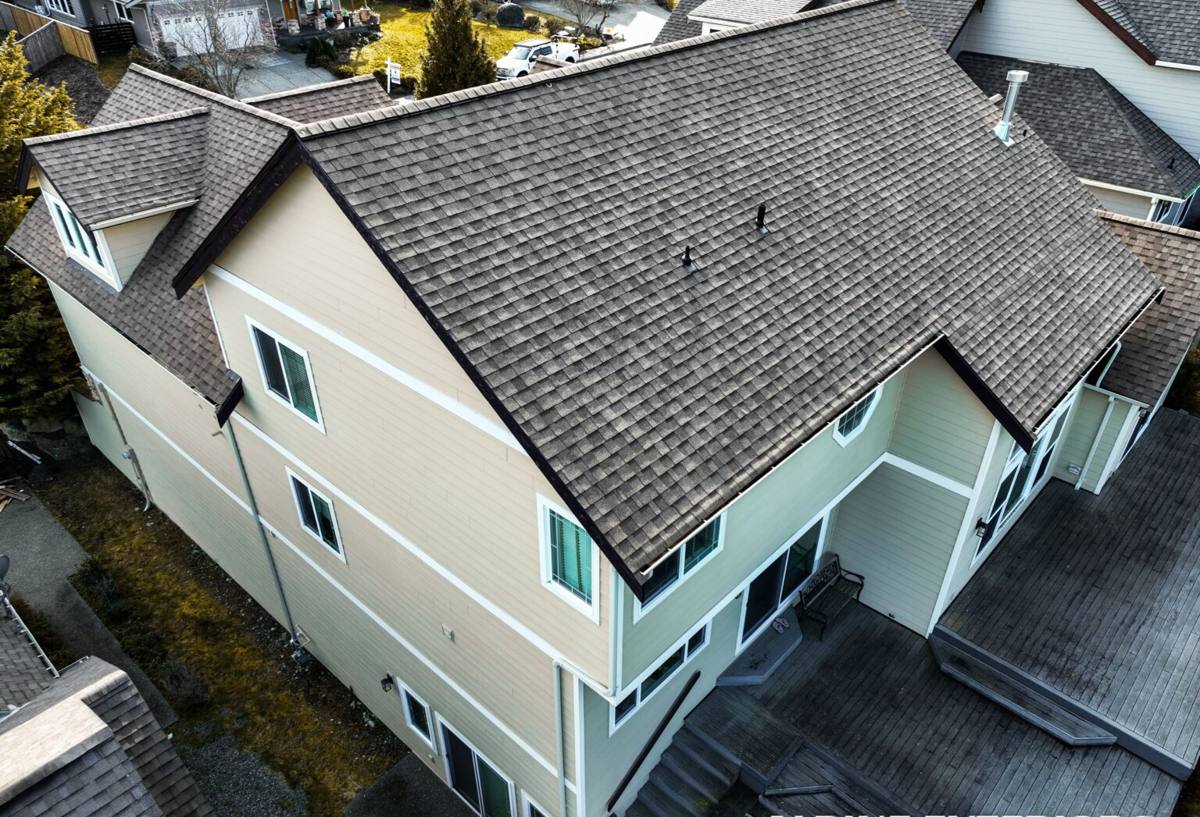
What a Correctly Built Deck Looks Like Here
The visible parts of a deck — the decking boards, the railing, the stair treads — get most of the attention, but the parts that determine whether a deck lasts eight years or twenty-five are underneath and out of sight. In this climate, a few details matter more than they would somewhere drier:
Ledger Attachment and Flashing
Where the deck attaches to the house is the single most common failure point we see on older decks in this area, because it's the one spot where wood, water, and a fastened connection all meet at once. A ledger board needs proper flashing that directs water away from the house sheathing, not just a bead of caulk and a hope. Done wrong, water gets trapped between the ledger and the house band board and rots both from the inside, often for years before it shows on the surface.
Fasteners and Hardware
Salt air corrodes standard fasteners faster than most homeowners expect. Structural connectors, joist hangers, ledger bolts, and screws should be rated for exterior and coastal-influenced use — stainless steel or a heavy-duty coated fastener rated for ground contact and salt exposure, not a generic exterior-grade screw that's fine 50 miles inland but starts weeping rust streaks down composite boards within a couple of seasons here.
Joist Protection
Bare framing lumber under decking boards sits in a damp microclimate all winter — shaded, poorly ventilated, and rarely dry. Joist tape or a comparable flashing membrane over the tops of joists keeps water from wicking into end grain through screw penetrations, which is one of the quieter causes of substructure rot we find when we're called out to look at a deck that "seems fine on top."
Drainage and Airflow Underneath
Moss and mildew need shade and stagnant moisture to establish. A deck built tight to grade with no airflow underneath, or with landscaping crowding the perimeter, holds humidity against the framing and the underside of the boards. Proper post height, gapped decking, and keeping vegetation clear of the structure all reduce how long surfaces stay wet after a storm — which in Barkley can mean the difference between an occasional cleaning and a slick, green deck by early spring.
Decking Material Comparison for This Climate
There's no single "best" decking material — the right choice depends on how much maintenance a homeowner wants to take on, budget, and how much direct sun versus shade the deck gets. Here's how the common options actually perform under Bellingham's rain-and-moss conditions:
| Material | Moisture Behavior | Moss/Mildew Resistance | Maintenance |
|---|---|---|---|
| Pressure-treated pine | Absorbs water readily; needs sealing to control swelling and checking | Low — porous surface holds moisture and organic growth | Annual cleaning and re-sealing recommended |
| Cedar | Naturally moisture-resistant, but still needs finish maintenance | Moderate — natural oils slow growth but don't stop it | Periodic cleaning and refinishing to hold color and resistance |
| Composite decking | Doesn't absorb water into the board itself; can trap surface moisture | Moderate to good, varies by brand and cap type | Low — periodic washing to clear moss film |
| PVC decking | Fully moisture-resistant, non-porous | Good — smooth, non-porous surface sheds growth more easily | Lowest — occasional washing |
We'll walk through these trade-offs honestly during an estimate rather than pushing whatever has the best margin. A shaded, north-facing deck under fir trees is a different decision than an open, sun-exposed deck on the same street — the surrounding conditions on the specific lot matter as much as the material spec sheet.
Railings, Stairs, and Code Requirements
Deck railings and stairs are structural safety items, not just design elements, and Whatcom County permitting follows the International Residential Code baseline for height, baluster spacing, and guard requirements on elevated decks. Beyond meeting code, railing posts are another spot where water intrusion causes early failure — a post that isn't properly through-bolted and flashed at its base will loosen well before the rest of the structure shows wear, especially with the wind-driven rain that comes off the water through this part of the county.
Stair stringers deserve the same attention to fastener quality and moisture protection as the main frame. They see more direct weather exposure than most of the deck surface and take repeated foot traffic, so any weak point shows up as flex or give underfoot faster than it would elsewhere.
How Our Process Works
- On-site assessment. We look at the specific lot — sun exposure, drainage, existing structure if it's a rebuild, and how the house's siding and roofline affect ledger attachment.
- Honest material walkthrough. We explain the real trade-offs between wood and composite/PVC options for that specific spot, not a one-size-fits-all pitch.
- Permitting. We handle the permit process with the county where required, including engineering details for ledger attachment and footings.
- Framing built for the climate. Flashed ledger, corrosion-resistant hardware, joist protection, and drainage details as described above — not just to code minimums, but to what actually holds up here.
- Decking, railing, and finish work. Installed to the manufacturer's spec for the chosen material, since improper fastening patterns are a common cause of warranty denial on composite and PVC products.
- Final walkthrough. We go over basic maintenance expectations for the material chosen so there are no surprises the first wet winter.
Maintenance That Actually Matters Here
Every deck in this climate needs some level of upkeep — the question is how much, and that depends on the material and the site conditions. A practical maintenance checklist for a Barkley deck:
- Sweep debris and standing organic matter (needles, leaves) off the surface regularly, especially in shaded areas where moss gets a foothold fastest
- Wash the deck surface at least once a year to clear moss and mildew film before it becomes a slip hazard
- Check railing posts annually for looseness at the base, which is often the first sign of moisture getting into a connection point
- Inspect and clear debris from underneath the deck where airflow can get blocked by landscaping or storage
- For wood decking, reseal on the manufacturer's or installer's recommended schedule — don't wait until graying and checking are already visible
- Look at the ledger flashing line where the deck meets the house once a year for any sign of staining or gaps
Signs an Existing Deck Needs Attention
For homeowners in Barkley with an existing deck rather than a new build, a few warning signs are worth acting on before they become structural issues rather than cosmetic ones:
- Soft or spongy spots underfoot, especially near the ledger or stair landing
- Rust streaking down the face of composite or PVC boards from fasteners
- Persistent green or black film that comes back quickly after cleaning
- Railing posts that flex or rock at the base
- Visible gaps or staining at the ledger-to-house connection
- Boards that have cupped, split, or pulled away from fasteners
Any of these can usually be addressed while they're still repairs rather than a full rebuild, but only if they're caught early — which is easier when the underlying construction was done right in the first place.
Why It Matters to Hire a Crew That Already Works This Area
Deck-building fundamentals are the same everywhere in a general sense, but the specific failure points — which ledger details actually leak here, which fastener grades hold up against this air, how much shade a given lot typically gets through the wet months — are things a crew learns by working Bellingham and Whatcom County conditions repeatedly, not by reading a spec sheet once. A contractor who's built and later repaired decks in this same climate has already seen what goes wrong when corners get cut on flashing or hardware, and builds accordingly the first time instead of learning on someone else's deck.
That local, repeated experience is also why we're straightforward about material trade-offs instead of defaulting to whatever's easiest to install. A deck is a long-term investment sitting outside in Pacific Northwest weather for decades — getting the substructure and material choice right the first time costs less over the life of the deck than dealing with a moisture problem that could have been avoided.
Get a Straightforward Estimate
If you're planning a new deck in Barkley or want an honest look at an existing one, we're happy to come take a look and walk through what your specific lot and conditions call for. There's no pressure and no obligation — just a clear picture of what's involved before you decide anything. Use the form below to request a free estimate.