 Bellingham Window
 Windows That Actually Hold Up in Cordata
Cordata sits far enough inland from the bay that people sometimes assume it's spared the worst of Bellingham's weather. It isn't, not really. The same weather system that soaks the rest of Whatcom County moves through Cordata too — long stretches of steady rain from fall through spring, damp air that never fully dries out, and enough shade from mature trees and close-set lots to keep moss and algae established on north-facing surfaces most of the year. Add in the salt-tinged air that drifts inland off Bellingham Bay on windy days, and you've got a climate that is quietly hard on windows, even when the damage isn't obvious from the street.
Custom windows in this context means more than picking a size and style off a shelf. It means specifying glass, frame material, and installation details that match how this specific neighborhood's homes actually get weathered — corner lots that catch driving rain sideways, older single-pane units that have been fogging or sticking for years, additions where a window opening was never quite standard size to begin with.
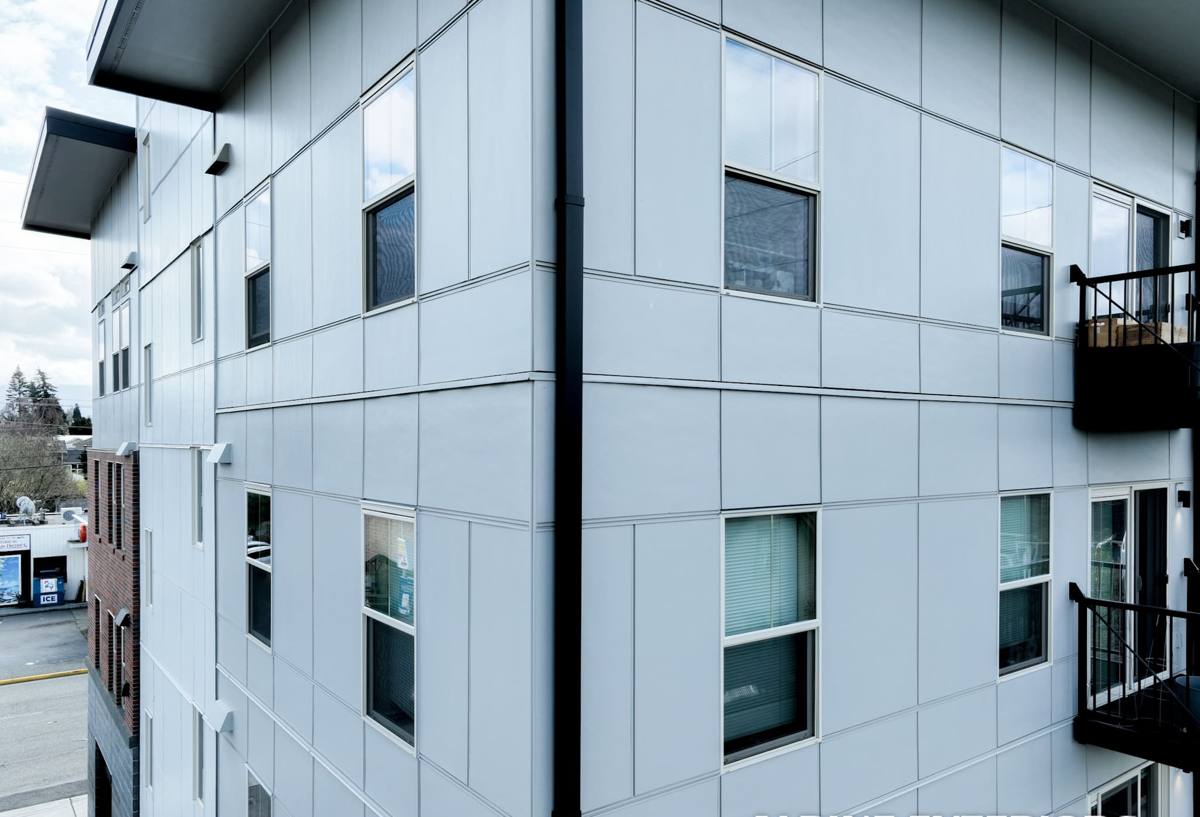
What Cordata's Climate Does to Windows Over Time
Driving Rain and Wind-Driven Moisture
Rain in this part of Washington rarely falls straight down. Storms off the Pacific push it sideways, which means window assemblies get tested at the flashing and sill long before the glass itself is the problem. Older installations, or ones that were never properly flashed to begin with, let water track behind the trim and into the wall cavity. You often don't see this until there's staining on interior drywall or a soft spot in the sill — by then the moisture has usually been working for a while.
The Long Moss Season
Whatcom County's moss season isn't a few weeks in spring — it's most of the year on shaded, north- or east-facing walls. Moss and algae hold moisture against wood trim and frames far longer than open, sun-exposed walls dry out. On homes with mature landscaping or tight lot spacing, which describes a lot of Cordata, this means trim and frame materials need to tolerate sustained dampness, not just occasional rain.
Salt Air, Even Inland
Cordata isn't waterfront, but Bellingham Bay is close enough that salt-laden air reaches inland neighborhoods on windy days, especially in fall and winter. Salt exposure accelerates corrosion on hardware, hinges, and fasteners that aren't rated for it. It's a slower effect than moisture damage, but it shows up over years as stiff operation, corroded screens, and pitted metal components.
Condensation and Indoor Humidity
Bellingham's mild, damp climate means homes run more humid indoors than people expect, especially with modern, tighter insulation. Older or poorly-sealed windows condense that moisture right on the glass and sill, which over time can degrade wood frames from the inside even if the exterior looks fine.
Signs a Cordata Home Needs Window Work
- Fogging or a persistent haze between panes on double-glazed units — a sign the seal has failed
- Windows that stick, won't latch fully, or have visibly warped sashes
- Soft, spongy, or discolored wood at the sill or lower frame corners
- Visible moss, algae, or black streaking on frames and trim, even after cleaning
- Drafts you can feel near the frame on a windy day, even with the window latched
- Noticeably higher heating bills without a clear other cause
- Condensation forming on the inside of the glass regularly through fall and winter
Any one of these can be a minor fix. Several together, especially on a home with original 1980s-to-2000s builder-grade windows, usually point to replacement being the more honest answer than another round of caulk and touch-up paint.
What a Correct Custom Window Job Involves in This Neighborhood
Assessing the Opening, Not Just the Glass
Before we talk product, we look at the opening itself: is the sill sloped correctly for drainage, is there existing rot or moisture damage behind the trim, is the flashing (if any) actually doing its job. On older Cordata homes, this step often reveals problems that predate the window itself — issues a straight swap-and-caulk replacement would just seal back up.
Frame Material Suited to Sustained Dampness
We steer clients away from bare wood exteriors on shaded, moss-prone elevations unless they're committed to real maintenance — sustained dampness is exactly the condition wood struggles with long-term. Vinyl, fiberglass, and clad-wood options hold up with far less upkeep in these spots, and we'll say so plainly rather than sell whatever looks nicest in a brochure.
Glass and Gas Fill for a Damp, Mild Climate
Double-pane, argon-filled, low-E glass is the practical standard here — it manages condensation and heat loss well in a climate that's more about steady dampness and moderate temperature swings than extreme heat or cold. We size glass packages to the specific exposure of each opening, not a blanket spec for the whole house.
Flashing and Sealing Done in the Right Order
This is where most bad installs go wrong, and it's invisible once the trim goes back on. Correct flashing integration — water-resistive barrier, flashing tape, and sealant applied in the right sequence so water sheds outward at every layer — matters more in Whatcom County's wind-driven rain than in drier climates where a sloppy sequence might go unnoticed for years.
Hardware Rated for Coastal-Adjacent Air
Given the periodic salt air reaching Cordata, we specify corrosion-resistant hardware and fasteners rather than standard-grade hinges and latches that'll pit and stiffen faster than the window itself wears out.
Our Process for a Cordata Custom Window Project
- On-site assessment. We inspect existing openings, note any rot, drainage, or flashing issues, and measure precisely — custom openings on older or additions-built homes are rarely standard size.
- Honest scoping. We tell you plainly if what looks like "just replace the glass" is actually a sill repair or flashing correction first. We'd rather flag it now than have you calling about the same leak in two years.
- Material and glass selection. We walk through frame material and glass options suited to your home's specific exposure — a shaded north wall and a sun-exposed south wall on the same house can reasonably get different specs.
- Installation. Proper removal, opening prep, flashing integration, and sealing — in that order, done right, not rushed to hit a same-day install.
- Final check. We test operation, seal integrity, and weather-seal before we consider the job done, not just whether the window looks good from inside.
Cost Factors for Custom Windows in This Area
| Factor | Why It Matters Here |
|---|---|
| Frame material | Vinyl and fiberglass typically cost less upfront and need less upkeep in sustained damp/shade; clad-wood costs more but offers a different look with less exterior maintenance than bare wood |
| Opening condition | Rot or drainage repair discovered during removal adds cost but prevents repeat failure — skipping it is a false savings |
| Glass package | Low-E, argon-filled double-pane is the practical baseline for this climate; upgraded coatings add cost for marginal extra benefit in most Cordata exposures |
| Number and size of openings | Larger custom sizes and multi-window projects have per-unit efficiencies but higher total cost |
| Access and elevation | Second-story or awkward-access openings add labor time, particularly where landscaping limits scaffolding or ladder placement |
| Trim and exterior finish | Matching existing trim profiles or finishes on an older home can add time versus a straightforward like-for-like swap |
We give real numbers during the on-site visit once we've seen the actual openings — broad online estimates rarely account for what's actually behind your trim.
Why Hire a Crew That Already Works in Cordata
Window work isn't generic, and neither is this neighborhood's housing stock. A crew that's worked Cordata knows which builder-grade window lines from the 1990s and 2000s tend to fail first, what typical opening sizes and trim details look like on the area's common home styles, and how much shade and moss exposure a given lot line or tree canopy actually creates. That's the kind of knowledge that comes from doing the work here repeatedly, not from a one-size-fits-all national playbook.
It also matters for accountability. A local, Bellingham-based crew is easy to reach if a question comes up two years after install — not a name on an invoice from a company that moved on to the next city. For a coastal-adjacent Pacific Northwest climate like Whatcom County's, that kind of local track record is worth more than a slightly lower bid from someone unfamiliar with how these houses actually weather.
Maintenance That Extends the Life of New Windows
- Rinse frames and sills seasonally, especially on shaded elevations, to keep moss and algae from establishing
- Check and clear weep holes on vinyl and fiberglass frames so water can drain instead of pooling
- Inspect exterior caulk lines annually, particularly after a hard winter, and touch up before gaps widen
- Wipe down hardware periodically if you're in a spot that catches more of the bay's salt air on windy days
- Address condensation on interior glass promptly — it's a sign of indoor humidity worth managing, not just wiping and forgetting
If your Cordata home has windows that fog, stick, draft, or just look tired after another wet Whatcom County winter, we're happy to take a look and give you a straightforward, no-pressure estimate. Use the form below to get started.