 Bellingham Window
 Deck Repair Built Around Lynden's Weather, Not Around a National Playbook
Lynden sits inland from Bellingham Bay, but that doesn't spare it from the weather pattern that defines exterior work across Whatcom County: long stretches of driving rain, short cool summers, and a moss season that can run from October well into spring. Decks here don't fail because homeowners neglect them. They fail because wood, fasteners, and even composite boards are built to a spec that assumes drier, more predictable weather than what we actually get. A deck repair done right in Lynden accounts for that from the start — not as an afterthought once rot shows up.
We're a Bellingham-based crew that works Lynden regularly, alongside Ferndale, Everson, and the rest of Whatcom County. That matters more than it sounds like it should, because deck repair is one of those jobs where local knowledge changes the actual scope of work — what to check, what to replace versus patch, and what will hold up through another wet season.
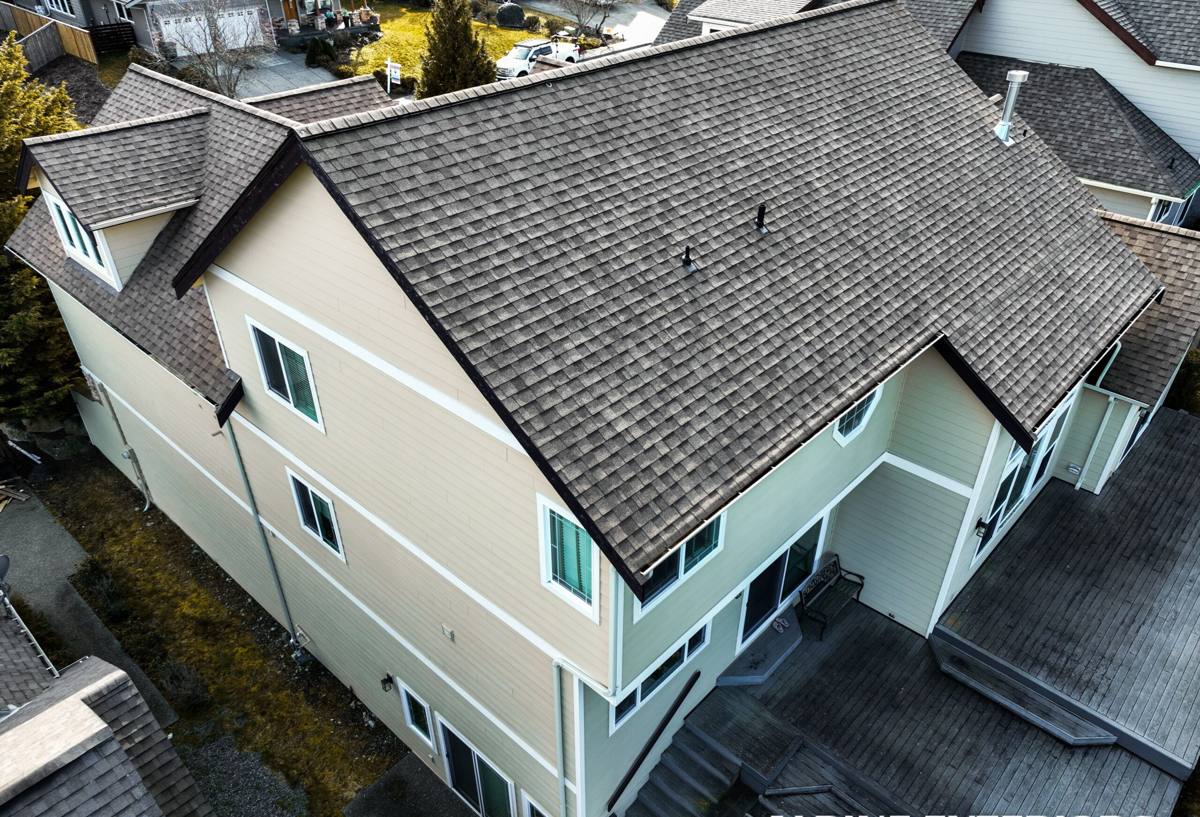
What Makes Lynden Decks Age Differently
A few things about this area's climate show up in almost every deck we inspect:
- Extended moisture exposure. Boards and framing rarely get a long enough dry stretch to fully release moisture between rain events, which accelerates rot in end grain and fastener holes.
- Moss and organic buildup. Shaded decks, north-facing decks, and anything under trees collect moss that holds water against the wood surface far longer than open sun exposure would allow.
- Freeze-thaw cycling. Whatcom County gets enough cold snaps each winter that trapped moisture in cracks and joints freezes, expands, and widens the damage — a slow process that's easy to miss until a board or post is compromised.
- Salt-influenced air near the coast. Homes closer to Bellingham Bay and the water see accelerated corrosion on fasteners and hardware; even Lynden properties with older galvanized fasteners can show similar wear over enough years.
None of this means a Lynden deck is doomed — it means the repair has to match the cause, not just patch the symptom.
Signs Your Deck Needs Repair, Not Just a Wash
Homeowners often call us after noticing something small — a soft spot underfoot, a stair that feels less solid than it used to. Those small signs are usually worth acting on before they become structural ones. Watch for:
- Soft, spongy, or spring-back decking boards, especially near the house or in shaded areas
- Visible gaps, splitting, or checking at board ends and around fasteners
- Rust streaks running down from screws, nails, or metal connectors
- A ledger board (where the deck attaches to the house) that looks discolored, swollen, or separated from the siding
- Wobble in railings or posts when you lean on them
- Persistent moss or algae that comes back within weeks of cleaning
- Stairs that feel less rigid than the rest of the structure
Any one of these can be a minor fix. Several at once, or anything involving the ledger board or support posts, usually means it's time for a proper inspection rather than a DIY patch.
What a Correct Deck Repair Actually Involves
It starts underneath, not on the surface
A repair that only replaces the boards you can see is treating the symptom. We check the framing first — joists, beams, posts, and especially the ledger board connection to the house, since that's the single most common point of hidden rot on decks in this climate. Water tracks along the house-to-deck junction and can sit there unnoticed for years if flashing was installed poorly or is missing altogether.
Fastener condition matters as much as wood condition
A board can look fine and still be held on with corroded fasteners that are one hard step away from letting go. Part of a correct repair is checking hardware condition, not just visible wood condition, and replacing fasteners with ones rated for the moisture exposure this area sees — not the minimum-spec hardware sometimes used in original construction.
Matching materials, not just filling gaps
Mixing a new pressure-treated board into an older cedar deck, or patching composite decking with the wrong fastener system, creates a repair that looks fine for a season and then fails at the seam. We match materials and fastening methods to what's already there, or explain honestly when a full section replacement makes more sense than trying to blend old and new.
Repair or Replace: How We Help You Decide
Not every deck problem calls for a full rebuild, and not every deck is worth patching indefinitely. The honest answer depends on how much of the structure is affected and how old the deck already is.
| Factor | Leans toward Repair | Leans toward Replacement |
|---|---|---|
| Framing condition | Joists and beams are sound, damage is isolated | Multiple joists or the ledger board show rot |
| Age of the deck | Under 10-12 years, built to current codes | Older deck, unknown or outdated construction methods |
| Extent of damage | A few boards, one section, or railing only | Damage spread across most of the surface or structure |
| Fastener/hardware condition | Hardware is intact aside from isolated spots | Widespread corrosion across connectors and fasteners |
| Design changes wanted | You're happy with the current layout and size | You want a different footprint, added stairs, or more space |
We'll give you a straight answer on which side of that line your deck falls on, including what happens if you repair now versus what you'd be looking at in a few more years.
Materials We Use and Why
For structural framing and posts, pressure-treated lumber rated for ground contact is the standard for a reason — it's the most predictable performer against the moisture cycle this region puts decks through. For visible decking and railings, the choice is more about trade-offs than a single right answer:
- Cedar holds up well against moisture and has a natural look many homeowners want, but it needs periodic sealing or staining to keep that resistance intact over time.
- Pressure-treated decking is durable and cost-effective, though it moves and checks as it dries and needs a maintenance schedule to look its best.
- Composite decking cuts down on staining and sealing, but it's not maintenance-free — it still needs cleaning to prevent moss and mildew buildup, and repairs to composite boards require matching the specific product's fastening system, which isn't always interchangeable between brands.
We'll walk through what's already on your deck and what makes sense for the repair — including telling you when sticking with the original material is the more practical call than switching.
Our Repair Process
- On-site inspection. We look at the deck from the ground up — framing, ledger connection, fasteners, and surface — not just the parts that are visibly failing.
- Clear scope and estimate. You get a straightforward explanation of what needs fixing, what's optional, and what it costs, with no pressure toward a bigger job than you need.
- Repair work. We replace what needs replacing, correct any flashing or drainage issues we find at the ledger, and make sure fasteners and hardware match the exposure the deck sees.
- Final check and cleanup. We test the repaired areas for solidity, clean up job debris, and walk you through basic care for what was repaired.
Maintenance That Actually Extends the Life of a Repair
A good repair can be undone by the same conditions that caused the original damage if it's not maintained. A short, realistic checklist for Lynden and greater Whatcom County conditions:
- Sweep debris and standing leaves off the deck surface regularly, especially in fall
- Clean moss and algae as soon as it appears rather than letting it establish
- Check that gaps between boards stay clear so water can drain instead of pooling
- Inspect the ledger board area and any flashing once a year for discoloration or gaps
- Re-seal or re-stain wood decking on the schedule the product calls for, not just when it looks faded
- Tighten or replace any hardware showing early rust before it spreads
Why a Local Bellingham Crew Matters for a Lynden Repair
Deck repair advice that's written for a national audience tends to underestimate how much moisture exposure this region actually gets, and how much that changes what "properly repaired" means. A crew that works Lynden, Bellingham, and the rest of Whatcom County regularly has already seen how ledger boards fail here, how fast moss returns on a shaded deck, and which fastener choices actually hold up through a full winter — not just how they're supposed to perform on paper. That local pattern recognition is the difference between a repair that lasts and one that reopens the same problem in two years.
If you're seeing soft boards, a wobbly rail, or signs of moisture damage on your Lynden deck, we're happy to take a look and give you a straightforward, no-pressure estimate on what it would take to fix it right. Use the form below to get started.