 Bellingham Window
 Why Birch Bay Decks Fail Faster Than Decks Inland
Birch Bay sits right on the water along Whatcom County's coastline, and that location is exactly why decks out here age differently than decks ten or fifteen miles inland. Salt-laden air corrodes fasteners, hinges, and any exposed metal hardware well before it would fail on a deck in a drier, more sheltered part of Bellingham. Add in driving rain that comes sideways off the water during winter storms, and you get moisture forced into joints and end grain that a south-facing inland deck rarely sees. Then there's moss season, which in this part of Washington isn't a few weeks — it's a good chunk of the year. Moss and algae hold moisture against wood and composite surfaces alike, and on a shaded or north-facing deck near Birch Bay, that green film can show up within a season of a fresh build if the deck wasn't detailed correctly.
None of this means a deck can't last in Birch Bay. It means the deck has to be built for these conditions from the ledger board down to the fastener heads, not just built to a generic code minimum and hoped for the best.
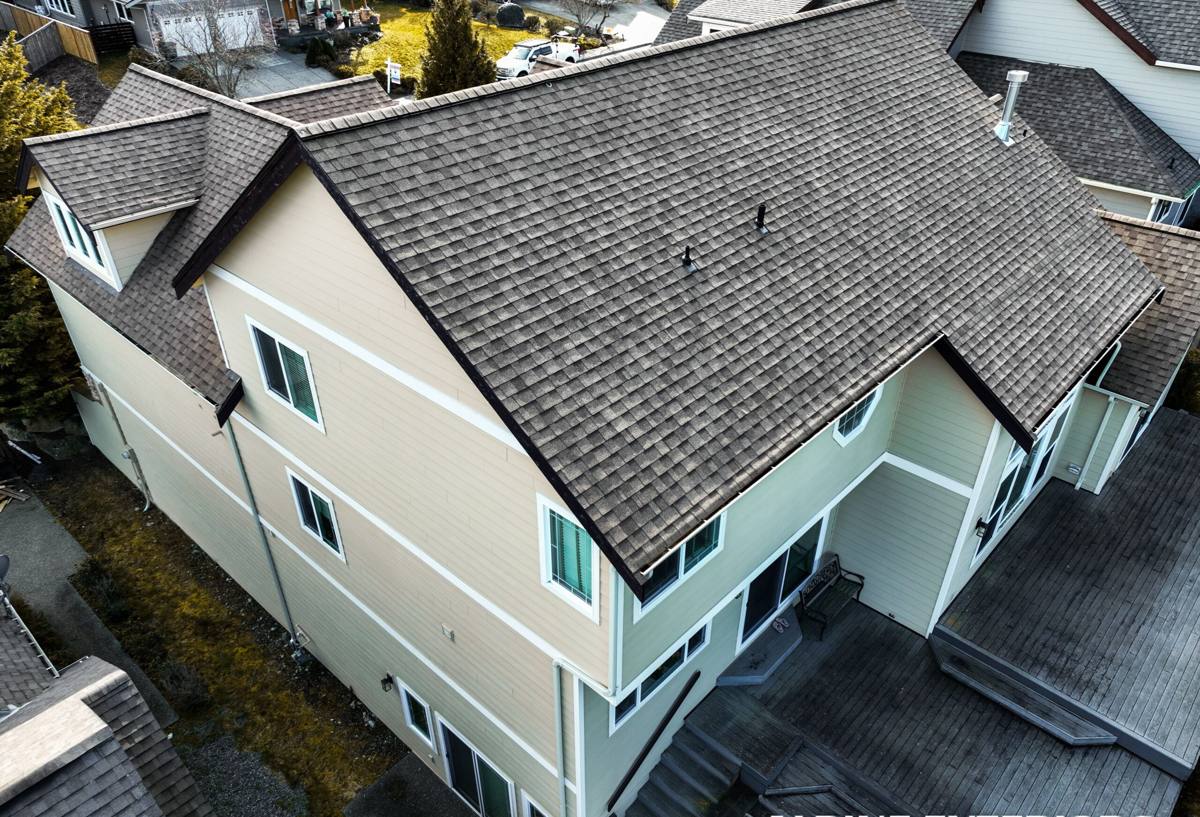
Signs a Deck Needs Replacement, Not Repair
Homeowners often ask us to look at a board or two and end up with a bigger conversation. Repair makes sense when the problem is isolated — a cracked board, a loose baluster, a single soft spot. Replacement becomes the honest recommendation when the issues point to the structure itself.
- Soft or spongy decking across multiple boards, not just one or two
- Rot or discoloration at the ledger board where the deck meets the house
- Rust streaks or crumbling around joist hangers and fasteners
- Visible gaps, sag, or bounce in the frame when you walk across it
- Posts that have shifted, or footings that look undersized or heaved
- Persistent moss or algae that returns within weeks of cleaning
- A railing that flexes noticeably when leaned on
If more than one of these shows up, the cost of chasing repairs usually starts to approach the cost of doing it right once. We'll always tell you honestly which category your deck falls into — there's no benefit to us talking a homeowner into a full replacement they don't need.
Decking Material Choices for a Marine Climate
Material choice matters more in Birch Bay than it does in a lot of other parts of Whatcom County, simply because the air and moisture exposure is harsher. Here's how the common options actually perform in this specific setting.
| Material | Salt Air / Moisture Behavior | Moss & Algae Resistance | Maintenance |
|---|---|---|---|
| Pressure-treated wood | Performs well if properly sealed and re-coated; end grain and cut edges need extra attention | Needs regular cleaning and periodic treatment to stay ahead of growth | Annual to biennial cleaning and re-sealing |
| Cedar | Naturally moisture-resistant, but still benefits from sealing near the water | Moderate — surface graying and moss are common without upkeep | Periodic cleaning, occasional oil or sealer |
| Composite decking | Very stable in wet, salty conditions; won't rot or absorb moisture into the core | Can still grow surface moss/algae in shaded, damp spots — needs washing | Low — occasional washing, no sealing |
| PVC decking | Excellent moisture and salt resistance; fully synthetic core | Similar to composite — surface cleaning needed in shaded areas | Low — washing only |
We don't push one material on every homeowner. Some people want the look and feel of real wood and are willing to keep up with sealing; others want a deck they can mostly ignore aside from a hose-down twice a year. Both are reasonable choices — the deciding factor is usually how much upkeep you actually want to do, not which product is "better" in the abstract.
Why We're Cautious About Certain Wood Species Near the Water
Some lower-grade or unrated lumber can look fine going in but struggles once it's exposed to sustained salt spray and near-constant dampness. Our standard for Birch Bay jobs is to use lumber and hardware rated for the exposure the deck will actually see, not the minimum the code technically allows. It costs a bit more up front and saves the homeowner from an early second replacement.
What a Correct Deck Replacement Actually Involves
A deck replacement is more than pulling up old boards and screwing down new ones. Done correctly, especially in a wet, salt-exposed spot like Birch Bay, it includes:
Structure and Framing
We inspect and typically replace the ledger board connection, joists, and beams rather than reusing old framing under new decking. Reusing a frame that's already been absorbing coastal moisture for a decade just relocates the problem under a fresh surface.
Flashing and Water Management
The ledger-to-house connection is the single most common failure point on any deck, anywhere, and it matters even more here. Proper flashing directs water away from the house framing instead of trapping it against the rim joist — this is where hidden rot most often starts.
Footings and Posts
Footings need to be sized and set to local frost depth and soil conditions, with post bases that keep the wood off standing water. In a low-lying or shaded yard, drainage around footings matters as much as the footing size itself.
Fasteners and Hardware
We use corrosion-resistant, coastal-rated fasteners and connectors throughout — not just at the visible surface. Standard interior-grade hardware corrodes noticeably faster in Birch Bay's air than it would even a few miles inland, and a single failed hanger can compromise a whole section of joist.
Airflow Underneath
Good under-deck ventilation helps the structure dry out between rain events instead of staying damp, which directly slows both rot and moss growth on the underside.
Our Process From Estimate to Finished Deck
- On-site assessment — we look at the existing deck (if there is one), the ledger connection, drainage patterns in the yard, and sun/shade exposure that affects moss and moisture.
- Honest scope and estimate — a clear breakdown of what's being replaced and why, with material options explained in plain terms.
- Permitting — we handle the permit process for the jurisdiction the property falls under, since deck replacements of most sizes require one.
- Demolition and structural rebuild — old decking, framing, and compromised hardware come out; new structure, flashing, and footings go in to current standards.
- Decking, railing, and finish work — surface material and railing installed per the plan, with attention to fastener placement and drainage gaps between boards.
- Final walkthrough — we go over the finished deck with the homeowner, including basic maintenance guidance specific to the material chosen.
Railings and Hardware Built for the Conditions
Railings take a lot of abuse in a coastal spot — hands on them, weather on them, and in Birch Bay, salt air on every fastener and bracket. We spec railing hardware the same way we spec deck fasteners: corrosion-resistant, rated for exterior coastal exposure, and installed with backing that won't loosen over a few wet winters. A railing that wobbles after a year or two almost always traces back to undersized or mismatched hardware, not the railing material itself.
Permits and Local Considerations
Deck replacements in and around Bellingham and Whatcom County generally require a permit once you're past a certain size or height off grade, and inspections are part of that process. Because Birch Bay sits close to shoreline areas, some properties may also fall under additional review depending on proximity to the water. We handle this as part of the job rather than leaving homeowners to sort out permitting on their own — it's one less thing to manage, and it makes sure the finished deck is actually documented and up to code if the home is ever sold or insured.
Maintenance Checklist for a Birch Bay Deck
Whatever material you choose, a little seasonal attention goes a long way toward outrunning the moss and salt air. A practical routine looks like this:
- Sweep debris and standing organic matter off the deck regularly, especially in fall
- Wash the surface (and underside, if accessible) at least once or twice a year to knock back moss and algae before it establishes
- Check fastener heads and railing brackets annually for early corrosion
- Keep gutters and downspouts near the deck clear so runoff isn't dumping extra water onto or under it
- Re-seal or re-oil wood decking on the schedule the product calls for — don't wait until it looks gray and dry
- Trim back overhanging vegetation that keeps sections of the deck shaded and damp
A composite or PVC deck cuts a lot of this down to washing alone, which is part of why many Birch Bay homeowners lean that direction — but even low-maintenance materials still need the occasional cleaning to stay ahead of the moss.
Why Local Experience in Birch Bay Matters
A crew that mostly works drier, more sheltered neighborhoods can build a deck that looks great on install day and still run into trouble on the coast within a couple of years — undersized flashing, standard-grade hardware, or a footing plan that doesn't account for how wet the ground stays here. Working regularly in Birch Bay means we already know which details can't be skipped: the ledger flashing, the fastener grade, the drainage under the frame, and the material trade-offs that actually make sense this close to the water. That's not a marketing point — it's the difference between a deck that needs attention again in three years and one that holds up through a full decade of Whatcom County winters.
If you're weighing repair versus replacement, or just want an honest look at what your current deck needs, we're happy to come out, take a look, and walk you through the options with no pressure. Fill out the form below to request a free estimate.