 Bellingham Window
 Why Edgemoor Decks Wear Out Faster Than You'd Expect
Edgemoor sits close enough to Bellingham Bay that salt-laden air reaches almost every deck in the neighborhood, and the tree cover that makes the area so pleasant to live in also keeps a lot of decking shaded and damp for much of the year. That combination — airborne salt plus persistent moisture plus filtered sunlight that never fully dries the wood — is harder on a deck than almost any other condition in Whatcom County. Fasteners corrode faster. Wood fiber stays wet longer between rains. Moss and algae get a foothold on boards that never see direct sun in the winter months.
None of this means Edgemoor is a bad place for a deck. It means a deck built here needs to be built with those specific stressors in mind, not with a generic approach that works fine in a drier, sunnier part of the state. A deck that was built to code and looked great when it went in ten or fifteen years ago can still be failing underneath in ways that aren't obvious from the surface.
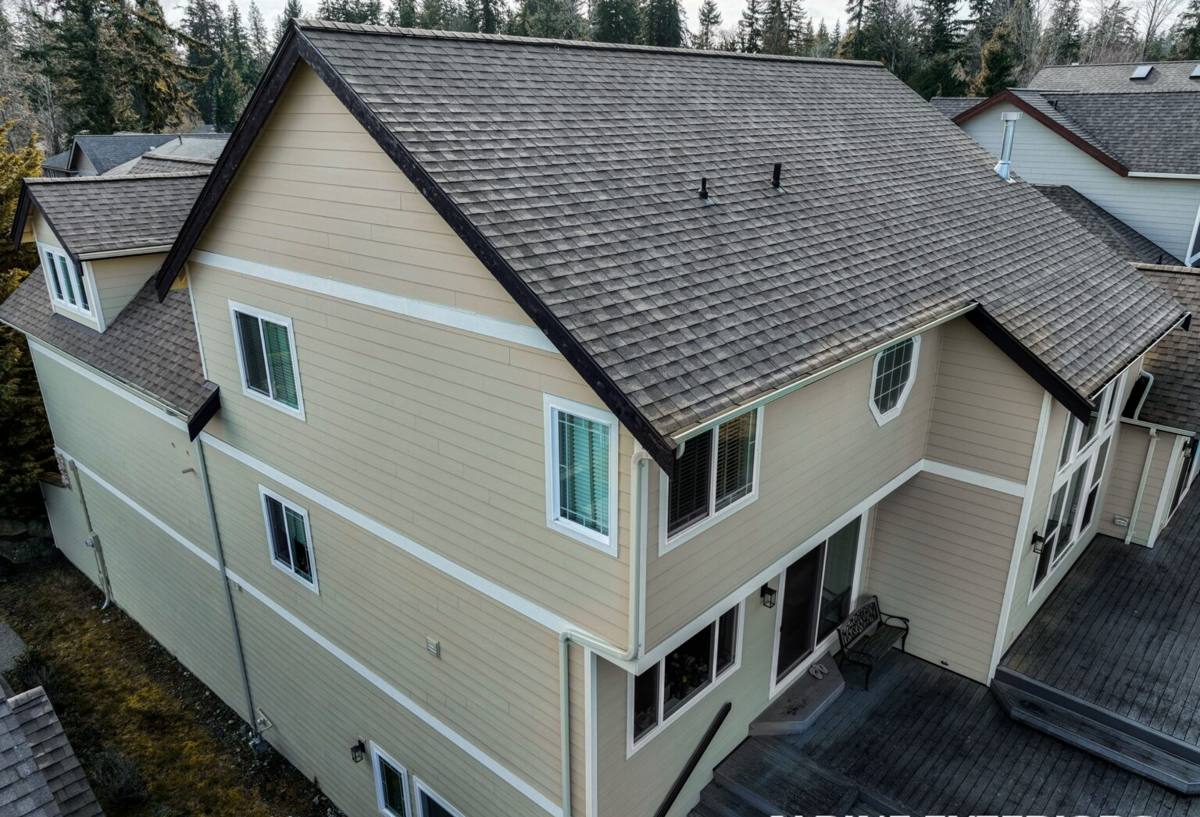
Signs Your Deck Is Due for Replacement
Some deck problems are cosmetic and can be patched. Others mean the structure itself is no longer trustworthy. It's worth knowing the difference before you spend money on the wrong fix.
- Soft or spongy spots in the decking, especially near the house or around post bases
- Rust streaks running down from screw heads or bolts
- A ledger board (where the deck attaches to the house) that looks dark, swollen, or separated from the siding
- Persistent green or black staining that comes back within weeks of cleaning
- Railings that flex or wiggle more than they used to
- Gaps between boards that have widened noticeably, or boards that have cupped or crowned
- Visible daylight or gaps where joist hangers meet the framing
- A general sense that the deck "feels different" underfoot than it did a few years ago
Any one of these on its own might just call for a repair. Several together, especially structural ones like a compromised ledger or spongy framing, usually mean replacement is the more honest answer than another round of patching.
What a Correct Deck Replacement Involves
A deck replacement is not just pulling up old boards and screwing down new ones. The parts nobody sees once the project is done are the parts that determine whether it lasts five years or twenty-five.
Structural Work Nobody Sees
The ledger board attachment is usually the single most important connection on the whole deck, and it's also the one most exposed to water intrusion because it sits directly against the house. A correct replacement means removing the old ledger, inspecting the rim joist and sheathing behind it for rot, and reinstalling with proper flashing that sheds water away from the house rather than trapping it against the wall. Footings get checked for frost depth and settling, posts get checked for plumb, and joists get sized and spaced to current code rather than just matched to whatever was there before.
Railings and Code Compliance for View Lots
A lot of Edgemoor decks are built for a view, which means railings matter more here than in a lot of neighborhoods. Whatever railing style you choose — traditional baluster, cable, or glass panel — it has to meet current guardrail height and baluster-spacing requirements. On elevated decks especially, this isn't optional and it isn't a place to cut corners; it's the one part of the deck that exists purely for safety.
Choosing the Right Decking Material for Edgemoor's Climate
There's no single "best" decking material — there's a best material for your specific deck, your budget, and how much upkeep you're willing to do. Given the salt air, shade, and moss pressure common in Edgemoor, here's how the main options actually compare.
| Material | Upfront Cost | Maintenance | Moss/Algae Resistance | Typical Lifespan |
|---|---|---|---|---|
| Pressure-treated fir/pine | Lowest | Annual cleaning and periodic sealing | Low unless kept sealed and sunlit | 10–15 years |
| Cedar | Moderate | Regular sealing to maintain color and resist moisture | Moderate — naturally rot-resistant but still needs care in shade | 15–20 years |
| Composite decking | Higher | Occasional washing, no sealing or staining | Good, though shaded areas still need periodic cleaning | 25–30 years |
| PVC/capped polymer | Highest | Minimal — soap and water | Very good | 25–30+ years |
For a sunny, exposed lot, a well-maintained wood deck can perform fine. For the shadier, tree-covered lots that are common in Edgemoor, composite or capped polymer decking generally makes more sense — not because wood is a bad product, but because wood's performance depends heavily on sun exposure and upkeep, and a deck sitting under fir and cedar canopy simply doesn't dry out the way a wood deck needs to in order to age well. That's a maintenance and moisture-behavior trade-off, not a knock on wood as a material.
Fasteners, Flashing, and Hardware — The Details That Determine Lifespan
This is the part of a deck replacement that's easiest to shortcut and most expensive to get wrong later. Salt air accelerates corrosion in standard galvanized hardware, which means fasteners, joist hangers, and structural screws all need to be rated for coastal or high-corrosion environments — typically stainless steel or a heavy-duty coated fastener designed for treated lumber and marine-adjacent conditions. Flashing at the ledger and at any post-to-beam connections needs to actually shed water rather than just look correct, since a flashing detail that traps moisture will rot framing from the inside while the surface still looks fine.
This is also where a lot of the difference between a deck that lasts 10 years and one that lasts 25 comes down to details a homeowner will never inspect after the fact — which is exactly why it matters who's making those choices during construction.
Permits and Local Requirements
Most deck replacements in and around Bellingham require a permit, particularly when the deck is attached to the house, elevated above a certain height, or being rebuilt with a different footprint than the original. Requirements can vary depending on whether the property falls under City of Bellingham or Whatcom County jurisdiction, and on the specifics of the lot — slope, setbacks, and proximity to the shoreline can all factor in for properties near the bay. Pulling the right permit protects you: it means the work gets inspected, and it means there's a clean paper trail if you ever sell the house.
Our Deck Replacement Process
- On-site inspection of the existing deck, including probing the ledger, framing, and posts for hidden rot
- Straightforward写 written estimate covering material options and what the structural work will involve
- Permit application where required, handled before any demolition begins
- Full tear-out of old decking, railings, and any compromised framing
- Structural repairs and upgrades — ledger flashing, footings, joists, and hardware rated for this climate
- Installation of new decking and railings to current code
- Final walkthrough and inspection sign-off
We don't skip the tear-out to save time by building over questionable framing, and we don't reuse hardware that's already showing corrosion. If we find rot in the ledger or framing once we open things up, we'll show you what we found and talk through the options before moving forward — no surprises added to the invoice after the fact.
Why a Crew That Already Works in Edgemoor Matters
Edgemoor's mix of sloped, wooded, view-oriented lots isn't the same as building a deck on a flat, open lot elsewhere in Whatcom County. Post heights vary a lot from one end of a deck to the other on sloped sites, footings sometimes need to go deeper to reach stable soil, and tree cover changes how a deck dries out and how often it needs cleaning. A crew that's worked in the neighborhood before has already dealt with these variables and isn't learning on your project. That familiarity also extends to knowing which fastener grades and flashing details actually hold up here long-term, rather than which ones simply meet minimum code on paper.
If your deck is showing its age, or you're just not sure whether what you're seeing is a simple fix or something more structural, we're happy to take a look and give you a straight answer. Reach out for a free, no-pressure estimate using the form below — we'll walk the deck with you, point out what we find, and lay out honest options before any work begins.