 Bellingham Window
 Why Columbia Homes Need More Than a Standard Window Upgrade
Columbia sits close enough to Bellingham Bay that salt-laden air, wind-driven rain, and the region's long stretch of damp, low-light months all show up in how a window ages here. A window that's rated efficient on paper can still underperform if the installation doesn't account for what this specific stretch of Whatcom County throws at a house. We've worked enough replacement jobs in this neighborhood to know the difference between a window that looks good going in and one that's still sealing tight, draining correctly, and holding its efficiency numbers five winters later.
Energy efficiency in a coastal Pacific Northwest home isn't just about the glass. It's the frame material's tolerance for moisture and salt exposure, the flashing detail behind the trim, and whether the installer actually air-sealed the rough opening instead of just caulking the exterior and calling it done. Get any one of those wrong and you end up with a window that's technically "energy-efficient" by its label but leaks air, fogs between the panes within a few years, or invites rot into the framing around it.
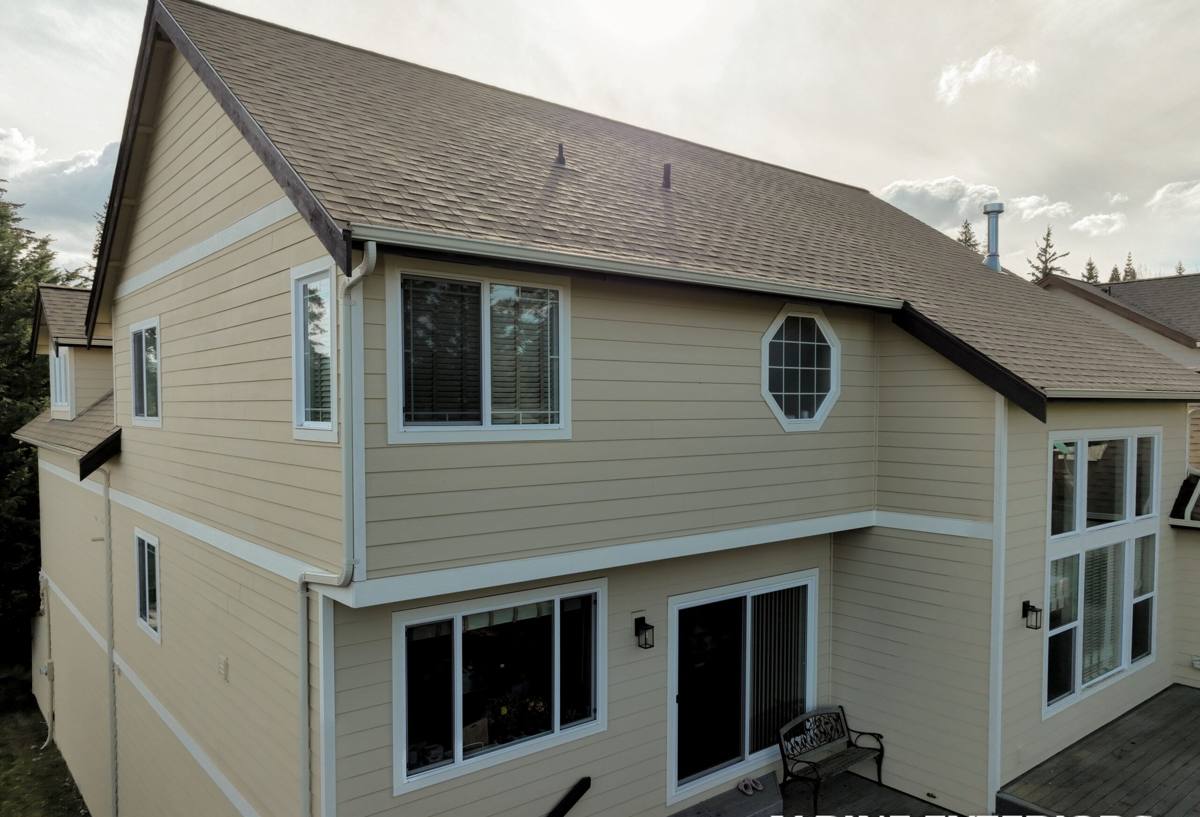
What "Energy-Efficient" Actually Means in This Climate
Manufacturers rate windows using NFRC labels — U-factor (how well the window resists heat loss) and Solar Heat Gain Coefficient (how much solar heat passes through). In Whatcom County's marine climate, we're mostly managing heat loss and moisture, not solar gain, since we don't get the intense summer sun that drives cooling costs in drier climates. That changes what actually matters for a Columbia home compared to, say, a house in eastern Washington.
What We Prioritize Locally
- Low U-factor (0.27 or lower) to hold heat in through our long, wet winters
- Durable weatherstripping that won't compress or crack from constant damp-dry cycling
- Frame materials that resist moisture wicking and won't corrode or pit from salt air
- Double or triple glazing with an argon or krypton gas fill and a Low-E coating tuned for heat retention, not solar blocking
- A drainage path built into the frame so wind-driven rain has somewhere to go besides your wall cavity
A window that's efficient on a spec sheet but fights condensation or lets moisture track into the wall isn't actually saving you money — it's just moving the cost from your heating bill to a repair bill down the road.
What a Correct Installation Actually Involves
Most window failures we get called out to fix aren't the window's fault — they're installation shortcuts. In a climate this wet, the flashing and air-sealing details matter as much as the product itself.
The Non-Negotiables on Every Job
Before a new window goes in, the rough opening gets prepped properly: old caulk and failed sealant removed, sill pan flashing installed so any water that gets past the window has a way out, and self-adhered flashing tape lapped correctly at the sides and head so water sheds down and out, not into the wall. The window itself gets shimmed level and plumb, fastened per the manufacturer's schedule, and the gap between frame and rough opening filled with a low-expansion foam or backer rod and sealant — not just stuffed with fiberglass insulation, which does nothing for air sealing.
Exterior trim and caulking come last, and only after we've confirmed the window operates correctly and the flashing is doing its job. Skipping steps here is exactly how a five-year-old "energy-efficient" window ends up with soft trim, fogged glass, or a musty smell in the wall below it.
Frame Material Comparison for a Coastal Bellingham Property
| Frame Material | Moisture & Salt Air Tolerance | Maintenance | Typical Fit for Columbia Homes |
|---|---|---|---|
| Vinyl | Good — won't corrode or rot, handles damp cycling well | Low — occasional cleaning | Strong all-around choice, best value |
| Fiberglass | Excellent — very stable in temperature and moisture swings | Low | Good for exposed elevations facing weather |
| Wood | Poor without diligent upkeep — vulnerable to rot and moss growth in shaded, damp spots | High — regular painting/sealing required | Only recommended with a clad exterior and a real maintenance plan |
| Aluminum | Fair — can pit or corrode near salt air over time; poor thermal performance unless thermally broken | Moderate | Generally not our first recommendation for efficiency-focused replacements |
We don't rule out wood-frame or clad-wood windows outright — some homeowners want the look and are committed to the upkeep — but we're upfront that in a shaded, damp Columbia lot with a long moss season, wood asks for more attention than vinyl or fiberglass will.
Moss, Salt, and Condensation: The Three Things We See Most
Moss Buildup Around Frames and Sills
Shaded north- and west-facing walls in this neighborhood hold moisture longer, and moss doesn't just grow on roofs — it takes hold in sill grooves and trim joints where water sits. Left alone, it traps moisture against the frame and accelerates wear, especially on wood trim. Good sill pan flashing and a slight outward slope on the sill are simple details that keep water moving instead of pooling.
Salt Air and Hardware Corrosion
Locks, hinges, and cranks on lower-quality hardware can start showing corrosion within a few years this close to the bay. We spec hardware finishes rated for coastal exposure rather than the base-grade hardware that comes standard on some builder-grade window lines.
Interior Condensation
If a home's old single-pane or early double-pane windows are sweating on cold mornings, that's usually a sign the glass isn't holding an insulating air gap anymore — or the home has more humidity than the windows can handle. New energy-efficient units with a proper gas fill and Low-E coating cut this dramatically, but ventilation (bath fans, kitchen exhaust) still matters in a house that stays closed up through our wet season.
Our Process on a Columbia Job
- On-site assessment — we check existing frame condition, look for hidden rot or moisture damage around each opening, and measure for accurate ordering.
- Product selection — we walk through frame material, glazing package, and grille or hardware options based on the home's exposure and your budget, not a one-size pushed package.
- Prep and removal — old windows come out carefully, and we inspect the opening before anything new goes in. If we find rot or damaged sheathing, we flag it before proceeding, not after.
- Flashing and installation — sill pan, flashing tape, shimming, fastening, and air-sealing done to manufacturer spec.
- Interior and exterior finish — trim, caulking, and touch-up so the job looks finished, not patched.
- Final walkthrough — every window operates, locks, and seals the way it should before we call it done.
Cost Factors for Columbia Homeowners
| Factor | Why It Moves the Price |
|---|---|
| Frame material | Fiberglass typically costs more than vinyl; wood-clad more still |
| Glazing package | Triple-pane and upgraded Low-E coatings add cost but improve winter performance |
| Number and size of openings | Larger or custom-sized windows cost more than standard sizes |
| Existing damage | Rot repair or resheathing found during removal adds labor and material |
| Access and elevation | Second-story or hard-to-reach windows take more time and equipment |
We give a firm, itemized quote after seeing the actual openings — not a phone estimate — because the condition behind the old trim is often the biggest variable in what a job actually costs.
What to Check Before You Hire Anyone for This Work
- Confirm they're licensed and bonded to work in Washington State
- Ask specifically how they flash and seal the rough opening, not just what window brand they sell
- Ask whether they've worked in your specific neighborhood and understand its exposure — a house buffered by trees performs differently than one facing open wind off the bay
- Get the U-factor and SHGC numbers in writing for the exact product being quoted, not a generic brochure figure
- Ask what happens if they find rot or moisture damage once the old window is out
- Clarify warranty coverage on both the product and the labor separately
Why a Crew That Already Works Columbia Matters
A window installer who's done work throughout Bellingham and Whatcom County knows which elevations in this neighborhood take the worst of the driving rain, which lots hold shade and moisture longest, and what that means for flashing and frame choice before they even start the estimate. That's not something you can fully substitute with a generic install checklist — it's pattern recognition built from doing the work here, house after house, through actual wet winters.
If you're weighing a window upgrade for a Columbia home, we're happy to walk the property, look at what your current windows are actually doing wrong, and put together a straightforward, no-pressure estimate — no inflated urgency, just an honest read on what your home needs. The form below is the fastest way to get that started.