 Bellingham Window
 Deck Repair Built for Ferndale's Climate
Ferndale sits close enough to the water and open farmland that decks here take a beating most inland homeowners never deal with. Salt-laden air off the Strait of Georgia and Bellingham Bay works its way into fasteners and metal connectors year-round. Driving rain off Pacific storms drives moisture sideways under railings and ledger flashing where it doesn't belong. And the long gray stretch from October through April gives moss, algae, and fungal growth months to work into wood grain before anyone gets a dry weekend to deal with it. A deck that would coast along for a decade in a drier climate can develop real structural problems here in half that time if it's not built and maintained with this weather in mind.
We repair decks all over Whatcom County, but Ferndale properties in particular tend to show a specific pattern of wear: soft spots near ground contact, rusted-through fasteners at stair stringers, and ledger boards that have trapped water against the house for years without anyone noticing. Knowing that pattern before we even pull the first board is what makes an inspection here faster and more accurate than a generic once-over.
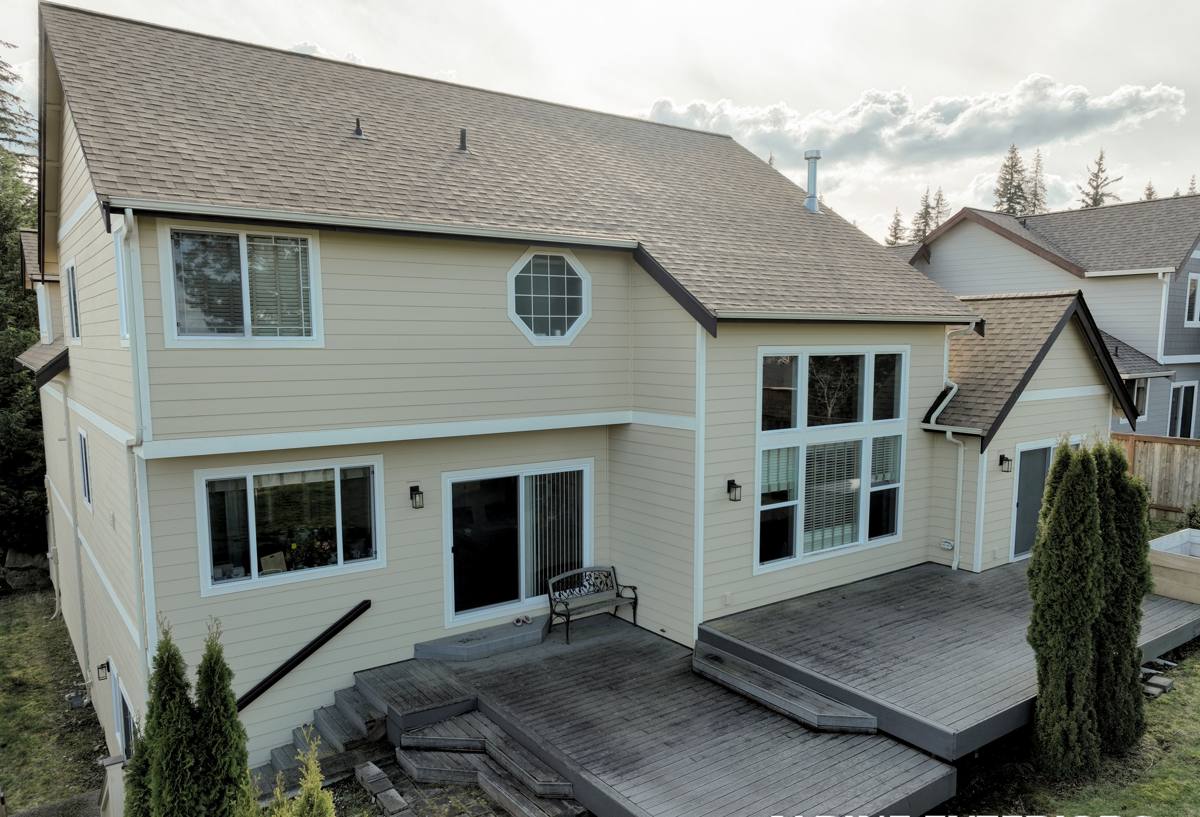
What Ferndale Decks Actually Need
Every deck repair job starts with the same question: is this cosmetic wear, or is it a sign of something happening underneath that you can't see yet? In this climate, the two get confused constantly. A deck can look fine on the surface — even freshly stained — while the framing underneath is holding water against untreated cuts or corroding hardware. We've also seen the opposite: boards that look rough and gray but are structurally solid once cleaned up, where a full rebuild would have been overkill.
The usual suspects
- Ledger board attachment — where the deck meets the house is the single most common failure point in this region because it's the hardest spot for water to drain away from
- Post bases and footings — ground contact plus standing moisture accelerates rot at the base of support posts faster than anywhere else on the structure
- Fastener corrosion — galvanized nails and screws that weren't rated for coastal exposure will rust, bleed, and eventually shear
- Stair stringers — narrow, load-bearing, and constantly wet from splashback and runoff off the treads above them
- Railing connections — loosen gradually as wood shrinks and swells through repeated wet-dry cycles, often long before anyone notices the wobble
- Surface moss and algae buildup — not just cosmetic; trapped moisture underneath accelerates decay in the boards themselves
Repair vs. Rebuild: How We Make the Call
Nobody wants to pay for a full deck replacement when a targeted repair would do the job, and nobody wants a patch job that fails again in two winters. The honest answer depends on what's actually happening structurally, not just how the deck looks from the yard.
| Condition Found | Typical Fix | Why |
|---|---|---|
| Surface graying, moss, mild cupping on a few boards | Clean, spot-replace boards, reseal | Wood is sound; problem is surface exposure, not structural |
| Soft or spongy decking boards | Replace affected boards and inspect joists underneath | Rot has usually started below the surface where it's not visible from the top |
| Rusted or failing fasteners with sound wood | Re-fasten with corrosion-rated hardware | Hardware failure alone doesn't mean the wood needs replacing |
| Rot at ledger board or rim joist | Cut out and rebuild ledger connection, correct flashing | This is a structural connection to the house — patching over it is not safe |
| Widespread rot at multiple posts/footings | Full or partial rebuild of substructure | Once the support system is compromised in several places, piecemeal repair doesn't restore real load capacity |
| Deck older than 20 years, original hardware | Rebuild recommended even if it looks okay | Older fastening methods and untreated lumber common in older builds rarely meet current safety margins |
We'll always tell you plainly which category your deck falls into and why — including when a full rebuild genuinely isn't necessary yet, even if that means a smaller job for us.
How a Proper Repair Job Works
1. Inspection from the ground up
We check the ledger connection and flashing first, since that's the highest-consequence failure point, then work through posts, footings, joists, stair stringers, and railings before ever looking at the decking surface itself. A screwdriver test on suspect wood tells us more than a visual scan ever will.
2. Isolate the cause, not just the symptom
Rot and fastener failure almost always have a moisture source behind them — poor drainage, missing flashing, a gap that lets water sit instead of shed. Replacing a board without fixing why it failed just buys you a repeat visit in a few years.
3. Match materials to the job, not the cheapest option
Depending on what we're replacing, that might mean pressure-treated framing lumber rated for ground contact, stainless or hot-dip galvanized fasteners sized for coastal exposure, or composite decking where board-level moisture exposure has been a repeat problem. We'll walk you through the trade-offs rather than defaulting to whatever's fastest to install.
4. Rebuild connections correctly, not just cosmetically
A ledger board reattached without proper flashing will fail again — it's just a matter of when. We correct the underlying detail so the repair actually holds through another wet season, not just through the next inspection.
5. Finish and protect
Once structural and fastener work is done, we address the surface — cleaning, sealing, or staining as needed — so the repaired sections hold up alongside the rest of the deck instead of standing out or weathering at a different rate.
Why Moss and Salt Air Change the Maintenance Math
Homeowners who've lived somewhere drier are often surprised how much upkeep a Whatcom County deck needs compared to what they're used to. It's not that the materials are worse — it's that the conditions are tougher. Moss holds moisture directly against wood fibers for months at a time. Salt air accelerates corrosion on any metal component that isn't rated for it. And the sheer number of wet days each year means a deck here gets far less time to dry out between rain events than one somewhere with a real dry season.
None of that means decks in Ferndale are a lost cause — it means the build details and fastener choices matter more here than they would somewhere drier, and skipping steps that seem minor elsewhere (proper flashing, corrosion-rated hardware, adequate gaps for drainage) causes real problems faster in this climate.
A simple seasonal checklist that catches most problems early
- Clear leaves and debris from between boards before fall rains settle in
- Scrub visible moss and algae off decking and stairs at least once a year
- Check railings and stair connections for looseness after the wettest months
- Look underneath the deck once a year for standing water, soft framing, or rust streaks near fasteners
- Reseal or restain on the schedule your specific finish calls for — don't wait for visible failure
- Flag any soft spots in decking immediately rather than waiting for a full plank to fail
Why Hire a Crew That Already Works in Ferndale
Deck repair looks straightforward from the outside, but the failure patterns in this part of Whatcom County are specific enough that local experience actually changes the outcome. We already know which connections tend to fail first in homes exposed to weather off the Strait, what fastener grades hold up here versus what looks fine for a season and then doesn't, and how much drainage detail actually matters given how many wet days this area sees in a typical year. That means fewer surprises mid-job and repairs that are built for the conditions your deck actually faces, not generic conditions from a manual written somewhere drier.
It also means we're not guessing at code requirements or inspection expectations for the area — we handle deck work here regularly enough that the structural side of the job, not just the cosmetic side, gets done right the first time.
What to Expect When You Call Us
We start with a real inspection, not a quick guess from the driveway. That means getting underneath the deck, checking the ledger connection, testing suspect boards, and looking at footings and posts where accessible. From there we'll give you a straight answer on what's actually needed — repair, partial rebuild, or full rebuild — along with the reasoning behind that recommendation. We'd rather explain why a smaller repair is genuinely sufficient than upsell a rebuild nobody needs yet, and we'll be equally direct if we find something that shouldn't wait.
If you're noticing soft spots, a wobbly railing, moss that won't come off, or you just haven't had anyone look underneath your deck in a few years, it's worth getting ahead of it before another wet Whatcom County winter adds to the damage. We offer free, no-pressure estimates — fill out the form below and we'll take a look.