 Bellingham Window
 Why Ferndale Roofs Wear Differently Than Roofs Inland
Ferndale sits close enough to Bellingham Bay and the Salish Sea that salt-laden air is a normal part of the weather, not an occasional event. Add in Whatcom County's long wet season and the moss growth that comes with it, and you've got three things working against a roof at the same time: corrosion from airborne salt, sustained moisture from driving rain, and organic growth that holds water against the surface long after a storm passes. Any one of those is manageable on its own. Together, they shorten the life of roofing materials that weren't specified with this climate in mind.
Metal roofing done right is one of the better answers to that combination, but "metal roofing" isn't one product — it's a category with real differences in panel type, coating, and fastener hardware that matter a lot more here than they would in a dry inland climate. Getting those choices right is most of what separates a metal roof that looks the same in twenty years from one that's showing rust streaks and lifted seams in five.
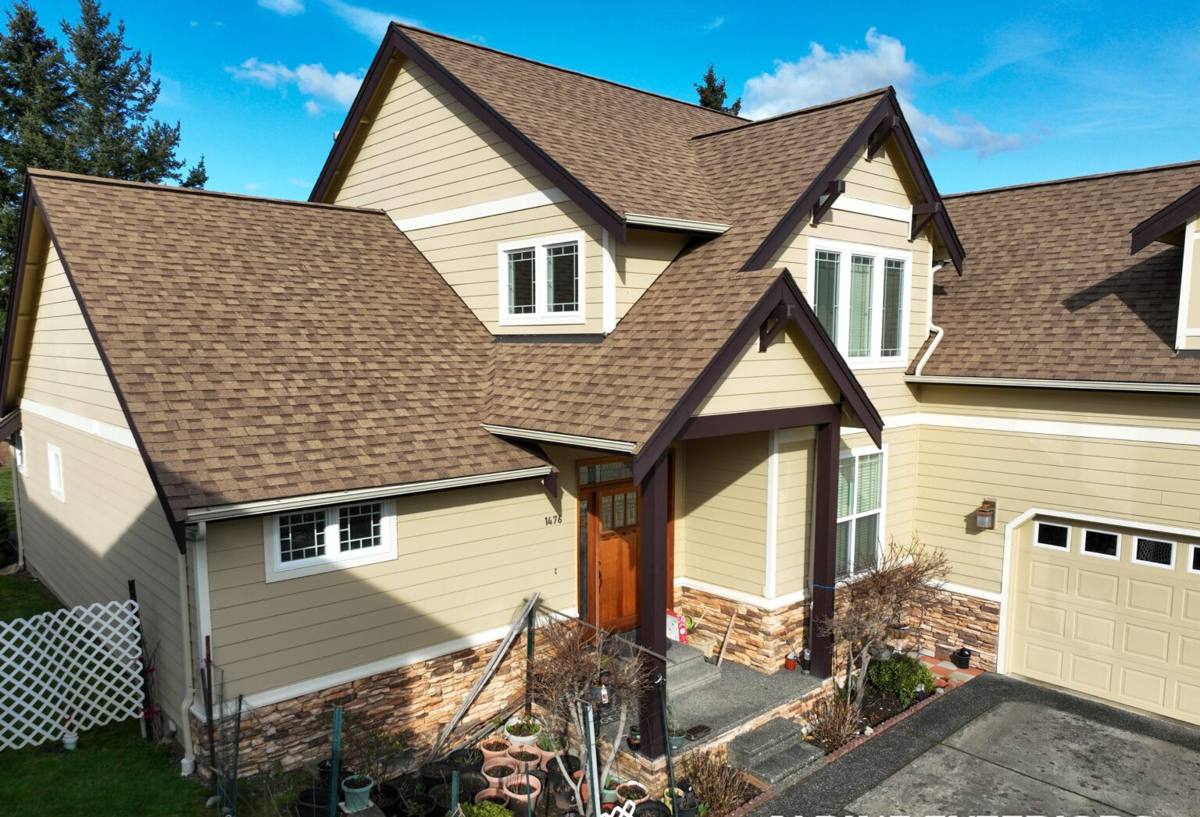
What Ferndale's Climate Actually Demands From a Metal Roof
Before we talk panels and pricing, it's worth being specific about what this climate does to a roof over time:
- Salt air corrosion: Airborne salt from coastal moisture accelerates rust at any exposed metal edge, fastener head, or scratch in a coating — especially on the west- and northwest-facing slopes that catch weather off the water.
- Driving rain: Wind-driven rain doesn't just fall straight down here. It gets pushed sideways under flashing, into fastener penetrations, and up under laps that would stay dry in a calmer climate.
- Extended moss season: Shaded, north-facing, and low-slope sections of roof stay damp for long stretches of the year, which is exactly what moss and algae need to establish. Moss holds moisture against a roof surface and, on the wrong material, traps it long enough to cause real damage.
- Temperature swings: Metal expands and contracts with daily temperature changes. Panels and fastening systems that don't account for that movement eventually work themselves loose or oil-can (that visible wavy distortion in flat panel areas).
None of this means metal roofing is a bad fit for Ferndale — the opposite, actually. It means the material choice, coating, and installation details have to be matched to these conditions on purpose, not assumed to be "good enough" because metal roofing generally has a strong reputation.
Choosing the Right Metal Roofing System
There isn't a single "best" metal roof for every Ferndale home. The right system depends on roof slope, how exposed the home is to coastal wind and salt air, and what look the homeowner wants. Here's how the common options compare for this specific climate:
| System | Best For | Coastal/Moisture Performance | Trade-offs |
|---|---|---|---|
| Standing seam | Most Ferndale homes, especially those closer to the water or with lower-slope sections | Concealed fasteners mean no exposed screw heads to corrode or back out over time; raised seams shed wind-driven rain well | Higher material and labor cost than exposed-fastener panels |
| Exposed-fastener panels | Outbuildings, shops, budget-conscious re-roofs on less exposed sites | Workable performance if fasteners and washers are corrosion-rated and gaskets are checked periodically | Exposed screws are the first thing to fail in salt air; requires more long-term maintenance |
| Stone-coated steel / metal shingles | Homeowners who want a traditional shingle look with metal's durability | Good moisture shedding; coating protects the steel base if installed with proper underlayment | More seams and fastener points than standing seam; cost sits between the two above |
For most of the re-roofs we do in this area, standing seam earns its higher price by removing the single biggest long-term liability in a salt-air environment: exposed fastener heads. That said, exposed-fastener systems aren't wrong for every application — they're just a different maintenance commitment, and we'll tell you honestly which one fits your specific roof and budget rather than defaulting to the most expensive option.
Panel Gauge and Coating Matter as Much as Panel Style
Two roofs can use the same panel profile and perform very differently based on steel gauge and coating system. Thinner, lower-grade panels oil-can more visibly and dent more easily. We install panels with coatings rated for coastal exposure, and we're upfront when a lower-cost panel option would mean trading away corrosion resistance you'd actually need on your site.
What a Correct Metal Roofing Installation Involves
The panels get most of the attention, but on a roof that has to handle wind-driven rain and salt air, the details underneath and around the panels are what actually determine how long the roof lasts.
Underlayment and Deck Prep
We start with the roof deck itself — checking for soft spots, prior water damage, and proper ventilation before anything goes down. Over that, a synthetic or high-temperature underlayment provides the roof's real waterproofing backup, with self-adhered membrane at eaves, valleys, and any low-slope transitions where wind-driven rain is most likely to get pushed uphill under the panels.
Flashing at Every Penetration
Chimneys, vents, skylights, and wall transitions are where most roof leaks actually start, metal or otherwise. Flashing has to be formed and layered correctly with the underlayment and panels so water is directed out and down at every one of these points, not just caulked and hoped for.
Fasteners and Hardware Rated for Coastal Exposure
Whether we're using concealed clips on a standing seam system or exposed screws on a fastener-style panel, the hardware itself has to be rated for the corrosion exposure this area sees. Mismatched or budget-grade fasteners are one of the most common causes of premature rust streaking on metal roofs near the coast.
Ventilation
Proper intake and exhaust ventilation keeps moisture from condensing on the underside of the deck, which matters year-round here but especially during the extended damp months when attic humidity has nowhere to go without a working airflow path.
Moss and Algae: Prevention Built Into the Install, Not an Afterthought
Moss doesn't grow because a roof is old — it grows where moisture sits. Metal roofing already has a real advantage here because its smooth, hard surface gives moss and algae far less to hold onto compared to a porous roofing material. But a few installation choices make that advantage bigger:
- Correct panel overlap and seam direction so water sheds instead of pooling on shaded slopes
- Attention to valleys and low-slope sections where debris and standing moisture tend to collect
- Keeping panel finishes free of scratches during installation, since a scratched coating gives moss and algae a foothold it wouldn't otherwise have
We won't tell a homeowner that any roofing material makes moss maintenance disappear entirely — trees, shade, and gutter debris still play a role. But a well-installed metal roof needs far less moss treatment over its life than most other common roofing materials in this climate.
Our Process, Start to Finish
- On-site assessment: We look at your roof's slope, exposure to prevailing weather, existing ventilation, and any current problem areas before recommending a system.
- Honest system recommendation: You get a straight answer on standing seam versus exposed-fastener versus metal shingle for your specific home, with real trade-offs explained — not a pitch for the most expensive option by default.
- Written estimate: Scope, materials, and timeline in writing before any work starts.
- Tear-off and deck inspection: Old roofing comes off and the deck gets checked and repaired as needed before anything new goes down.
- Underlayment and flashing installation: The waterproofing layer and all flashing details go in correctly the first time, since this is the layer that keeps a home dry even if a panel is ever compromised.
- Panel installation: Panels and fasteners rated for coastal exposure, installed to manufacturer spec for expansion and contraction.
- Final walkthrough: We go over the finished roof with you, including what maintenance (if any) it needs going forward.
Maintenance Homeowners Should Actually Expect
One of metal roofing's real selling points is how little ongoing maintenance it needs compared to other roofing materials — but "low maintenance" isn't "no maintenance," especially in this climate. A simple checklist covers most of it:
- Clear debris (needles, leaves, branches) from valleys and low-slope sections a couple times a year
- Keep gutters clear so water isn't backing up under the roof edge during heavy rain
- Check for any scratches or dings after storms or fallen branches, since exposed steel corrodes faster than coated steel
- Have fastener heads and seams visually inspected periodically if your system uses exposed fasteners
- Trim back overhanging branches that keep sections of roof shaded and damp longer than the rest
What Affects the Cost of a Metal Roof in Ferndale
| Factor | Why It Matters Here |
|---|---|
| Panel system chosen | Standing seam costs more upfront than exposed-fastener panels but needs less long-term maintenance in salt air |
| Roof complexity | More valleys, penetrations, and slope changes mean more flashing work and labor time |
| Deck condition | Any rot or soft decking found during tear-off has to be repaired before panels go on |
| Coating and gauge | Higher-grade coatings and thicker steel cost more but hold up longer against coastal corrosion |
| Roof accessibility | Steep slopes or difficult site access add labor time regardless of material |
We'd rather walk your roof and give you real numbers than throw out a broad range that doesn't mean much until we've seen the actual scope of work.
Why Hiring a Crew That Already Works Ferndale Matters
Metal roofing installation isn't forgiving of shortcuts — a seam that's slightly off spec or a fastener that isn't rated for the exposure won't show a problem on day one. It shows up as a leak or a rust streak a few years later, usually after the crew that installed it has moved on. A contractor who works Whatcom County regularly has already seen how these roofs perform through multiple wet seasons in this specific coastal environment, not a generic climate assumption from a manufacturer spec sheet.
That local track record also means faster, more accurate estimates, since we're not guessing at how exposed a given site is to wind-driven rain off the water or how much shade a particular roof section gets through the year. It's the difference between a roof that's built to a general standard and one that's built for the conditions it will actually face on your property.
If you're weighing a metal roof for your Ferndale home, we're happy to walk the roof with you, talk through which system actually fits your situation, and put together a free, no-pressure estimate — just fill out the form below to get started.