 Bellingham Window
 Why Sehome's Climate Is Hard on Siding
Sehome sits close enough to Bellingham Bay that salt-laden air is a real factor in how exterior materials age here, not just a talking point. Add in the region's long wet season, driving rain that comes in sideways off the water, and the shade from mature trees that keeps north- and west-facing walls damp for days after a storm, and you have a climate that punishes any siding product with a weak point in its finish, its fastening, or its drainage plane. Whatcom County homes don't fail because of one big storm. They fail slowly, from years of moisture finding a way behind the cladding and staying there.
Moss is the most visible symptom of that moisture. It doesn't just grow on roofs — it takes hold in siding seams, behind trim, and anywhere caulking has started to crack, and once established it holds water against the wall assembly nearly year-round. Homes in Sehome's tree-covered lots see this more than homes in open, sunnier parts of the county. Siding that can't shed water fast and dry out between rain events is fighting a losing battle here.
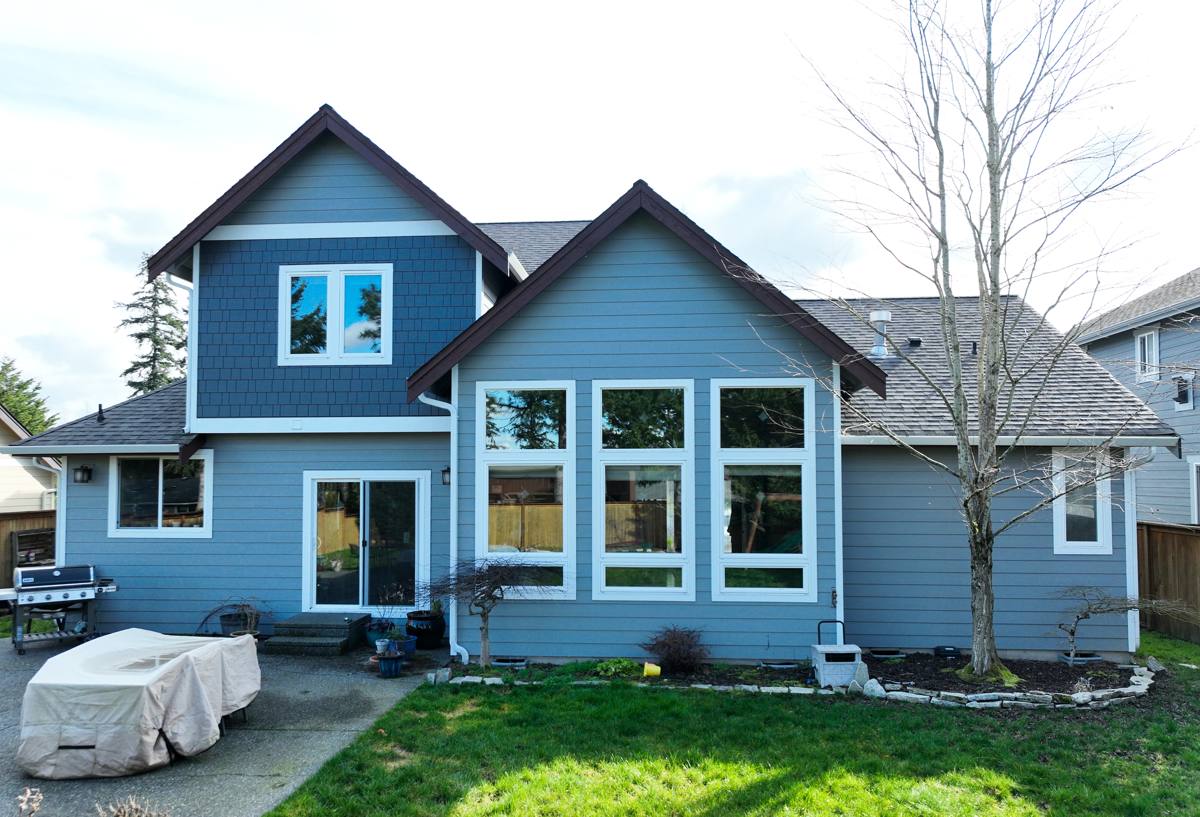
What Correct Fiber Cement Siding Installation Actually Requires
Fiber cement is only as good as the installation behind it. The material itself resists rot and moss growth far better than wood-based products, but a sloppy install can still let water in behind the boards — and once that happens, the siding's durability doesn't matter much. A correct job in a climate like ours comes down to a handful of details that are easy to skip and expensive to fix later.
Drainage Plane and Rain Screen Gap
Every wall needs a way for water that gets past the siding to drain back out instead of sitting against the sheathing. That means a proper weather-resistant barrier underneath the siding and, ideally, a rain screen gap that lets air move behind the boards so they dry out between storms. Skipping this step is one of the most common shortcuts we see on older re-sides, and it's the reason some homes develop hidden rot within a few years even with good-looking siding on the outside.
Flashing and Fastening Details
Windows, doors, deck ledgers, and any place two roof planes meet siding are where water intrudes first. Flashing has to be layered correctly — installed shingle-style so water is always directed outward and down, never trapped behind a joint. Fasteners matter too: James Hardie specifies fastener type, spacing, and placement for a reason, and under-driven or over-driven nails are a leading cause of premature siding failure, especially in a wet climate where any gap becomes a water path.
Factory-Finished Coating
ColorPlus finish is baked on at the factory under controlled conditions, which gives it far more consistent coverage and adhesion than field-applied paint. That matters most in a marine climate, where a thin or uneven coat of site-applied paint is the first thing salt air and UV exposure will find and break down.
Why We Install Only James Hardie
We get asked why we don't offer LP SmartSide, vinyl, Cemplank, Allura, or primed wood siding alongside Hardie. The honest answer is that we'd rather install one product exceptionally well than several products adequately. Each of those alternatives has legitimate uses, but each also has a real trade-off — engineered wood siding relies on its resin-treated surface staying intact to resist moisture, vinyl can warp and fade and doesn't stand up well to impact, and unprimed or site-primed wood products need far more ongoing maintenance to keep water out over time. In a climate that combines salt air, heavy rain, and a long moss season, those trade-offs show up faster than they would somewhere drier.
James Hardie's fiber cement is non-combustible, dimensionally stable, and backed by a factory finish engineered specifically for climate zones like ours through its HZ5 product line. Standardizing on one manufacturer also means our crews know the fastening specs, flashing details, and warranty requirements cold — there's no guessing which product's install manual applies on a given job.
| Factor | James Hardie Fiber Cement | LP SmartSide / Engineered Wood | Vinyl |
|---|---|---|---|
| Moisture resistance | Cement-based, does not absorb water like wood fiber | Resin-treated wood strand, relies on surface coating staying intact | Doesn't absorb water, but seams and laps can trap moisture behind panels |
| Moss and algae resistance | Non-organic surface resists growth better than wood-based products | Wood component can support moss and fungal growth if coating fails | Resists moss directly but growth often collects in overlaps and trim |
| Fire resistance | Non-combustible | Combustible, treated wood product | Combustible, can melt or deform under heat |
| Finish longevity | Factory-baked ColorPlus finish, engineered for UV and salt exposure | Factory or site-applied finish, performance varies by product | Color is throughout the material but can fade and chalk over time |
| Impact and warp resistance | Rigid, holds shape and resists denting | Good rigidity, vulnerable if surface coating is breached | Can warp in heat, dent or crack in cold |
Our Process, Start to Finish
Assessment and Estimate
We start by walking the exterior with you, looking at how the current siding — whatever it is — has held up against sun, shade, and prevailing wind and rain direction on your specific lot. We check for soft spots, failed caulking, and signs of trapped moisture around windows and trim before we ever talk about product or price. That walk-through is what a fair, honest estimate is built on.
Tear-Off and Wall Prep
Old siding comes off down to the sheathing so we can actually see what's underneath — this is where hidden rot or past water damage gets caught and addressed instead of covered up. We install a new weather-resistant barrier and, where the wall assembly calls for it, a rain screen system to keep the new siding drying properly from day one.
Installation
Hardie boards go up to manufacturer spec — correct fastener placement, correct flashing sequence at every window, door, and roofline intersection, and correct gapping and caulking at joints. This is the stage where shortcuts either get taken or don't, and it's the single biggest factor in how the siding performs ten and twenty years out.
Final Walkthrough
Before we call the job done, we walk the exterior with you again to check trim lines, caulking, and finish consistency, and to answer any questions about care going forward.
Signs Your Current Siding Is Losing the Battle
A lot of siding problems in this climate are visible well before they become structural. Worth checking for:
- Soft or spongy spots when you press on the siding, especially near the bottom courses
- Paint that's peeling or bubbling rather than just fading evenly
- Persistent moss or dark staining that comes back shortly after cleaning
- Visible gaps, cracks, or separated caulking at seams, corners, and trim
- Warping, bowing, or boards that no longer sit flat against the wall
- Musty smell or discoloration on interior walls that back up to exterior siding
Any one of these on its own isn't necessarily an emergency, but a few of them together usually means water has been getting behind the siding for a while.
Living With Fiber Cement Siding in a Marine Climate
One of the practical advantages of fiber cement here is how little upkeep it asks for compared to wood-based alternatives. It doesn't need repainting on the schedule that raw or primed wood does, and its resistance to moisture and organic growth means less scrubbing and fewer moss treatments over the years. That said, no siding in Whatcom County is entirely maintenance-free. An annual rinse to clear pollen, salt residue, and early moss growth, along with a quick visual check of caulking at windows and trim, goes a long way toward getting the full lifespan out of the material and keeping any warranty coverage intact.
Cost Factors for a Sehome Project
Every home is different, but the same handful of factors tend to drive cost on fiber cement siding projects in this area: the amount of tear-off and disposal required for the existing siding, how much of the sheathing and framing needs repair once the old siding is off, the complexity of the home's trim and roofline (more corners, dormers, and window openings mean more flashing and labor), and the siding profile and finish you choose. Homes with existing moisture damage from a failed prior installation will generally cost more to correct properly than a straightforward re-side over sound sheathing. We'll walk through all of this specifically for your home during the estimate rather than quoting a number blind.
Why Local Experience Matters
A crew that already works in and around Sehome and greater Bellingham knows how the wind and rain actually move across this part of Whatcom County, which walls take the worst of it on a given lot, and how much shade and moss pressure to expect from mature tree cover. That's not something you can fully account for from a generic install checklist — it comes from doing this work, on homes like yours, in this specific climate, year after year.
If your Sehome home's siding is showing its age, or you're planning ahead for a replacement, we're happy to take a look and give you a straightforward, no-pressure estimate — just fill out the form below to get started.