 Bellingham Window
 Siding in Columbia Has to Answer to This Climate, Not Just Look Good
Homes in Bellingham's Columbia neighborhood sit close enough to the water and the weather that comes with it that siding choices matter more here than they do in drier parts of the country. Salt-laden air off the bay works on fasteners, trim, and paint film year-round. Driving rain, pushed sideways by wind off the water, finds every gap in flashing and every hairline crack in old caulk. And Whatcom County's long, damp shoulder seasons mean moss and algae get months to establish themselves on any surface that stays wet and shaded.
None of that is unique to one street or one block in Columbia — it's the reality for most of Bellingham's older, tree-shaded neighborhoods. But it means siding decisions here can't be made the way they'd be made in a hot, dry climate. The material has to handle sustained moisture exposure without swelling, rotting, or feeding mold. The finish has to hold color and resist the kind of surface growth that damp siding invites. And the installation details — flashing, gaps, fastener placement — matter as much as the product itself.
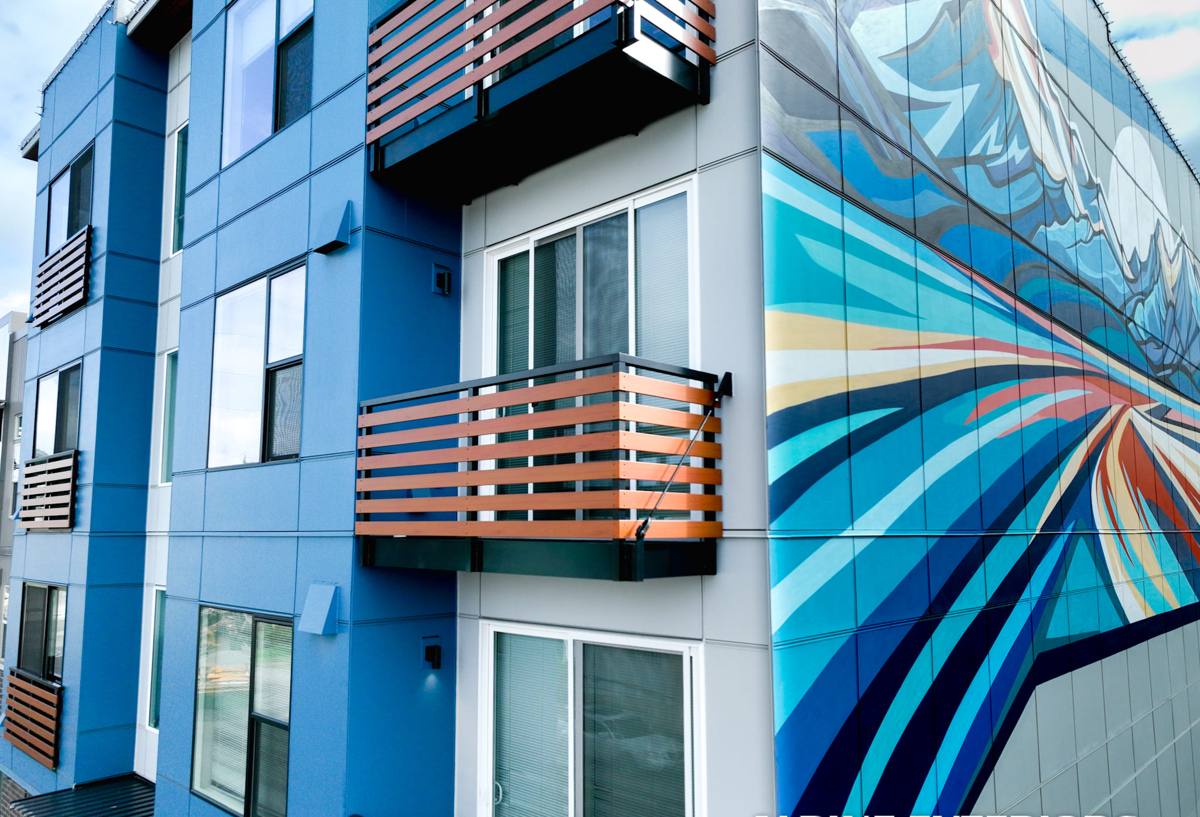
Why We Install Only James Hardie Fiber Cement
We don't install vinyl, LP SmartSide, cedar, primed spruce, or other fiber cement brands like Cemplank or Allura. That's not a marketing position — it's a standard we've settled on after weighing how each of those products actually performs in a marine, high-moisture climate over decades, not just the first few years.
- Vinyl can warp, fade, and crack in temperature swings, and it doesn't hold up as a long-term barrier against wind-driven rain the way a rigid fiber cement panel does.
- Wood-based composite and engineered wood products perform well when kept dry, but they're more sensitive to sustained moisture exposure than fiber cement, and a coastal climate doesn't give siding many fully dry stretches.
- Cedar and primed spruce are beautiful materials, but they demand a repainting and maintenance schedule that most homeowners underestimate — especially in a climate where wet weather can run eight or nine months of the year.
- Other fiber cement brands may be similar on paper, but we've standardized our crews, flashing details, and warranty process around one manufacturer so there's no guesswork on the job site.
James Hardie's fiber cement is non-combustible, dimensionally stable, and manufactured in climate-specific formulations — the HZ5 line is engineered for exactly the wet, temperate conditions found in western Washington. Paired with a factory-applied ColorPlus finish, it holds color and resists the moisture-driven fading and streaking that plain painted siding shows first.
What a Correct James Hardie Job Actually Involves
The material is only half the equation. Most siding failures we get called out to inspect — regardless of brand — trace back to installation shortcuts, not the product itself. A correct Hardie installation on a Columbia-area home includes:
- A weather-resistive barrier installed and lapped correctly behind the siding, not just stapled up as an afterthought
- Properly flashed window and door openings, since this is where wind-driven rain finds its way behind siding first
- Correct fastener type, spacing, and depth — over-driven nails are one of the most common causes of early plank failure
- Manufacturer-specified gaps at butt joints and trim to allow for expansion without caulk failure
- Rainscreen or proper drainage plane details where the wall assembly calls for it, especially on shaded, north-facing walls that stay damp longer
- Careful attention to grade clearance and drip edges so siding isn't sitting in splash-back moisture at the base of the wall
Skip any one of these and the siding can still look fine for a year or two — the problems that show up from bad flashing or fastening in a wet climate take time to surface, which is exactly why installation quality matters more than most homeowners realize when comparing bids.
How Local Climate Conditions Show Up in the Details
| Climate Factor | What It Does to Siding | How Correct Hardie Installation Responds |
|---|---|---|
| Salt air off the bay | Accelerates corrosion of fasteners and metal trim, dulls paint film over time | Corrosion-resistant fasteners and factory ColorPlus finish instead of field-applied paint |
| Driving, wind-pushed rain | Forces water behind siding at joints, seams, and openings | Properly lapped weather barrier and flashed penetrations at every opening |
| Long moss and algae season | Growth on shaded or north-facing walls holds moisture against the surface | Factory finish resists surface growth better than field paint; proper drainage keeps walls drying |
| Temperature swings, wet-to-dry cycling | Causes expansion and contraction that stresses joints and caulk lines | Manufacturer-spec gaps at butts and trim built in from the start |
Our Process, Start to Finish
The process is the same whether the home is a small bungalow or a larger two-story, though the scope and timeline shift with the size and condition of the existing wall assembly.
- Walk-through and estimate. We look at the current siding, trim, window flashing, and any signs of past moisture issues before quoting anything — a real number depends on what's actually on the wall, not a square-footage guess.
- Tear-off and inspection. Once old siding comes off, we can see the sheathing underneath. This is where hidden rot or past flashing mistakes show up, and it's better to find them now than to bury them under new siding.
- Weather barrier and flashing. This step is the one that determines whether the siding performs for twenty-plus years or fails early — it happens before a single piece of Hardie board goes up.
- Installation to manufacturer spec. Fastener pattern, gaps, and trim details follow James Hardie's published installation guidelines, which is also what keeps the manufacturer's warranty intact.
- Final inspection and cleanup. We walk the finished job looking specifically for anything that could let moisture in — caulking, trim joints, penetrations for vents and fixtures.
Why Hiring a Crew That Already Works in Columbia Matters
Siding installation isn't one-size-fits-all across a region, even one as compact as Bellingham. A crew that regularly works in Columbia and similar Bellingham neighborhoods has already seen how the local mix of tree cover, lot orientation, and proximity to the water plays out on real walls — which sides of a house tend to hold moss longest, where wind-driven rain tends to concentrate, and how older homes in this part of the county were originally sheathed and flashed.
That familiarity shows up in small decisions during a job: where to add extra flashing attention even when it's not strictly required, which walls need a closer look at drainage, and how to sequence work around Whatcom County's wet stretches so the wall assembly isn't left exposed longer than it needs to be. It also means faster, more realistic scheduling — a crew that knows the area's weather patterns plans around them instead of getting surprised by them.
What Drives Cost on a Columbia Siding Project
| Factor | Why It Matters |
|---|---|
| Condition of existing sheathing | Hidden rot or old moisture damage found during tear-off adds repair scope before new siding goes up |
| Home size and wall complexity | More corners, dormers, and trim details mean more cutting, flashing, and labor time |
| Siding profile chosen | Lap siding, panel siding, and shingle-style Hardie products differ in material and labor cost |
| Trim and accessory scope | Fascia, soffit, and trim replacement alongside siding affects total project size |
| Access and site conditions | Tree cover, tight lot lines, and multi-story walls affect staging and labor time |
We don't quote broad ranges without seeing the home, since the variables above can shift a project's scope significantly from one house to the next — but we're upfront about cost drivers during the walk-through so there are no surprises once a contract is signed.
What to Expect After Installation
One of the practical advantages of James Hardie's ColorPlus finish is how little it demands from homeowners afterward. There's no repainting cycle to plan around, and the factory finish holds up better against the surface staining that shaded, damp walls tend to cause in this climate. That said, no siding is entirely maintenance-free:
- Rinse down shaded or north-facing walls periodically if moss or algae starts to show, before it has a chance to establish
- Keep gutters and downspouts clear so runoff isn't sheeting down the wall face
- Trim back vegetation and tree cover that keeps a wall section shaded and slow to dry
- Have caulk lines and trim joints checked periodically, since those are the first points to show wear
- Address any impact damage promptly rather than letting a small crack become an entry point for moisture
Questions Worth Asking Before You Hire
Whether you end up working with us or another contractor, these are worth asking anyone bidding a siding job in this climate:
- Do you follow the manufacturer's published installation guidelines, and can you explain your flashing approach at windows and doors?
- What weather-resistive barrier do you use, and how is it lapped and sealed?
- Will the finished installation keep the manufacturer's warranty intact, or does your method deviate from spec?
- How do you handle sheathing repair if rot or damage turns up during tear-off?
- Can you walk me through how the project timeline accounts for wet weather?
If you're weighing a siding project for a home in Columbia or elsewhere in Bellingham, we're happy to walk the property, look at what's on the wall now, and put together a straightforward, no-pressure estimate — just fill out the form below.