 Bellingham Window
 What Lynden's Climate Does to Exterior Siding
Lynden sits in Whatcom County, close enough to the water and the foothills to get the worst of both worlds: long stretches of driving rain off the Pacific, damp air that never fully dries out between storms, and a moss and algae season that can run most of the year on north-facing walls. Add in the salt-tinged air that moves through this part of Western Washington and you have a climate that is genuinely tough on siding, even siding that looks fine from the street.
The failure pattern is almost always the same. Water gets behind the siding at a seam, a fastener, or a poorly flashed window, and it has nowhere to go and no way to dry out quickly. Months or years later, that shows up as soft spots, peeling paint, or rot in the sheathing underneath — long after the original installer is gone. Moss and algae growth on top of that traps even more moisture against the wall and accelerates the problem.
None of this means Lynden homes need something exotic. It means the siding material and the installation both need to be matched to what this climate actually does, year after year.
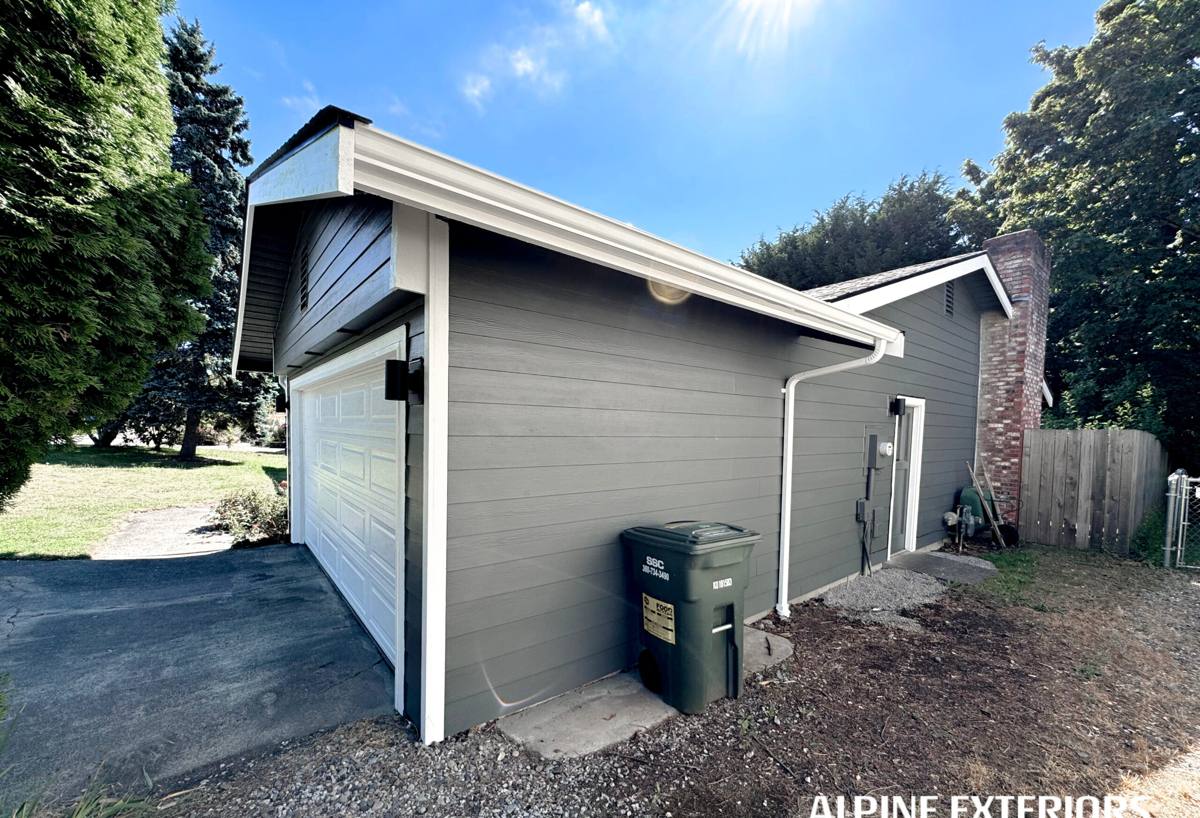
Why We Install Only James Hardie Fiber Cement
We made a decision as a company to install James Hardie fiber cement siding exclusively — not vinyl, not LP SmartSide, not cedar or primed spruce, not other fiber cement brands. That's not a marketing position, it's a practical one built around what holds up in Whatcom County weather.
Fiber cement is not organic material, so it does not rot, and it is not a food source for the moss and mildew that thrive in our damp climate. It's also non-combustible, which matters more each year as wildfire smoke and ember exposure become a bigger part of Pacific Northwest summers. James Hardie's ColorPlus finish is baked on at the factory under controlled conditions, which gives it better fade and moisture resistance than most field-applied paint jobs, and the company backs its products with a strong, transferable limited warranty.
Other products have real strengths, and we're upfront with homeowners about that. Vinyl is inexpensive and low-maintenance in mild climates. Cedar has a look some homeowners love. But in a climate that stays wet for months at a time, those products carry trade-offs — moisture absorption, seam failure, or ongoing upkeep — that we're not willing to put our name behind. Hardie's HZ5 product line is specifically engineered for climate zones like ours, with moisture and freeze-thaw performance built into the formulation rather than added on.
What HZ5 Means for a Lynden Home
James Hardie makes region-specific formulations, and HZ5 is the version engineered for areas with more rain, humidity, and freeze-thaw cycling — which describes Whatcom County well. It's not a cosmetic difference; it's a different cement formulation designed to resist moisture-related damage over decades of exposure, not just years.
What a Correct James Hardie Installation Actually Involves
The product itself is only part of the equation. Most siding failures we get called out to inspect — on any brand — trace back to installation shortcuts, not the material. A correct Hardie installation on a Lynden home includes several things that are easy to skip and hard to notice once the siding is up.
Water Management Behind the Siding
A drainage plane — typically a weather-resistant barrier plus a rainscreen gap — gives any water that gets past the siding a path to drain and dry out instead of sitting against the sheathing. In a climate with as much sustained moisture as ours, this is not optional. It's the difference between siding that sheds an occasional leak and siding that traps one.
Flashing at Every Penetration
Windows, doors, hose bibs, light fixtures, and vents are the places siding jobs fail first. Each one needs proper flashing and integration with the water-resistive barrier, not just a bead of caulk over the gap. Caulk is a backup, not a water management strategy.
Fastening and Clearances to Hardie's Spec
James Hardie publishes specific fastener patterns, nailing lines, and minimum clearances from grade, roofing, and decks. Installers who don't follow them can void the manufacturer's warranty even though the siding was installed with genuine Hardie product. We install to spec because that's what actually protects the homeowner, not just because it satisfies a warranty card.
Joint and Seam Treatment
Board seams, corners, and butt joints are where fiber cement is most vulnerable if they're not treated correctly — proper caulking, correct overlaps, and in some cases factory-finished trim pieces that reduce the number of field-cut, unsealed edges exposed to weather.
James Hardie Product Options for Lynden Homes
Hardie offers several profiles, and the right one depends on the home's style and what's being replaced. We'll walk through the options during an estimate, but here's a general comparison:
| Product | Look | Best fit |
|---|---|---|
| HardiePlank lap siding | Traditional horizontal lap, smooth or woodgrain texture | Most common choice for full re-sides on traditional and craftsman-style homes |
| HardieShingle | Staggered or straight-edge shingle look | Accent areas, gables, or homes going for a cottage or shingle-style appearance |
| HardiePanel | Vertical panel siding | Modern facades, garage walls, gable accents, or board-and-batten looks with trim |
| HardieTrim | Factory-finished trim boards | Corners, window and door surrounds, fascia — reduces field-cut exposed edges |
Our Process, Start to Finish
For a Lynden siding project, our process generally looks like this:
- On-site assessment of the existing siding, sheathing, and any signs of moisture damage or rot
- A written estimate that specifies the Hardie product line, profile, color, and trim details — no vague allowances
- Removal of old siding and inspection of the sheathing underneath, with any repairs addressed before new siding goes on
- Installation of the weather-resistive barrier and rainscreen system
- Flashing of all windows, doors, and penetrations
- Installation of Hardie siding and trim to manufacturer fastening and clearance specifications
- Final walkthrough with the homeowner before we consider the job done
We don't upsell homeowners into products we don't stand behind, and we don't cut corners on the parts of the job nobody sees once the siding is up — because those are the parts that determine whether it lasts.
Living With Hardie Siding in a Moss-Prone Climate
Fiber cement is low-maintenance compared to wood, but "low-maintenance" doesn't mean "no maintenance" anywhere in Whatcom County. A little seasonal attention goes a long way toward protecting the investment:
- Rinse siding annually, especially on north- and shade-facing walls where moss and algae take hold fastest
- Keep gutters clear so overflow doesn't run down and pool behind siding at the roofline
- Trim back landscaping and tree limbs that keep siding shaded and damp longer than it needs to be
- Inspect caulking at trim, windows, and joints every year or two and have gaps resealed before water gets behind them
- Watch for soft spots, discoloration, or peeling near the ground line, where splashback and standing moisture are most common
Why Local Installation Experience Matters
Whatcom County's weather isn't identical to Seattle's, and it's not the same as inland Washington either. A crew that regularly works Lynden and the surrounding area has already seen how driving rain hits specific wall orientations, how long moss takes to establish on shaded elevations, and where flashing tends to get skipped on homes built in different decades. That experience shapes decisions on-site — where to add extra flashing, how much rainscreen gap to use, which trim details hold up best — in ways a generic installation approach doesn't.
It also matters for warranty support. If a question comes up two, five, or ten years after installation, working with a crew that's still local and still standing behind its work locally is worth more than a lower bid from someone passing through.
Cost Factors for a Lynden Hardie Siding Project
Every home is different, but the same factors tend to drive cost up or down on Hardie siding projects in this area:
| Factor | Why it matters |
|---|---|
| Sheathing condition | Rot or moisture damage found during tear-off adds repair scope before new siding can go on |
| Home size and complexity | More corners, dormers, and roof lines mean more flashing, trim, and cutting |
| Product mix | Combining lap siding with shingle accents or panel sections costs more than a single profile |
| Trim scope | Full HardieTrim packages cost more upfront but reduce exposed field-cut edges |
| Access and site conditions | Multi-story sections, tight lot lines, or landscaping can affect labor time |
We give homeowners a real number after seeing the home, not a phone estimate — Hardie siding is not a product where guessing at scope serves anyone well.
If you're weighing a siding replacement on a Lynden home and want a straight answer about what it actually needs, we're glad to take a look. The estimate is free, there's no pressure, and you'll get a clear breakdown of product, scope, and cost before you decide anything.