 Bellingham Window
 Building New in Barkley Means You Only Get One Shot at the Windows
Barkley is one of the newer, more active pockets of residential growth in Bellingham, and if you're framing a new home or building here, the windows are one of the few components you genuinely cannot fix cheaply after the fact. Once siding, trim, and interior finish are closed up around a window opening, correcting a bad flashing detail or an undersized unit means tearing back finished work. That's a different risk profile than a remodel, and it's why new-construction window installs deserve their own process, not a scaled-down version of a replacement job.
We install new-construction windows for builders and homeowners across Whatcom County, and Barkley's mix of newer builds and infill lots gives us a good read on what actually holds up here versus what looks fine on a spec sheet.
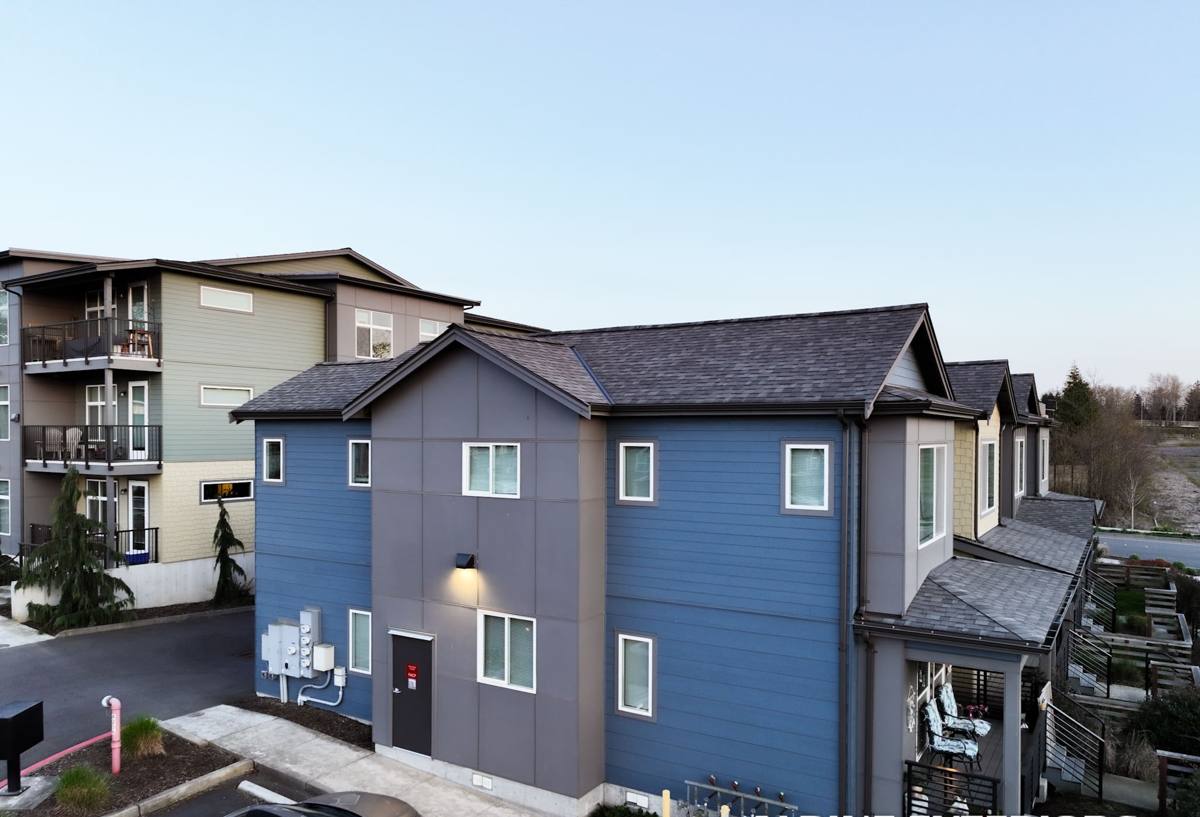
What Bellingham's Climate Actually Demands From a New Window
Bellingham sits close enough to the water that salt-laden air is a real factor on hardware and exposed metal, especially on homes with more open exposure. Add in the region's steady driving rain — not just volume, but wind-driven rain that hits window assemblies at an angle — and a long moss season that keeps siding, trim, and sills damp for months at a stretch, and you have a climate that punishes shortcuts in ways a drier region never would.
For a new-construction window in Barkley, that means three things matter more here than in most parts of the country:
- Water management at the rough opening — the sill pan, flashing tape, and house wrap integration have to work together as a system, because any gap becomes a slow leak that won't show up until there's already rot behind the wall.
- Corrosion-resistant hardware — locks, hinges, and balance systems need to tolerate salt air and near-constant moisture without seizing or staining within a few years.
- Sill and frame materials that shed moisture — anything that traps water against wood trim invites the moss, mildew, and soft-wood problems that show up on so many older homes in this area.
None of this is exotic. It's standard building science. But it only works if it's actually done at install, not assumed because the window itself carries a good warranty.
New Construction vs. Replacement — Why the Approach Is Different
Homeowners sometimes assume a "new-construction window" is just a nicer version of a replacement window. The real difference is in how it attaches to the structure, which changes almost everything about the install.
| Factor | New Construction | Replacement |
|---|---|---|
| Frame type | Nailing-fin frame, set into an open rough opening | Block frame or insert, set into an existing finished opening |
| Weatherproofing | Full sill pan, flashing tape, and house wrap integration before siding goes on | Relies on existing wall flashing and sealant at the perimeter |
| Access | Open stud walls, before insulation and drywall | Finished interior and exterior already in place |
| Best used when | Ground-up builds, additions, or gutted-to-the-studs remodels | Existing home with intact, sound framing and trim |
| Long-term risk if done wrong | Hidden water intrusion inside a closed wall cavity | Visible leaks or drafts around the window frame |
For a build in Barkley, this means the window install has to be sequenced correctly with the framer, the house wrap installer, and the siding crew — it isn't a standalone trade that shows up and works in isolation.
Why Sequencing on Site Matters
A new-construction window installed a week too early or too late relative to the house wrap can end up with the wrap lapped the wrong direction over the flange — a detail that looks fine from the outside but sends water behind the siding during any hard rain. We coordinate directly with the builder's schedule so the window goes in at the right point in the wall assembly, not just whenever it's convenient.
What a Correct Installation Actually Involves
A proper new-construction window install in this climate follows a specific order. Skipping or reversing steps is the single biggest cause of water problems in walls that otherwise look perfectly built.
- Verify the rough opening is square, plumb, and sized correctly before the window ever arrives on site.
- Install a sloped sill pan so any water that gets past the window drains back outward, not into the wall.
- Apply flashing tape at the sill and jambs in the correct shingle-lap order — bottom first, sides, then head.
- Set the window, shim it plumb and square, and fasten through the nailing fin per the manufacturer's schedule.
- Integrate the head flashing under the house wrap so water sheds over, not behind, the top of the window.
- Insulate the gap between the frame and rough opening with a low-expansion foam or backer rod, never packed rigid insulation that can bow the frame.
- Seal and caulk only where the manufacturer's instructions call for it — over-sealing a nailing-fin window can trap water instead of releasing it.
Every one of those steps is inspectable at the time it happens and essentially invisible once the wall is closed. That's exactly why it matters who does it.
Choosing the Right Frame and Glass for This Exposure
Frame material and glass package both affect how a window performs against Bellingham's rain and salt air over the long run, not just its first winter.
| Frame Material | Moisture Behavior | Maintenance |
|---|---|---|
| Vinyl | Won't rot; performs well if properly drained and sealed | Low — occasional cleaning |
| Fiberglass | Very stable in wet, temperature-swinging climates | Low, higher upfront cost |
| Aluminum-clad wood | Good exterior protection, but relies on caulking staying intact | Moderate — watch joints and clad seams |
| Bare wood | Attractive but vulnerable to prolonged damp and moss growth | High — regular repainting and sealing |
For most new builds in Barkley, we steer clients toward vinyl or fiberglass frames with a double- or triple-pane, Low-E coated glass unit. The coating cuts down on heat loss during the wet, overcast months that make up much of the year here, and it doesn't add meaningful cost the way it might have a decade ago. Bare wood exteriors are still an option for homeowners who want the look, but we're upfront that it comes with a real maintenance commitment given how much of the year this area stays damp.
Our Process for New-Construction Projects in Barkley
Plan Review and Product Selection
We start from the architectural drawings or builder specs, confirm rough opening sizes, and go over frame material, glass package, and hardware finish before anything is ordered. Getting this right up front avoids delays waiting on a re-order mid-build.
Site Coordination
We work directly with your general contractor or framer to slot the window install into the build schedule at the correct point — after the house wrap is up, before siding closes in around the openings.
Installation and Documentation
Each opening is prepped, flashed, and set following the sequence above. On request, we document flashing and sill pan work with photos before it's covered, which is useful for builder records and any future resale disclosures.
Final Check
Every window is checked for square, smooth operation, and a clean seal before we call the job finished — not just visually, but by operating each unit and checking the exterior seal.
Before You Sign Off — A Practical Checklist
- Confirm whether the quote includes sill pans and flashing tape, or just the window units themselves.
- Ask who is responsible for coordinating install timing with the house wrap and siding crews.
- Verify frame material and glass package match what was specified in the build plans.
- Ask whether hardware is rated for coastal or high-moisture exposure.
- Get manufacturer warranty documentation in writing, separate from the installer's workmanship warranty.
Why Local Experience in Barkley Specifically Matters
A crew that regularly works new builds in and around Barkley already knows how local framing crews typically size rough openings, which builders in the area sequence house wrap a certain way, and what the county inspectors here are looking for at flashing checks. That familiarity shortens the back-and-forth on site and reduces the chance of a scheduling gap where an opening sits exposed to Bellingham's rain longer than it should. It also means we're not guessing at how this climate treats a given product over five or ten years — we're watching it happen on homes not far from yours.
If you're planning a new build or addition in Barkley and want windows installed correctly from the rough opening out, we're happy to walk the plans with you and provide a free, no-pressure estimate — just fill out the form below.