 Bellingham Window
 Building New in Sehome? Windows Are Not a Place to Cut Corners
Sehome sits close enough to Bellingham Bay and the surrounding hills that new construction here deals with a specific mix of weather: salt-tinged marine air, wind-driven rain off the water, and long stretches of gray, damp months where moss and mildew get a real foothold on anything that holds moisture. If you're framing a new home or a major addition in this neighborhood, the windows you choose and how they're installed will shape how the house performs for the next 20-30 years — energy bills, condensation problems, rot risk, and how much maintenance you're doing every fall.
New construction is actually the best time to get this right. Unlike a retrofit or replacement job, you're not working around an existing frame or finished siding — the window opening, the flashing, the weather-resistive barrier, and the exterior finish can all be sequenced together as one system. Done correctly, that's the strongest, longest-lasting window installation you can get. Done poorly, it's the hardest kind of mistake to fix later, because by the time water damage shows up, it's usually behind finished walls.
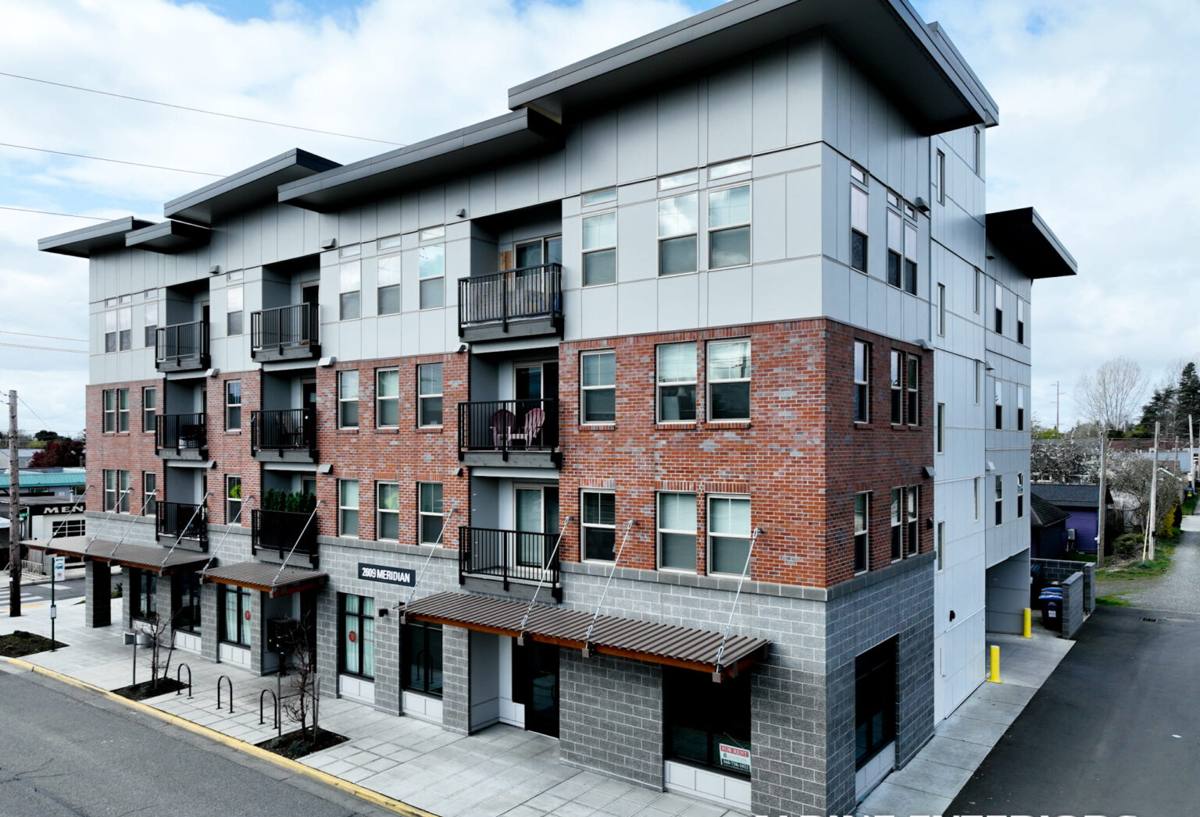
What Whatcom County Climate Actually Does to New-Construction Windows
Salt Air and Marine Moisture
Homes within a few miles of Bellingham Bay see more airborne salt and moisture than homes further inland in Whatcom County. This doesn't rot glass, but it does accelerate corrosion on hardware, fasteners, and lower-grade metal components, and it keeps humidity levels around the building envelope higher for more of the year. That matters most at the window's flashing and sealant details — anywhere metal meets metal, or sealant is the only thing keeping water out, is a spot that ages faster here than it would in a drier climate.
Driving Rain
Bellingham doesn't get the heaviest rainfall totals in the state, but it does get wind-driven rain, especially during fall and winter storms. Driving rain doesn't just fall on a window — it gets pushed sideways and upward into gaps that a simple bead of caulk was never designed to handle. This is why proper flashing (not just sealant) is non-negotiable on new construction here. Sealant fails eventually; flashing that's lapped correctly with the weather-resistive barrier keeps working even after that happens.
Long Moss and Mildew Season
Whatcom County's damp season runs long, and anywhere moisture sits — horizontal sills, poorly sloped trim, shaded north-facing walls — grows moss and mildew faster than most homeowners expect. On new construction, this is a design and detailing issue as much as a maintenance one: sill pans that actually slope outward, trim details that don't trap water, and window materials that don't wick moisture all reduce how much moss and green staining shows up in year two and three.
What a Correct New-Construction Window Installation Involves
New-construction installation is different from a replacement job, and it involves more steps that all have to happen in the right order:
- Rough opening check — verifying the framed opening is square, plumb, and sized correctly before the window ever shows up on site
- Sill pan flashing — a sloped, water-tight pan at the bottom of the opening so any water that gets past the window drains back out, not into the framing
- Weather-resistive barrier integration — the house wrap or building paper has to be cut, lapped, and taped so it directs water over the flashing, not behind it
- Window flashing tape at jambs and head — self-adhering flashing that ties the window into the wall's drainage plane in a specific shingle-lap order
- Fastening per manufacturer spec — correct fastener type, spacing, and placement to keep the window secure without distorting the frame
- Air sealing and insulation — low-expansion foam or backer rod and sealant around the frame, sized for the gap, so you're not relying on the window alone for the thermal seal
- Interior and exterior trim/sealant — finished with the right sealant for the substrate and gap, in a joint designed to move with the building
Skip or rush any one of these steps and the window itself can be top quality and still fail early — most of the water damage we see in newer homes traces back to flashing sequence, not the window unit itself.
Choosing the Right Window for a Sehome Build
Frame Material
Vinyl, fiberglass, and clad-wood are the three materials that make sense for most new construction in this climate. Each has real trade-offs worth weighing honestly rather than picking on brand alone:
| Material | Strength in This Climate | Trade-Off to Know |
|---|---|---|
| Vinyl | Won't rot, low maintenance, good value | Less design flexibility for large custom shapes |
| Fiberglass | Very stable dimensionally, holds paint/finish well, strong in temperature swings | Higher upfront cost than vinyl |
| Clad-Wood | Warm interior look, exterior metal or vinyl cladding sheds weather | Interior wood still needs periodic maintenance; higher cost |
Glass Package
Double-pane, low-E glass with argon fill is the baseline we recommend for new construction in Whatcom County — it's a good balance of cost and performance for our mild-but-damp climate. Triple-pane adds meaningful value on north-facing walls, larger openings, or homes prioritizing energy performance, but it's not always necessary on every elevation of every house. We'll walk through where it earns its cost and where it doesn't.
Why We're Selective About What We Install
We don't install every window brand or configuration on the market. Our standard is products with a track record of holding up to sustained damp exposure — consistent factory glazing, hardware that resists corrosion, and manufacturers who stand behind clear warranty terms. Some lower-cost options look fine on paper but create more callbacks and maintenance headaches down the road in a climate like this one; we'd rather set that expectation up front than install something we don't trust to perform here.
Our Process for Sehome New-Construction Projects
- Plan review — we look at your architectural plans or framing before windows are ordered, catching rough opening or flashing sequence issues early, when they're cheap to fix
- Product selection — walk through frame material, glass package, and performance ratings based on your budget and each wall's sun/rain exposure
- Coordinated scheduling — we work with your builder or GC's timeline so windows go in at the right point in the framing sequence, not before the opening is ready and not so late it holds up siding
- Installation to manufacturer and code spec — flashing, fastening, and sealing done in the correct order, documented as we go
- Final walkthrough — checking operation, sealant lines, and trim before we consider the job done
Why a Crew That Already Works Sehome Matters
New-construction window installation is code-driven and detail-heavy no matter where you build. What changes neighborhood to neighborhood is exposure — how much wind-driven rain a given lot sees, how shaded a wall stays through winter, how much salt air reaches a particular block. A crew that already works in Sehome and the surrounding Bellingham area has seen how these specific conditions play out on real builds, not just in a manufacturer's spec sheet. That translates into small but real decisions — sill pan slope, sealant choice, where to add extra flashing lap — made correctly the first time instead of learned the hard way after a callback.
We also know the local building department's expectations for window installation documentation and inspection sequencing, which keeps your framing and siding schedule from stalling while everyone waits on a re-inspection.
A Practical Checklist Before Your Windows Go In
- Rough openings confirmed square, plumb, and correctly sized for the ordered units
- Sill pan flashing installed and sloped to drain outward, not toward the framing
- Weather-resistive barrier lapped over flashing in proper shingle order (top layer over the one below)
- Flashing tape applied at jambs before head flashing, head flashing last
- Fastener type and spacing match manufacturer installation instructions
- Gaps around the frame insulated with low-expansion foam or backer rod, not overfilled
- Exterior sealant joints sized and tooled correctly, not just caulked over gaps
- Manufacturer warranty registration completed and saved with your project paperwork
Cost Factors for New-Construction Windows
Pricing on new-construction windows depends on more variables than most people expect going in. Rather than quote a number that won't hold up once we see your plans, here's what actually moves the price:
| Factor | Why It Matters |
|---|---|
| Frame material | Vinyl is typically the most budget-friendly; fiberglass and clad-wood cost more upfront |
| Glass package | Triple-pane and specialty coatings add cost per unit, especially at larger sizes |
| Window size and shape | Custom shapes, oversized units, and specialty openings cost more to fabricate and install |
| Number and complexity of openings | Total window count and how many walls/elevations are involved affects labor and flashing time |
| Site access and building stage | Coordinating with a builder's schedule and site conditions affects install efficiency |
We put together a written estimate based on your actual plans so you're comparing real numbers, not a rough guess that changes once work starts.
Ready to Talk Through Your Sehome Build?
If you're planning new construction or a major addition in Sehome, we're happy to look at your plans and walk through window options before anything is ordered — that's the point where the right decisions save the most money and headaches later. Reach out for a free, no-pressure estimate using the form below.