 Bellingham Window
 New Construction in York Calls for Windows Installed Right the First Time
If you're framing a new home in the York neighborhood or anywhere else around Bellingham, the windows you choose and how they're installed will decide how that house performs for the next 30 years. Whatcom County's mix of salt air, driving rain off the Sound, and a long moss season that keeps everything damp for months at a time is hard on building envelopes. A window that's a good product but installed wrong will leak. A window that's installed correctly but undersized for the exposure will fog, ice up on the inside, or cost more to heat than it should. New construction is the one point in a home's life where you get to do this right from the studs out — there's no siding to cut around, no old flashing to work over, no guesswork about what's behind the wall.
This page is specifically about new-construction window installation for York-area builds — not replacement windows, which is a different scope, different flashing detail, and a different set of trade-offs.
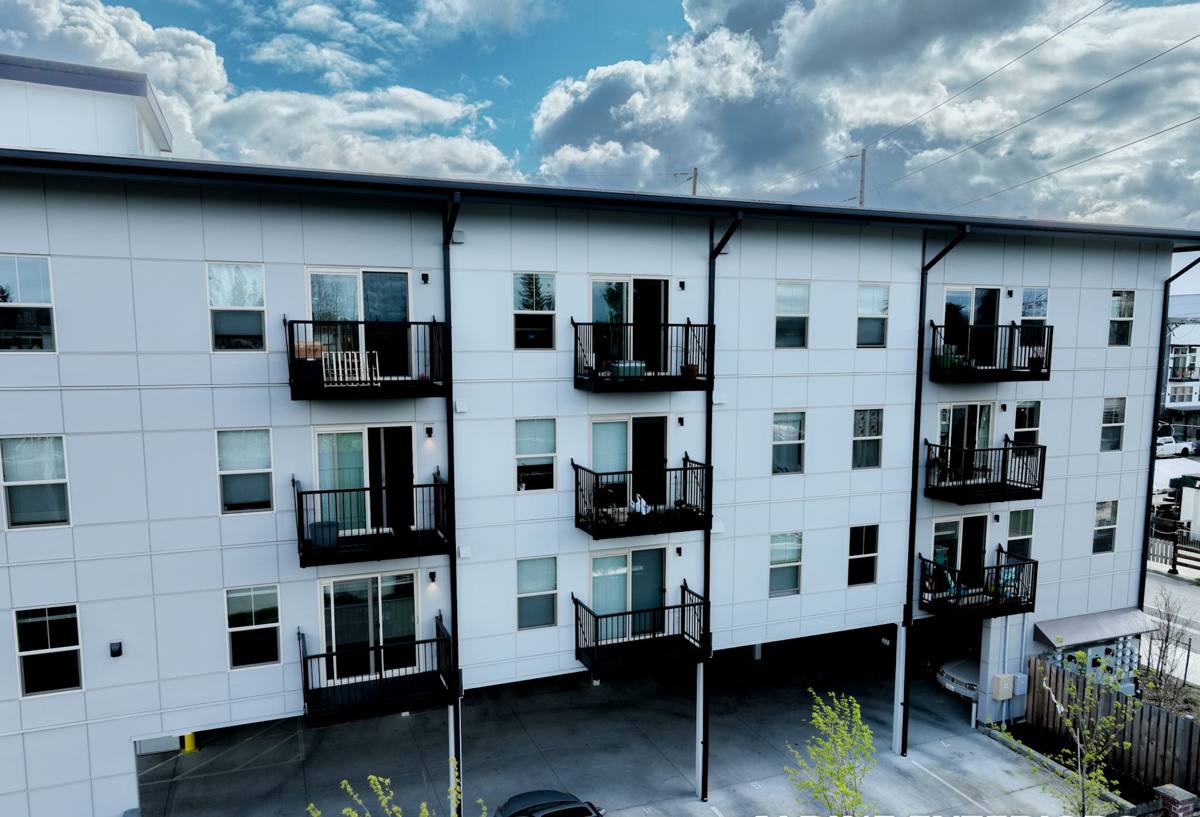
Why New-Construction Installation Is Different From a Replacement
New-construction and replacement windows are not interchangeable products, and the installation sequence is completely different. On a new build, the window goes in before the siding, so the crew is working directly with the weather-resistive barrier (WRB), the rough opening framing, and the flashing tape — there's no old trim or cladding to protect or patch around.
Nail-Fin vs. Flush-Fin Windows
Most new-construction windows use a nailing flange (nail fin) that gets integrated into the WRB and flashing before siding goes on. Some architectural styles, particularly on homes with masonry or panel siding, call for flush-fin or block-frame windows that sit differently in the opening. Which one is right depends on your siding type, wall assembly, and the architect's or builder's detailing — we coordinate that before the windows are ordered, not after they show up on site.
Working Inside the Builder's Schedule
New-construction window work happens on someone else's timeline. Framing has to be squared and the rough openings verified before we order, then windows need to land on site in the narrow window between dry-in and siding. Missing that sequence either delays the whole build or forces a rushed install — neither is good for a York-area home that's going to face its first wet winter within months of closing.
What Whatcom County's Climate Demands From New Windows
Bellingham sits close enough to the water that salt-laden air, wind-driven rain, and long stretches of damp, low-sun weather are just normal conditions here — not edge cases. New windows in a York-area build need to be specified and installed with that in mind from day one.
Salt Air and Coastal Exposure
Salt air accelerates corrosion on hardware, fasteners, and lower-grade aluminum components. On a new build we spec corrosion-resistant hardware and fasteners as a standard, not an upgrade, because replacing corroded window hardware on a home that's only a few years old is an avoidable headache.
Driving Rain and Wind-Loading
Whatcom County storms regularly push rain sideways, not straight down. That means the flashing detail at the sill and head matters more here than it would in a drier climate — a window that would be fine in an arid region can leak in a Pacific Northwest storm if the flashing sequence isn't done correctly. Wind exposure on a given lot also factors into what glazing and frame reinforcement makes sense.
Moss Season and Prolonged Moisture
Whatcom County effectively has a moss season that runs much of the year — anything that stays damp for weeks at a time will grow it, including window sills, trim, and the wall assembly behind poorly flashed openings. Good drainage detailing at the sill pan and correct sealant placement are what keep moisture moving out instead of sitting against wood trim or sheathing.
The Flashing and Sealing Sequence That Actually Keeps Water Out
Most window leaks in new construction aren't a bad window — they're a flashing sequence done out of order or with the wrong materials. This is the part of the job that doesn't show once siding and trim go on, which is exactly why it has to be done right the first time.
Sill Pan First
Every rough opening gets a sloped sill pan before the window goes in, so any water that does get past the window has somewhere to go besides the framing. This is a step that's easy to skip on a rushed job and impossible to fix later without removing the window.
Head Flashing and the Drip Cap
The WRB has to be integrated shingle-style — each layer overlapping the one below it — so water sheds down and out rather than behind the window. A drip cap or head flashing above the window directs bulk water away from the top of the opening, which matters more here given how often rain comes in at an angle.
Sealant Selection
Not every sealant is compatible with every window frame material or WRB, and using the wrong one can actually trap moisture instead of keeping it out. We match sealant to the materials on the job, and we don't caulk over gaps that should have been flashed instead — caulk is not a substitute for correct flashing.
Choosing Frame Material and Glazing for a York-Area Build
There's no single "best" window for every new build — the right choice depends on the home's style, budget, and how exposed the lot is to weather. What matters is picking a material and glazing package that's honestly suited to Whatcom County conditions rather than whatever has the lowest sticker price.
Frame Material Options
Vinyl frames are the most common choice for new construction in this area — good value, low maintenance, and solid performance when installed correctly. Fiberglass frames cost more but hold up well to temperature swings and hold paint better if you want a custom color. Wood-clad windows give a traditional interior look but need more attention to detail at the exterior cladding joints, since that's where moisture can work in over time if the install isn't precise.
Glazing Packages for This Climate
Dual-pane, low-E glass with argon fill is the baseline we'd recommend for a York-area build — it's a reasonable balance of energy performance and cost for this climate zone. Homes with more west or south exposure, or on more exposed lots, sometimes benefit from a different low-E coating tuned for solar heat gain rather than just heat retention. We size the glazing package to the home's orientation, not just a single spec applied to every window on the house.
Our New-Construction Process
New-construction window work only goes smoothly when it's coordinated with the rest of the build, so we treat it as a sequence of checkpoints rather than a single visit.
| Stage | What Happens | Why It Matters |
|---|---|---|
| Plan review | We review window schedule, rough opening sizes, and siding type before ordering | Catches sizing or spec mismatches before windows are manufactured |
| Rough opening verification | We check openings on site once framing is up | Framing tolerances vary — verifying on site avoids delivery of windows that don't fit |
| Flashing and install | Sill pan, WRB integration, window set, head flashing, fastening | This is the sequence that actually keeps the home dry long-term |
| Pre-siding inspection | We check our own flashing work before it gets covered by siding | Once siding goes on, flashing mistakes are expensive to find and fix |
| Trim-out and final check | Interior and exterior trim, hardware function, seal check | Confirms every window opens, locks, and seals correctly before handoff |
What Drives Cost on a New-Construction Window Package
Every new build is different, so we don't quote a whole-house window package without seeing the plans — but a few factors consistently move the price up or down, and it helps to know them before you're comparing bids.
| Factor | Typical Cost Impact | Notes |
|---|---|---|
| Frame material (vinyl vs. fiberglass vs. wood-clad) | Low to High | Vinyl is the most budget-friendly; wood-clad and fiberglass cost more upfront |
| Window count and size | Scales directly | Larger openings and specialty shapes cost more per unit |
| Glazing package | Low to Medium | Upgraded low-E coatings and gas fills add cost but improve comfort and utility bills |
| Site exposure | Low to Medium | Highly exposed lots may need reinforced glazing or hardware upgrades |
| Timeline coordination | Low to Medium | Rush orders or schedule changes after windows are ordered can add cost |
We'll walk through these factors against your actual plans during an estimate rather than quoting off a generic price sheet — a York-area lot facing open exposure needs a different conversation than one tucked behind other homes.
A Checklist Before You Sign With Any New-Construction Window Crew
Whether you use us or someone else, these are the things worth confirming before window work starts on your build:
- They've reviewed your actual rough opening sizes and window schedule, not just given a price off square footage
- They can explain their sill pan and flashing sequence in plain language, not just "we seal everything"
- They're using fasteners and hardware rated for coastal/salt-air exposure, not standard interior-grade parts
- They coordinate directly with your builder or general contractor on timing, not just show up unannounced
- They'll let you or your builder inspect flashing work before siding covers it
- Warranty terms are in writing and cover both the product and the labor, not just the manufacturer's glass warranty
Why Local Experience in York and Bellingham Matters
A crew that works new construction in and around Bellingham regularly has already seen how Whatcom County weather treats a house — which lots catch the worst of the wind-driven rain, how fast moss and moisture problems show up on a poorly detailed sill, and what actually holds up through a full wet season here versus what looks fine on install day and fails two winters later. That's not something you can get from a national installer working off a generic spec sheet. It also means we're familiar with local permitting and inspection expectations, so window rough-in and flashing work don't become a holdup for your framing or siding inspections.
If you're building in York or elsewhere around Bellingham and want windows specified and installed correctly the first time, we're happy to walk your plans with you and put together a straightforward, no-pressure estimate using the form below.