 Bellingham Window
 Roofing in Edgemoor: A Different Set of Problems
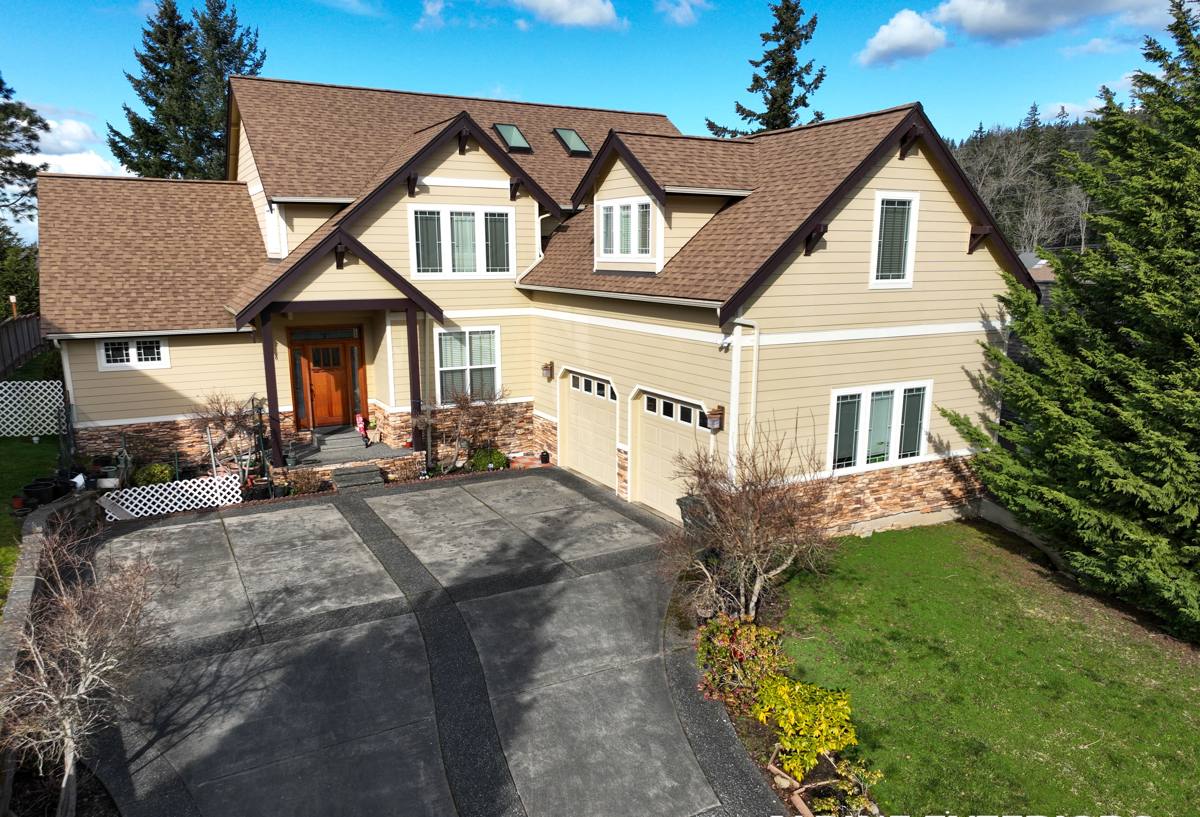
Edgemoor sits close enough to Bellingham Bay that salt-laden air is a daily fact of life for anything on a roof — fasteners, flashing, vent stacks, and the granules on asphalt shingles all take a slower, steadier beating here than they would further inland. Add the tree cover that gives the neighborhood its character, plus Whatcom County's long wet season, and you've got a roofing environment that punishes shortcuts. A roof that would hold up fine in a dry, sun-baked climate can fail early here if it wasn't built for this one.
This page covers what a proper new roof installation looks like specifically for Edgemoor homes — the materials that make sense, the details that matter most in this climate, and how our process works from first look to final inspection.
What Bellingham's Climate Does to a Roof
Salt Air and Corrosion
Homes closer to the water deal with airborne salt that accelerates corrosion on exposed metal — nail heads, drip edge, valley flashing, and vent boots all wear faster than they would a few miles inland. Roofing built for this area needs corrosion-resistant fasteners and flashing as a baseline, not an upgrade.
Driving Rain
Bellingham doesn't just get rain — it gets wind-driven rain that hits roofs at an angle, working its way under shingle edges, around chimneys, and into valleys if the underlayment and flashing details aren't done right. A roof here has to shed water sideways, not just downward.
The Long Moss Season
Shade from mature trees, combined with months of damp weather, gives moss and algae a long runway to establish themselves on north-facing slopes and anywhere debris collects. Moss isn't just cosmetic — its root structure lifts shingle edges and holds moisture against the roof deck, which is how small problems turn into rot.
Signs an Edgemoor Roof Needs Replacing, Not Patching
- Granule loss heavy enough that you can see bare asphalt on the shingle surface, especially on south and west-facing slopes
- Moss growth that comes back within a season or two of cleaning, even after treatment
- Curling, cupping, or cracked shingles across multiple sections of the roof, not just one isolated area
- Soft spots or sagging when walked, which usually means deck damage underneath
- Daylight visible through the attic roof boards, or water stains on attic sheathing
- A roof older than 20-25 years for asphalt shingle, or showing wear well ahead of its expected lifespan
- Rising energy bills tied to poor attic ventilation or failing insulation at the roofline
One or two of these can sometimes be addressed with a repair. Several at once, especially combined with a roof's age, usually means a repair is just delaying the real cost.
What a Correct New Roof Installation Actually Involves
A new roof is more than shingles nailed to plywood. In a climate like this, the parts you don't see matter as much as the parts you do.
Tear-Off and Deck Inspection
We remove the existing roofing down to the deck rather than layering over it. That's the only way to actually see the condition of the sheathing underneath — soft, delaminated, or water-stained decking gets replaced before anything new goes down. Roofing over rotten decking just hides the problem under a new layer of shingles.
Underlayment
Given how much wind-driven rain this area sees, underlayment choice matters. Synthetic underlayment with taped or sealed seams, paired with self-adhered ice-and-water membrane at eaves, valleys, and around penetrations, gives the roof a real second line of defense if wind ever pushes water past the shingles themselves.
Flashing
Chimneys, skylights, sidewalls, and valleys are where roofs actually fail — rarely in the open field of shingles. Flashing has to be formed and layered correctly with the underlayment and shingle courses, not just caulked in place. Caulk is a maintenance item, not a waterproofing strategy.
Ventilation
Balanced intake and exhaust ventilation keeps the attic space close to outdoor temperature and controls moisture. In a damp climate, poor ventilation traps humidity against the underside of the deck, which shortens the life of the roof from the inside out and can lead to mold in the attic.
Fasteners and Flashing Metal
We use corrosion-resistant fasteners and flashing throughout, not just at the exposed edges. It costs more up front and matters more here than it would inland.
Roofing Materials: How They Hold Up Locally
There's no single "best" roofing material — the right choice depends on budget, the home's architecture, and how much long-term maintenance an owner wants to take on. Here's how the common options compare for a shaded, damp, coastal-influenced property like an Edgemoor home.
| Material | Moss/Algae Resistance | Wind & Rain Performance | Typical Lifespan | Maintenance Burden |
|---|---|---|---|---|
| Standard asphalt composition shingle | Fair — needs periodic cleaning in shaded areas | Good when properly installed and fastened | 20-30 years | Moderate |
| Algae-resistant (AR) asphalt shingle | Better — copper or zinc granules slow regrowth | Good | 25-30 years | Low to moderate |
| Standing seam metal | Very good — sheds moss naturally | Excellent | 40-60 years | Low |
| Cedar shake | Poor without diligent upkeep | Fair — sensitive to installation quality and moisture | 20-30 years with maintenance | High |
| Synthetic/composite shingle | Good | Very good | 40-50 years | Low |
We don't install cedar shake as part of our standard offering. It can look great, but in a shaded, wet climate it demands consistent maintenance — cleaning, treating, and monitoring for moisture retention — to avoid the rot and moss problems that shorten its life. We'd rather steer a homeowner toward a material that performs well here with realistic upkeep than sell a product that needs more attention than most owners want to give it. That's a standard we hold ourselves to, not a knock on the material itself.
Our Process, Start to Finish
- On-site assessment — we walk the roof and attic, check the deck condition where accessible, note ventilation, flashing points, and moss/moisture patterns specific to the property's shade and exposure.
- Written estimate — a clear scope covering material options, tear-off, deck repair allowances, ventilation upgrades, and flashing work, with pricing broken out so you know what you're paying for.
- Permitting — we handle the permit process through the local jurisdiction before work begins.
- Material delivery and site protection — landscaping, siding, and gutters get protected before tear-off starts.
- Tear-off and deck inspection — old roofing removed, deck inspected and repaired as needed.
- Underlayment, flashing, and ventilation installation — the details that determine how the roof performs in wind-driven rain and long-term moisture exposure.
- Roofing material installation — installed to manufacturer specification, which is also what keeps material warranties valid.
- Final walkthrough — we review the completed roof, attic ventilation, and cleanup with the homeowner before calling the job done.
Cost Factors for an Edgemoor Roof Replacement
Every roof is priced on its own specifics, but the factors that move the number are consistent. Rather than quote a figure that won't reflect your actual roof, here's what drives cost up or down.
| Factor | Why It Affects Cost |
|---|---|
| Roof size and number of planes | More square footage and more valleys/hips mean more material and labor |
| Existing layers to remove | Tearing off multiple layers of old roofing costs more than a single layer |
| Deck condition | Rotted or delaminated sheathing needs replacement, which isn't known until tear-off |
| Roof pitch and access | Steep or hard-to-access roofs take longer and require more safety setup |
| Material choice | Asphalt, metal, and composite carry different material and labor costs |
| Ventilation and flashing upgrades | Bringing older ventilation or flashing up to current standards adds scope but pays off in roof life |
We put deck repair as an allowance in the estimate rather than a guess, and we tell you before we cover anything back up if we find something that changes the scope.
Why a Crew That Already Works Edgemoor Matters
A roofing crew that regularly works this part of Bellingham already knows which slopes hold moss longest, how much wind-driven rain a given orientation typically takes, and where local permitting tends to slow projects down if it's not handled correctly the first time. That's not a marketing point — it's the difference between a roof that's built to a generic spec and one that's built for the conditions it will actually sit in for the next few decades. It also means faster response if something needs a look after a big wind event, since we're not driving in from across the county.
Before You Hire: What to Check
- Confirm the contractor is licensed and insured in Washington, and ask to see current coverage
- Get the manufacturer certification level, if any — some material warranties require certified installers
- Ask how deck repair is handled if rot is found during tear-off — allowance up front, or surprise change order later
- Ask specifically about underlayment and ice-and-water membrane placement, not just shingle brand
- Get the ventilation plan in writing, not just "we'll vent it properly"
- Ask for the warranty terms in writing — both material and workmanship — before signing anything
Get a Straight Answer on Your Roof
If you're not sure whether your Edgemoor roof needs replacing or just some targeted repair and moss treatment, that's a fair question to start with — we'll give you an honest read either way. Reach out for a free, no-pressure estimate using the form below, and we'll walk the roof with you before recommending anything.