 Bellingham Window
 Why Sunnyland Roofs Wear Differently Than Roofs Inland
Sunnyland sits close enough to Bellingham Bay to catch salt-laden air, and its mature tree canopy means most homes here live in partial shade for a good chunk of the year. That combination is tougher on a roof than people expect. Salt air accelerates corrosion on exposed metal fasteners, flashing, and vent caps. Shade keeps roof surfaces damp longer after rain, which is exactly what moss, lichen, and algae need to take hold. And Whatcom County's wet season isn't just rainy — it's a long stretch of low-intensity, driving rain that finds every weak seam, nail pop, and worn flashing detail over time.
None of this means a roof in Sunnyland needs to be exotic or overbuilt. It means the installation details that get skipped or rushed elsewhere — proper underlayment coverage, correct flashing at every penetration, real attic ventilation — matter more here, not less. A new roof installed with those details right will outlast one that looks the same on day one but was installed for a drier climate.
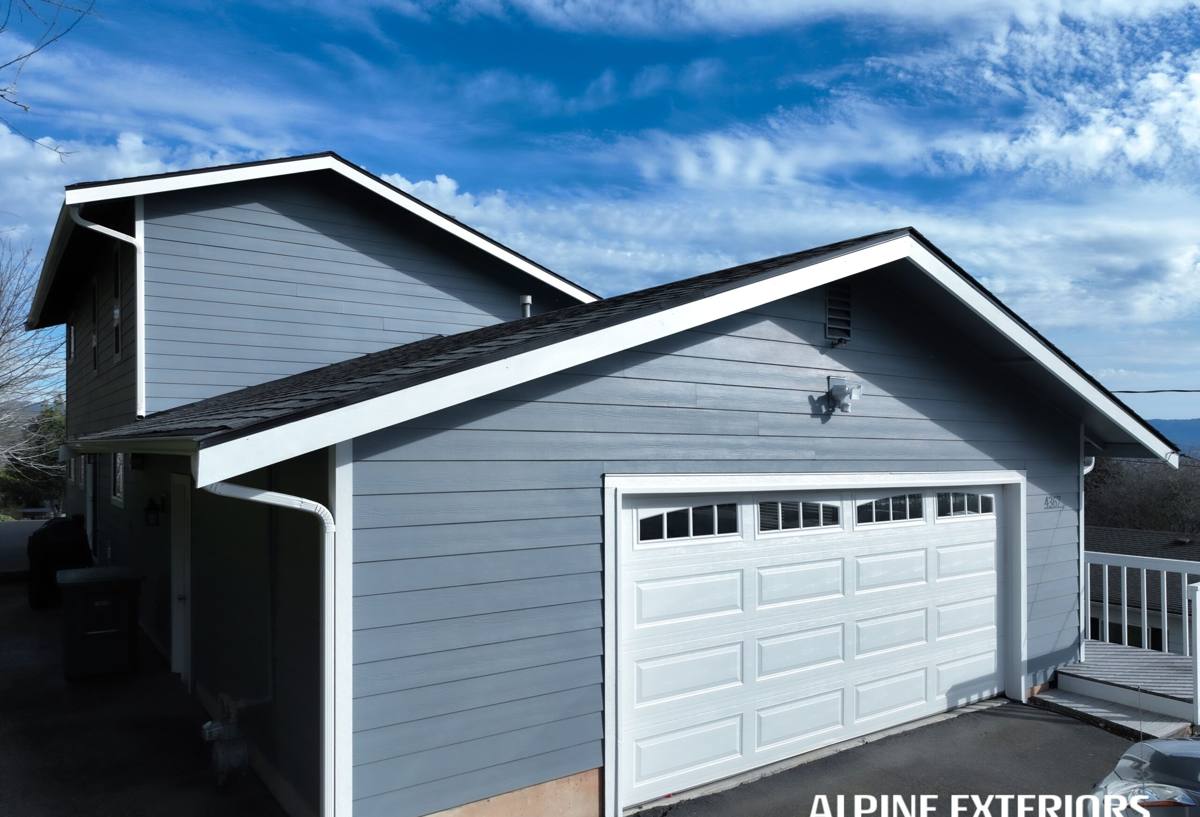
What a Correct New Roof Installation Actually Involves
"New roof" sounds simple, but the difference between a roof that lasts and one that fails early almost always comes down to what happens underneath the shingles or panels, not the material itself. A correct installation includes:
- Full tear-off to the deck — never a layover — so we can actually see the condition of the sheathing
- Deck inspection and replacement of any soft, delaminated, or water-damaged plywood or boards
- Ice-and-water shield at eaves, valleys, and around penetrations, sized for our wet-season exposure
- Synthetic underlayment across the full field for a secondary water barrier
- New flashing at every wall intersection, chimney, skylight, and vent — old flashing does not get reused
- Balanced intake and exhaust ventilation, not just a ridge vent with no intake to match it
- Manufacturer-specified nailing pattern and fastener type suited to coastal, high-moisture conditions
Skipping any one of these doesn't necessarily show up right away. A roof missing proper valley protection or flashing can look fine for a year or two before a leak shows up in a ceiling or wall cavity, by which point the damage is no longer just a roofing repair.
Choosing a Roofing Material for a Shaded, Coastal Lot
Most Sunnyland homes are well suited to either a quality architectural asphalt shingle or a metal roof, and the right call usually comes down to how much shade the roof sits in, how long you plan to own the home, and your appetite for periodic maintenance versus a higher upfront cost.
| Material | Performance in Shade/Moisture | Maintenance | Typical Lifespan |
|---|---|---|---|
| Architectural asphalt shingle | Good, especially with algae-resistant granules; still needs periodic moss removal in heavy shade | Moderate — roof cleaning every few years recommended | 25–30 years |
| Standing seam metal | Excellent — smooth surface sheds moisture and resists moss attachment | Low — occasional rinse, fastener check on exposed-fastener panels | 40–50+ years |
| Cedar shake | Poor in dense shade without diligent upkeep — moisture retention is a known trade-off | High — regular treatment and moss control required | 20–30 years with upkeep |
| Synthetic composite shingle | Good — engineered to resist moisture absorption | Low to moderate | 40–50 years |
We're honest with homeowners about cedar shake in a shaded, moss-prone spot like Sunnyland: it can look great, but the maintenance burden to keep it performing is real, and we'd rather set that expectation upfront than sell a product that becomes a chore. For most shaded lots here, we steer the conversation toward a good algae-resistant architectural shingle or metal, depending on budget and how long you're planning to stay in the home.
What "Algae-Resistant" Actually Means
Algae-resistant shingles have copper- or zinc-infused granules woven through the surface. As rain moves across the roof, trace amounts of that metal discourage algae and moss spores from establishing. It doesn't make a roof immune to moss — nothing does in a shaded coastal climate — but it meaningfully extends the time between cleanings compared to a standard shingle.
Our Installation Process, Start to Finish
- On-site inspection and estimate. We walk the roof (or use a drone where pitch or access makes that safer), check the attic for ventilation and moisture signs, and give you a written scope and price — no guesswork line items.
- Material selection. We walk through options based on your roof's exposure, shade, and budget, and give you straight answers about trade-offs rather than upselling.
- Permitting. Re-roofing in the City of Bellingham typically requires a permit; we handle that filing so you don't have to track it down yourself.
- Tear-off and deck inspection. Old roofing comes off down to the sheathing, and we document any deck repairs needed before covering anything back up.
- Underlayment and flashing. Ice-and-water shield, synthetic underlayment, and all new flashing go in before a single shingle or panel is installed.
- Installation. Material goes on to manufacturer spec, with attention to nailing pattern, exposure, and ventilation components.
- Cleanup and final walkthrough. Magnetic sweep for stray fasteners, full site cleanup, and a walkthrough so you know what was done and what to watch for.
Ventilation: The Detail Most Homeowners Never See
A roof that's shingled or paneled perfectly but poorly ventilated will still fail early. In our climate, trapped attic moisture condenses on the underside of the deck, which can rot sheathing from the inside out — a failure mode that has nothing to do with the roofing material itself. Correct ventilation balances intake (usually at the soffit) with exhaust (ridge or roof vents), so air actually moves through the attic instead of just circulating near the ridge. We check and correct this on every new roof installation, not just when it's convenient.
Moss, Algae, and Salt Air: What Sunnyland Homeowners Should Expect Long-Term
Even a well-installed roof in a shaded Sunnyland lot will eventually show some moss or algae growth — that's the nature of Whatcom County's wet, shaded microclimates, not a sign of a failed installation. What matters is staying ahead of it:
- Keep gutters and valleys clear of needles and leaf debris, which hold moisture against the roof surface
- Trim overhanging branches where practical to increase sun exposure and airflow
- Have moss physically removed (not just chemically killed and left in place) every few years
- Inspect exposed metal flashing and fasteners periodically for early corrosion, especially closer to the bay
- Address any moss buildup at the roof edge quickly — that's where trapped moisture does the most damage to shingles and decking
None of this is unique to us pushing extra services — it's genuinely what keeps a roof performing for its full expected lifespan in this specific kind of setting.
Signs a Sunnyland Roof Needs Replacement, Not Repair
Not every roof problem means starting over. But there's a point where patching stops making financial sense. Watch for:
| Sign | Usually Means |
|---|---|
| Granule loss visible in gutters, shingles look bare in patches | Shingles are past their protective lifespan |
| Daylight visible through the attic roof deck | Deck or flashing failure — needs full assessment |
| Multiple past repairs in different areas | Roof-wide aging, not isolated damage |
| Soft or spongy spots underfoot on the roof | Deck rot, often moisture-related |
| Heavy, persistent moss mats despite cleaning | Moisture retention issue underneath, not just surface growth |
Permits, Timing, and What to Expect Locally
Bellingham's building department requires permitting for most re-roofing work, particularly when decking repairs or structural work are involved — we handle that process as part of the job so it's not on your plate. Timing-wise, most single-family roof replacements in Sunnyland take one to three days of actual on-roof work once materials are staged, weather-dependent. Whatcom County's wet season makes scheduling around dry windows worth planning for, and we build weather contingency into our timelines rather than pretending it isn't a factor.
What to Ask Before Hiring Anyone for a Roof Replacement
- Are you licensed and insured in Washington State, and can you provide proof?
- Does the quote include full tear-off, or is a layover on the table?
- What underlayment and ice-and-water shield are specified, and where?
- Will all flashing be replaced, or reused where "still good"?
- How is attic ventilation being handled — intake and exhaust, or just exhaust?
- What's the manufacturer's warranty, and is it enhanced by certified installation?
- Do you pull the permit, or is that left to the homeowner?
A contractor who answers these clearly and specifically, without vague reassurances, is usually one worth trusting with the job.
Why a Crew That Already Works in Sunnyland Is Worth Choosing
A roofing crew that regularly works Bellingham's shaded, tree-heavy neighborhoods near the bay already knows which flashing details fail first in this climate, which materials hold up under real moss pressure rather than lab conditions, and how to sequence a job around Whatcom County's wet-season weather windows. That local pattern recognition is the difference between a roof that's technically installed to code and one that's actually built for the conditions it will sit under for the next twenty-plus years.
If you're weighing repair versus replacement, or just want an honest read on your roof's condition, we're happy to take a look. Reach out for a free, no-pressure estimate using the form below.