 Bellingham Window
 Roofing Built for Puget's Weather, Not Just Any Weather
Puget homes sit close enough to the water that salt air, wind-driven rain, and a moss season that can stretch nine months out of the year are simply part of owning a house here. A roof that would hold up fine in a drier inland climate can start failing early in this neighborhood if it wasn't installed with these conditions in mind. Asphalt shingle roofing remains one of the most practical, cost-effective choices for this area, but only when the materials, ventilation, and installation details are matched to what Whatcom County actually throws at a roof year-round.
This page focuses specifically on asphalt shingle roofing for homes in and around Puget. We're not going to give you a generic overview of shingles you could find on any manufacturer's website. We're going to walk through what actually matters for a roof in this specific location: the moisture, the moss, the wind exposure, and the kind of workmanship that keeps a shingle roof performing for its full service life instead of failing at year twelve.
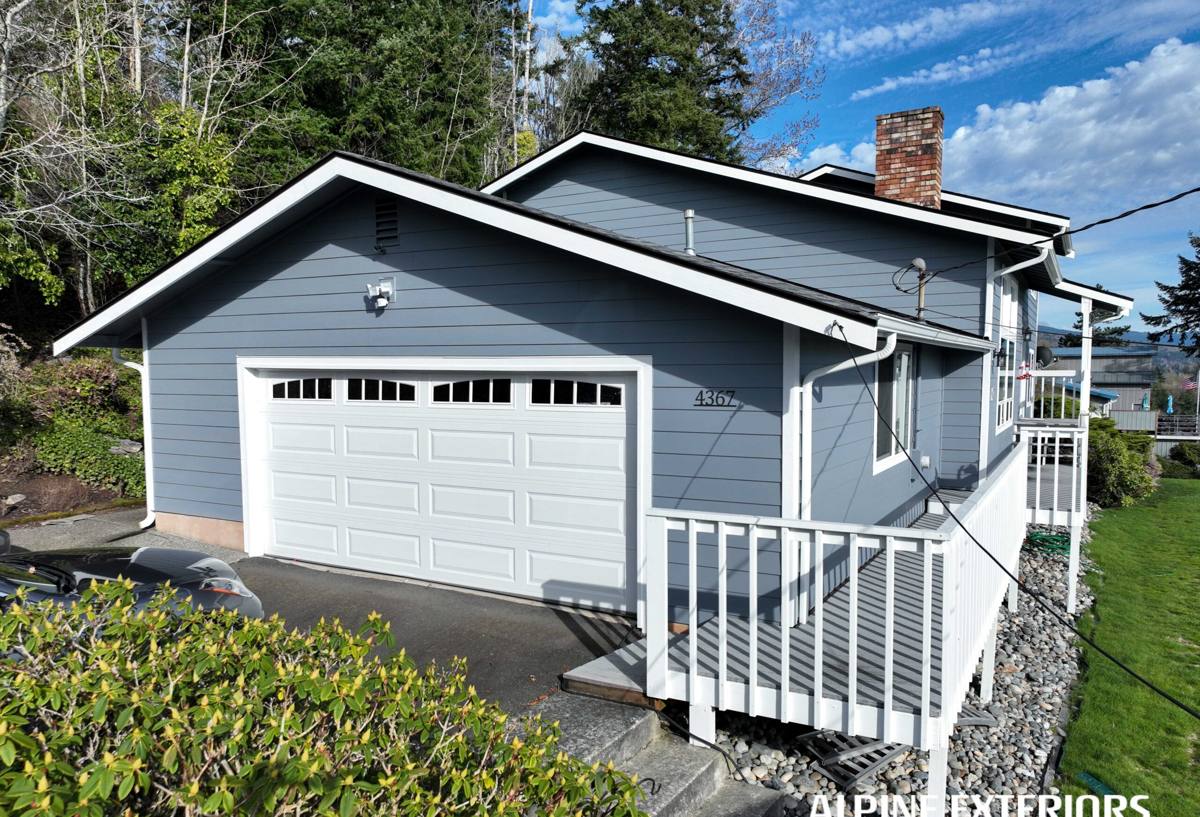
Why Puget's Climate Is Harder on Shingle Roofs Than People Expect
Salt Air and Corrosion
Homes closer to the water deal with airborne salt that accelerates corrosion on exposed metal — flashing, fasteners, vent boots, and drip edge. Cheap or under-spec metal components are often the first thing to fail on a shingle roof in this environment, well before the shingles themselves wear out. It's a detail that's easy to overlook because it's not visible from the ground, but it's one of the most common reasons we find leaks starting at flashing joints rather than in the field of the roof.
Driving Rain
Storms coming off the water don't just drop rain straight down — they drive it sideways under wind gusts, which pushes water into laps, valleys, and edges that a roof designed for calmer weather wouldn't need to worry about as much. That means underlayment choice, valley treatment, and edge detailing matter more here than they would in a lot of other parts of the country.
Moss Season
Bellingham's damp, shaded, mild climate is close to ideal for moss growth. Moss holds moisture against the shingle surface, lifts shingle edges as it grows, and works its way into laps over time. Left unmanaged for a few seasons, moss can shorten the usable life of an otherwise sound shingle roof by years. A roof in Puget needs a plan for moss from day one — not a reaction after it's already established.
What a Correctly Installed Shingle Roof Looks Like Here
A shingle roof that's going to hold up under Puget County conditions needs more than good shingles nailed down in a straight line. The system underneath and around the shingles does most of the real work.
- Synthetic underlayment rated for high-moisture climates, not the minimum builder-grade felt
- Ice-and-water shield at eaves, valleys, and roof-to-wall transitions where wind-driven rain is most likely to find a way in
- Balanced intake and exhaust ventilation so moisture from inside the home doesn't condense against the roof deck
- Corrosion-resistant flashing and fasteners suited to a salt-air environment
- Proper valley treatment — closed-cut or metal-lined, installed to shed water rather than trap it
- Starter strip and edge metal detailed to resist wind uplift in exposed locations
- Shingle selection with an algae-resistant (moss and streak-resistant) rating suited to this climate
Skip any one of these and the roof may look fine for a few years while a slow problem builds underneath. Most of the shingle roof failures we get called out to inspect in this area trace back to one of these details being shortcut during the original install, not to the shingles being a bad product.
Choosing the Right Shingle for a Puget Roof
Not every asphalt shingle product is a good match for this climate. The differences that matter most here are algae resistance, wind rating, and how the shingle sheds water at the laps.
| Factor | Why It Matters in Puget | What to Look For |
|---|---|---|
| Algae/moss resistance | Long damp season promotes growth that stains and lifts shingles | Shingles with copper or zinc granule treatment built in |
| Wind rating | Open exposure near the water means higher gust loads | Rated for at least 110 mph with proper nailing pattern |
| Shingle weight/thickness | Heavier shingles resist wind lift and hail impact better | Architectural (dimensional) shingles over 3-tab where budget allows |
| Warranty structure | Algae-resistance warranties are often shorter than the material warranty | Read the actual warranty terms, not just the headline years |
We don't push a single brand as the only acceptable option — several manufacturers make products that hold up well here. What matters more than the label is whether the specific shingle line has real algae-resistant granules (not just marketing language) and a wind rating that matches your home's exposure. We'll walk you through the options that fit your budget and go over the actual warranty terms in plain language, because the fine print is where a lot of homeowners get surprised later.
Our Process for a Puget Roof Replacement
1. On-Site Inspection
We start by getting on the roof, not just looking at it from the driveway. We check the deck condition, existing ventilation, flashing points, and any signs of moss or moisture damage that aren't visible from ground level.
2. Honest Scope and Estimate
You get a written scope that spells out the underlayment, ventilation plan, flashing approach, and shingle options — not just a single line item that says "reroof." If your deck needs repair or your ventilation is inadequate, we tell you before the work starts, not after we've opened up the roof.
3. Tear-Off and Deck Check
We remove the old roofing down to the deck and inspect for soft spots or water damage that wouldn't have been visible with the shingles in place. This is the point where hidden problems from a prior roof — often moisture damage from an earlier moss issue — actually get found and fixed.
4. Install to the Climate, Not the Minimum Code
Underlayment, ice-and-water shield, flashing, and ventilation go in to the standard described above, not just the local code minimum. Code minimums are a floor, not a target, especially in a wet coastal climate.
5. Final Walkthrough
We walk the finished roof and the site with you, confirm cleanup, and go over basic care and what to watch for going forward — including how to manage moss without damaging the shingles.
Living With a Shingle Roof in Puget: Moss and Maintenance
A well-installed, moss-resistant shingle roof still benefits from some basic upkeep in this climate. A few habits go a long way toward getting the full service life out of your roof:
- Keep gutters clear so water doesn't back up under the shingle edges during heavy rain
- Trim back overhanging branches that keep shade and moisture on the roof surface
- Have moss growth treated gently — soft washing or approved treatments, never pressure washing directly on shingles, which strips granules and shortens shingle life
- Schedule a roof check after major windstorms to catch lifted shingles or flashing damage early
- Watch for granules collecting in gutters, which can signal a shingle surface nearing the end of its service life
None of this is complicated, but it does need to actually happen. A roof that's ignored for a decade in this climate ages faster than one that gets a five-minute look twice a year.
Why a Crew That Already Works in Puget Matters
Roofing crews that mostly work drier inland climates don't always think about salt-air corrosion on flashing, or design ventilation around a moss season that lasts most of the year. It's not a matter of skill — it's a matter of what problems a crew has actually seen repeatedly and learned to build around. A crew that works Whatcom County roofs regularly has already seen where shortcuts show up as leaks two or three years down the road, and builds around those failure points as a matter of habit, not as an afterthought.
We also know the practical side of working in this area — permitting expectations, typical roof pitches and styles found on Puget homes, and how weather windows affect scheduling a tear-off safely. That local familiarity translates into fewer surprises and a tighter, more predictable project for you.
What This Typically Involves Cost-Wise
Shingle roof replacement costs vary based on roof size, pitch, number of layers being removed, deck condition, and shingle tier chosen. Rather than quote a number that won't reflect your actual home, we provide a detailed written estimate after the on-site inspection, broken down by scope so you can see exactly what you're paying for and why — including any upgrades like better underlayment or added ventilation that we recommend specifically because of this climate.
If you're weighing a shingle roof replacement or repair for a home in the Puget area, we're happy to take a look and give you a straightforward, no-pressure estimate. Use the form below to get started.