 Bellingham Window
 New-Construction Windows Built for Puget's Weather, Not Just the Blueprint
Puget sits close enough to the water that every new-construction window decision gets tested by the same three things year-round: salt-laden air off the Sound, driving rain that hits siding sideways during winter storms, and a moss season that runs longer here than almost anywhere else in Whatcom County. A window that's rated fine on paper can still underperform if it's not installed with this specific climate in mind. New construction gives us the best possible shot at getting it right the first time, because we're working with open framing instead of retrofitting around existing trim, siding, and old flashing mistakes.
We've done enough new builds in and around Bellingham to know that "new construction" doesn't mean "install and move on." It means coordinating with the framing schedule, checking rough openings before windows ever show up on site, and building a water management plan into the wall assembly itself. That's the difference between a window package that looks good at final walkthrough and one that still looks good in year twelve.
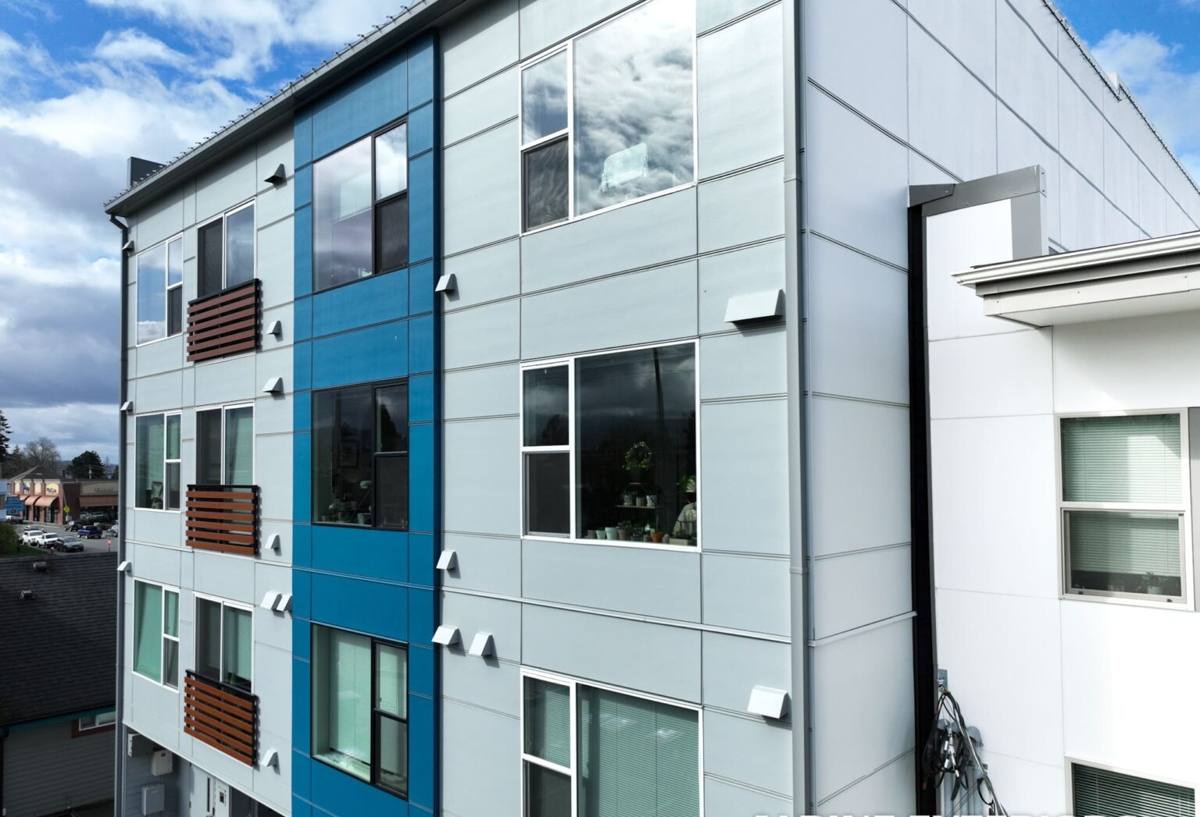
Why Puget's Microclimate Changes the Install
Bellingham's marine climate is milder than a lot of the country, but mild doesn't mean easy on building materials. Three local realities drive how we spec and install new-construction windows in this area:
- Salt air corrosion: Proximity to Bellingham Bay and the greater Puget Sound means airborne salt can accelerate corrosion on lower-grade hardware, fasteners, and cladding over time. We pay attention to hardware finish and fastener material, not just glass performance.
- Wind-driven rain: Storms here don't just fall straight down — wind pushes rain sideways into wall assemblies, which is exactly the condition that exposes weak flashing details. A window can be perfectly good and still leak if the flashing and sill pan underneath it are done wrong.
- Long moss and moisture season: Whatcom County's extended damp season keeps exterior surfaces wet longer than drier climates. Anywhere water can sit — sills, bottom corners, transitions to siding — needs a real drainage path, not just a bead of caulk.
None of this means Puget homeowners need exotic products. It means the installation details matter more here than they would in a dry climate, and that's where we focus.
What a Correct New-Construction Window Job Actually Involves
Rough Opening Verification
Before any window is set, we check that rough openings are square, plumb, and sized correctly per the manufacturer's specs. Framing crews are usually good, but tolerances stack up across a house, and it's cheaper to catch a problem before the window arrives than after.
Water Management Layer
This is the part that separates a durable install from a future callback. A proper new-construction window opening gets a sloped sill pan so any water that gets past the window has somewhere to go besides the framing. Housewrap or weather-resistive barrier gets integrated with the window flanges in the correct shingle-lap order — meaning each layer overlaps the one below it, so water sheds outward and down instead of working its way behind the cladding.
Flashing at Head, Jambs, and Sill
Given how much wind-driven rain this area sees, we treat flashing as the most important part of the job, not an afterthought. Head flashing needs to divert water out and away from the top of the window. Jamb flashing needs to tie cleanly into the water-resistive barrier on both sides. None of this is visible once siding goes on, which is exactly why it needs to be done right the first time.
Setting and Fastening
Windows get set level and plumb, shimmed correctly to avoid racking the frame, and fastened per manufacturer spec — not just "however many screws feel right." Over-fastening or under-shimming a window frame can cause operational problems (windows that stick or won't seal) even if the exterior looks fine.
Interior and Exterior Sealing
Low-expansion foam or backer rod and sealant around the frame perimeter, done at the right thickness, controls air leakage without bowing the frame. We also make sure interior sealing doesn't trap moisture — a wall assembly needs to be able to dry, not just be sealed airtight in every direction.
Our New-Construction Install Checklist
- Rough opening measured and squared before window delivery
- Sloped sill pan installed under every window opening
- Weather-resistive barrier integrated in correct shingle-lap sequence
- Head, jamb, and sill flashing installed and inspected before siding closes it in
- Window shimmed, leveled, and fastened per manufacturer spec
- Interior and exterior sealant applied at correct joints, not just wherever there's a gap
- Operation tested (open, close, lock) on every unit before we leave the site
Choosing Window Products for a Puget New Build
We don't push one brand as the answer for every project — the right product depends on budget, architectural style, and how exposed a given elevation is to wind and rain. What we do insist on is honesty about trade-offs. Vinyl frames are a solid value option and handle moisture well, but lower-end vinyl can show UV wear over many years. Fiberglass and composite frames cost more up front but hold dimensional stability better through temperature swings and tend to need less long-term maintenance. Wood-clad windows look great and perform well when detailed correctly, but they demand more attention at every seam because any gap in the cladding is a path for moisture into the wood underneath.
For elevations that take the brunt of wind-driven rain — typically west- and southwest-facing walls in this area — we're more conservative about product choice and flashing detail than we are on more sheltered sides of a house. That's a judgment call based on exposure, not a one-size-fits-all rule.
Glazing and Performance Considerations
Bellingham's climate doesn't demand the extreme cold-climate glazing packages you'd see in the Rockies or the Midwest, but double-pane with low-E coating is a reasonable baseline for most new construction here, with upgrades available for west-facing rooms that get more afternoon sun exposure or homes closer to the water where wind load is higher. Argon-filled units add a modest performance bump for a modest cost premium — worth discussing based on your specific floor plan and orientation.
| Factor | What to Weigh |
|---|---|
| Frame material | Vinyl (value), fiberglass/composite (durability), wood-clad (appearance, upkeep) |
| Exposure | West/southwest walls facing prevailing wind-driven rain need more conservative flashing detail |
| Glazing | Low-E double-pane baseline; argon or upgraded coatings for sun exposure or higher wind load |
| Hardware finish | Corrosion-resistant hardware matters more this close to salt air |
| Maintenance appetite | Wood-clad looks best but needs more attention; vinyl/fiberglass are lower-maintenance |
How We Work With Builders and General Contractors
Most of our new-construction work in the Puget area comes through coordination with a builder or GC rather than a homeowner calling us directly, though we work both ways. Either way, our process looks the same:
- Review plans and window schedule before framing is complete, so we can flag any rough opening or spec issues early
- Confirm delivery timing so windows arrive when the framing crew is actually ready for them — not sitting exposed on site for weeks
- Install to the sequence above, coordinating with whoever is doing housewrap and siding so the water management layers actually connect properly instead of being done by two crews who never talk to each other
- Walk the job with the builder before siding closes anything in, since flashing problems are cheap to fix before that point and expensive after
- Final punch-list and operational check on every window before the house is turned over
That coordination step — flashing gets inspected before siding goes on — is one of the most common places new-construction window problems get created. Once siding is up, nobody can see whether the water management layer was actually done correctly. We'd rather take the extra time to check it while it's still visible.
Why a Local Crew Matters More Than It Might Seem
New-construction window installation isn't exotic work, but doing it well in Whatcom County means understanding the specific conditions this area throws at a building envelope. A crew that mostly works drier or more inland climates may not default to the flashing detail this area actually needs, because they haven't had to. We work in Bellingham and the surrounding communities regularly, so we're not guessing about how wind-driven rain behaves against a west-facing wall in Puget, or how much attention a sill detail needs given how long things stay damp here.
There's also a practical side to hiring local: scheduling flexibility around framing timelines, faster response if a builder needs us back on site for a punch-list item, and a crew that isn't driving hours to get to your project. On a new build, timing coordination with other trades is often as important as the install itself.
Common Mistakes We See — and Avoid
- Flat or missing sill pans: Without a sloped drainage path, any water that gets past the window sits against the framing instead of draining out.
- Wrong shingle-lap sequence: If housewrap and window flanges aren't layered so water sheds downward and outward, moisture gets directed into the wall instead of away from it.
- Over-reliance on sealant alone: Caulk is a backup layer, not a substitute for correct flashing. Sealant fails eventually; good flashing keeps working underneath it.
- Racked frames from bad shimming: A window that's fastened without proper shim support can bind, stick, or fail to seal correctly even if it looked fine going in.
- Skipping the pre-siding inspection: Once the wall is closed up, a flashing mistake becomes a hidden problem instead of a quick fix.
What to Expect From Us on a New-Construction Job
We'll walk the plans with you or your builder, talk through frame and glazing options that fit the home's exposure and budget, and give you a clear installation timeline that lines up with the rest of the build schedule. We're upfront about what a given product will and won't do — no oversold performance claims, no glossing over maintenance needs. If a west-facing wall needs a more conservative flashing detail than the plans originally called for, we'll say so before it becomes a problem instead of after.
If you're planning a new build in Puget or elsewhere around Bellingham and want to talk through window options, framing coordination, or timeline, reach out for a free, no-pressure estimate — the form below gets you started.