 Bellingham Window
 Roof Replacement in York, Bellingham
Homes in the York neighborhood face the same roofing challenges as the rest of Bellingham, but with a few local wrinkles worth knowing before you replace a roof here. You're close enough to the water to pick up salt-laden air, tucked under a tree canopy that sheds needles and seeds most of the year, and sitting under Whatcom County's long, wet fall-through-spring stretch that keeps roofs damp for months at a time. A roof replacement done right for this area accounts for all of that from the start — not just the shingle color.
We've worked on roofs throughout York and the surrounding Bellingham streets long enough to know which north-facing slopes hold moss the longest, which older homes still have plank decking under the shingles, and which attic setups need extra ventilation work before a new roof goes on. That local pattern-recognition is worth more than any brochure, and it's the biggest reason to hire a crew that already works this specific area instead of a traveling outfit that treats every job the same.
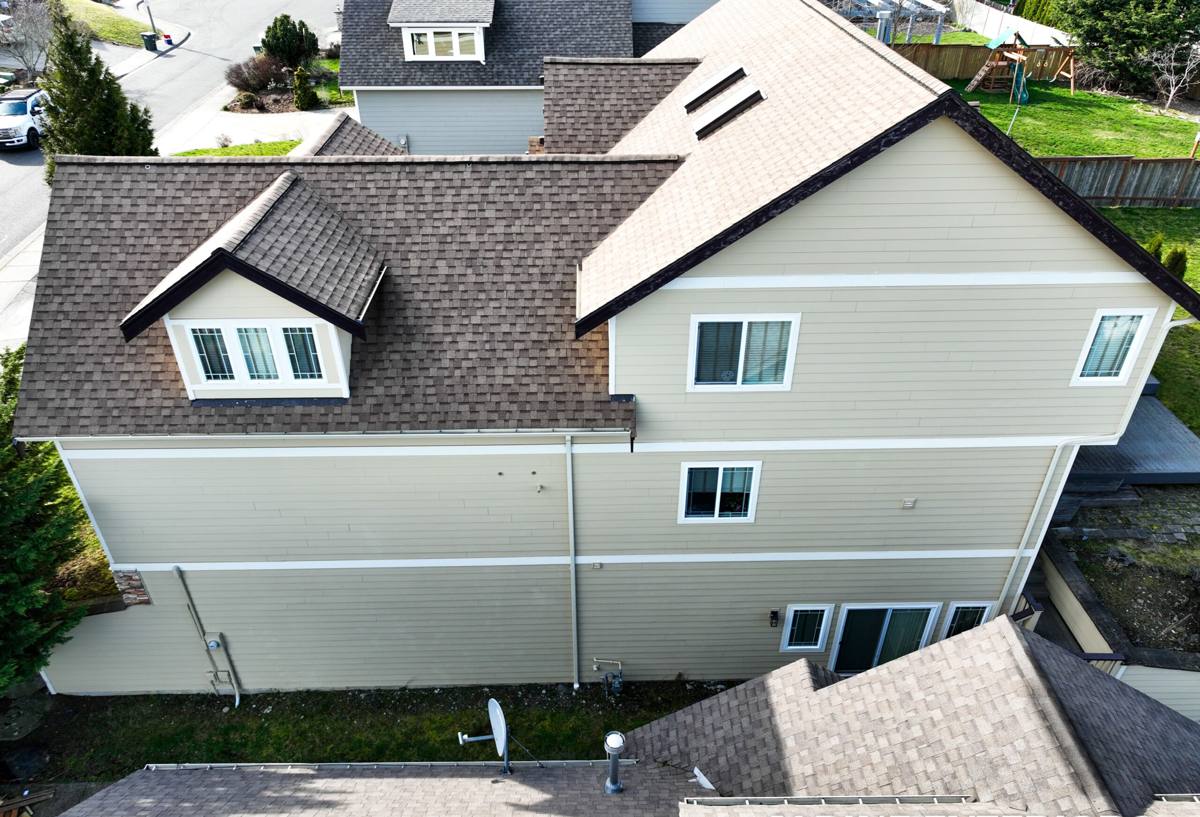
What Bellingham's Climate Does to a Roof
Whatcom County doesn't get the extreme heat or hail that wears out roofs elsewhere, but it applies steady, patient damage that catches homeowners off guard:
- Moss and organic growth: Shade, moisture, and mild temperatures are a perfect combination for moss, lichen, and algae. Left alone, moss lifts shingle edges, holds water against the roof deck, and accelerates granule loss.
- Driving rain: Wind-driven rain off the Sound doesn't just fall straight down — it pushes up under shingle tabs and around flashing details that would stay dry in a calmer climate.
- Salt air: Proximity to Bellingham Bay means airborne salt settles on roofing materials and fasteners. Over years, this speeds up corrosion on exposed metal — flashing, nail heads, gutter hardware — more than an inland roof would experience.
- Long wet season: Roofs here spend a large part of the year damp rather than fully dry, which matters for how underlayment, ventilation, and decking are chosen and installed.
None of this means Bellingham is a bad place for a roof — it means the roof has to be built for these specific conditions rather than a generic install.
Signs a York-Area Roof Needs Replacing, Not Patching
Not every roof problem calls for full replacement. Here's how we help homeowners tell the difference:
Repair is usually enough when:
- Damage is isolated to one area — a section of flashing, a handful of lifted or cracked shingles, a single leak point.
- The roof is under 15 years old and the rest of the field is in solid shape.
- The decking underneath is dry and sound.
Replacement makes more sense when:
- Granule loss is widespread and shingles look bare or blistered across multiple slopes.
- Moss has been established for years and has lifted shingles in more than one spot.
- You're seeing daylight through the attic, soft spots in the decking, or recurring leaks in different locations after past repairs.
- The roof is nearing or past its expected service life for its material.
An honest inspection should tell you which category you're in — and a contractor who wants your long-term trust will say "repair" when repair is the right call, even if replacement pays more.
Material Options for This Climate
There's no single "best" roofing material — the right choice depends on your home's slope, budget, and how much maintenance you want to do. Here's how the common options stack up for a wet, moss-prone, salt-air climate like Bellingham's:
| Material | Moisture & Moss Behavior | Maintenance | Typical Lifespan |
|---|---|---|---|
| Architectural asphalt shingle | Good when installed with proper ventilation and ice/water protection; moss-resistant granule options available | Periodic moss/debris removal recommended | 25–30 years |
| Standing seam metal | Sheds water and moss very well due to smooth, steep-shed surface; minimal organic buildup | Low — occasional gutter and fastener check | 40–50+ years |
| Cedar shake | Attractive but naturally absorbs moisture; requires diligent upkeep in a wet climate to avoid rot | High — regular treatment and moss control | 20–30 years with upkeep |
| Synthetic/composite shingle | Resists moisture absorption well; consistent performance across seasons | Low to moderate | 30–50 years depending on product |
For most York-area homes, we steer conversations toward architectural asphalt or metal — both give strong moisture and moss performance without asking the homeowner to babysit the roof every year. Cedar shake can still be the right call on the right home, but we're upfront that it demands more ongoing attention in this climate, and that's a maintenance and moisture-behavior trade-off, not a knock on the material itself.
What a Correct Roof Replacement Actually Involves
A roof replacement is more than stripping old shingles and nailing down new ones. For a wet coastal climate, the details underneath the visible surface matter as much as the shingle itself.
Tear-off and deck inspection
Full tear-off lets us actually see the decking. In older York-area homes this sometimes means original plank decking rather than plywood or OSB — both can be perfectly fine, but any soft, delaminated, or water-stained sections get identified and replaced before anything new goes down. Skipping this step just buries a problem under new shingles.
Underlayment and water protection
Given how much of the year Bellingham roofs stay damp, we pay close attention to underlayment quality and to ice-and-water shield placement at eaves, valleys, and any low-slope transitions — the spots where wind-driven rain and ice dams (on the rare cold snap) do the most damage.
Flashing details
Chimneys, skylights, wall-to-roof transitions, and vent penetrations are where most leaks actually start — not in the open shingle field. Flashing gets replaced, not reused, and corrosion-resistant materials are used given the salt air exposure this close to the Sound.
Ventilation
Proper intake and exhaust ventilation keeps the attic dry and the roof deck at a stable temperature. In a climate this humid, under-ventilated attics are one of the fastest ways to shorten a new roof's life — trapped moisture rots decking from underneath, regardless of how good the shingles above it are.
Moss prevention built in
On shaded or north-facing slopes common throughout York, we talk through moss-resistant shingle options and, where it makes sense, zinc or copper strip installation at the ridge — a passive way to slow moss regrowth without chemical treatments.
Our Process, Start to Finish
- On-site inspection: We walk the roof (or use appropriate access for steep slopes) and check the attic from inside — not just a look from the ground.
- Honest assessment: You get a clear answer on repair versus replacement, with the reasoning explained, not just a quote.
- Written estimate: Material options, scope of work, and a realistic price range — no vague allowances buried in fine print.
- Scheduling around weather: We plan tear-off and dry-in around Whatcom County's forecast windows so your home isn't exposed to open sky longer than necessary.
- Tear-off and deck repair: Full removal, deck inspection, and replacement of any compromised sheathing.
- Installation: Underlayment, flashing, ventilation, and the finish material installed to manufacturer spec.
- Final walkthrough: We review the finished roof with you, cover warranty paperwork, and answer any maintenance questions.
Cost Factors Worth Understanding
Every roof is different, but these are the variables that actually move the price, so you know what you're paying for:
| Factor | Why It Matters |
|---|---|
| Roof size and slope complexity | More valleys, dormers, and slope changes mean more labor and flashing work |
| Decking condition | Rot or soft sheathing found during tear-off adds repair cost that's hard to know until the old roof is off |
| Material choice | Asphalt, metal, and composite options span a wide price range and lifespan |
| Ventilation upgrades | Adding or correcting intake/exhaust venting is a smart long-term investment, especially in this climate |
| Access and steepness | Steep or hard-to-access roofs require more safety equipment and time |
We give real ranges during the estimate, not a number pulled out of thin air — and we flag likely deck repair costs upfront based on the age and visible condition of your roof, rather than surprising you mid-project.
A Pre-Estimate Checklist for Homeowners
Before we come out, it helps to have a few things in mind:
- Roughly how old is the current roof, if you know?
- Have you noticed leaks, and if so, where inside the house?
- Any past repairs you're aware of, even minor ones?
- Is moss or algae visible from the ground, and on which slopes?
- Any preference between asphalt, metal, or another material — or are you open to our recommendation?
- Rough timeline — are you working around a sale, insurance claim, or just planning ahead?
None of this is required to book an estimate, but it speeds up the conversation and helps us give you sharper answers on the spot.
Why a Local Bellingham Crew Matters for This Job
Roofing crews that don't work this region regularly tend to under-spec ventilation, skip zinc strips on moss-prone slopes, or use underlayment that's fine for a drier climate but not ideal for Whatcom County's wet stretch. We work York and the rest of Bellingham consistently, which means we're not guessing at how this climate treats a roof over time — we're seeing it firsthand on jobs and follow-up visits year-round. That local track record, not a sales pitch, is what should drive your decision on who replaces your roof.
If you're weighing a roof replacement in York or anywhere else in Bellingham, we're happy to take a look and give you a straight answer — repair, replace, or wait — along with a free, no-pressure estimate using the form below.