 Bellingham Window
 Siding Built for Sudden Valley's Microclimate
Sudden Valley sits in a different weather pocket than downtown Bellingham. The community's wooded lots, proximity to Lake Whatcom, and tree canopy coverage mean homes here deal with more shade, more standing moisture, and a longer moss season than siding in open, sun-exposed parts of Whatcom County. Add in the marine air drifting up from Bellingham Bay and the driving rains that come off the Puget Sound lowlands each winter, and you've got a combination that punishes the wrong siding choice fast.
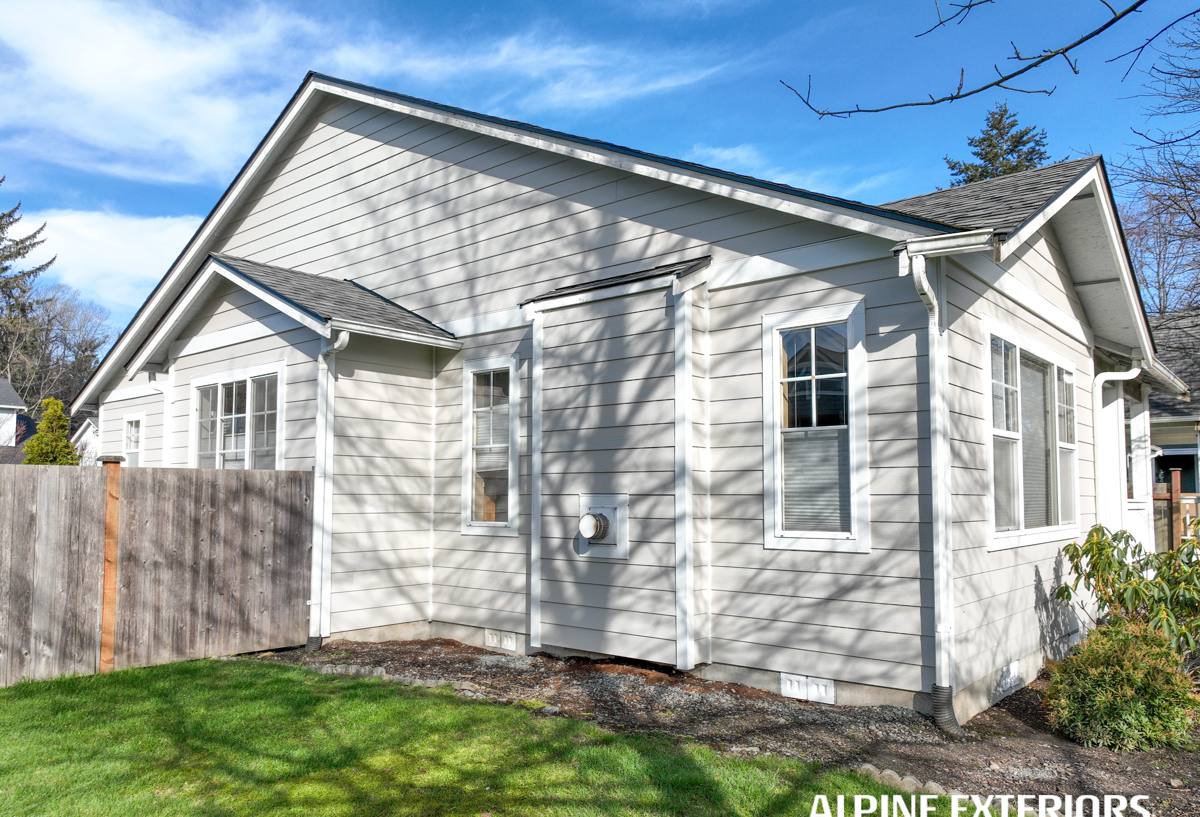
We install James Hardie fiber cement siding exclusively, and Sudden Valley is exactly the kind of neighborhood that shows why. Shaded, moisture-retentive lots are where cheaper siding materials fail first — and where a correctly installed fiber cement system earns its keep for decades.
Why Shade and Moisture Change the Equation
A lot of siding products are rated and marketed for average conditions. Sudden Valley isn't average. Homes tucked under mature trees dry out slower after a storm, stay damp longer through fall and winter, and collect organic debris — needles, leaves, pollen — in wall crevices and behind poorly flashed trim. That combination is what feeds moss, algae, and mildew growth on siding surfaces and, if moisture gets past the cladding, on the sheathing behind it.
What This Means in Practice
- North- and west-facing walls under tree cover stay wet longer after rain and need siding that tolerates sustained moisture exposure without swelling or softening
- Gutters, roof lines, and any point where two roof planes meet need careful flashing, since these are where runoff concentrates against the wall
- Lower wall sections near landscaping or retaining walls need proper clearance so soil and mulch moisture doesn't wick into the siding
- Homes with heavy shade benefit from lighter or factory-baked finishes that show moss growth early, making maintenance easier to stay ahead of
Why We Only Install James Hardie
We made a decision a while back to stop installing several products that are common in this region — vinyl, LP SmartSide, primed wood siding, and other fiber cement brands — because we kept seeing the same failure patterns on shaded, wet lots like the ones in Sudden Valley. Vinyl expands and contracts more than people expect in temperature swings and can crack in cold snaps. Engineered wood products are vulnerable at cut edges and seams if caulking isn't maintained. Primed wood and cedar need more upkeep than most homeowners realize once shade and moisture are constant factors.
James Hardie fiber cement is not a miracle product, and we won't pretend it's maintenance-free. But it's non-combustible, dimensionally stable in wet-dry cycles, and holds its factory-applied ColorPlus finish far longer than field-applied paint on other materials. For a climate like ours — and especially for a shaded, moisture-heavy community like Sudden Valley — that stability is what actually matters over 20-plus years, not what looks good on a spec sheet.
HZ5 vs. Standard HZ Products
Hardie makes climate-specific versions of its siding, engineered for different moisture and freeze conditions. For Whatcom County's wet, moderate-freeze climate, the HZ5 product line is the appropriate choice — it's built for regions with more moisture cycling than the desert Southwest or the deep freeze of the upper Midwest. We spec HZ5 as standard on Sudden Valley installs unless a specific site condition calls for something else.
What a Correct Installation Involves
Fiber cement siding is only as good as the installation behind it. Most of the failures we get called out to inspect on other contractors' work trace back to installation shortcuts, not the product itself. On a Sudden Valley home, we pay particular attention to:
Water Management Behind the Siding
A drainable house wrap or rainscreen gap gives any moisture that gets past the cladding a path to drain and dry out, rather than sitting against the sheathing. On shaded lots where walls take longer to dry naturally, this drainage plane is not optional — it's the difference between siding that lasts and sheathing rot fifteen years in.
Flashing at Every Penetration
Windows, doors, hose bibs, vents, and deck ledgers all need proper flashing integrated with the water-resistive barrier, lapped correctly so water sheds outward and down, never inward. This is detail work that takes longer than caulking a gap and calling it done, but it's the single biggest factor in long-term performance.
Proper Fastening and Clearances
Hardie's installation instructions specify fastener placement, board overlap, and minimum clearances from grade, roofing, and decks. Skipping these to save time is the most common shortcut we see, and it's exactly what leads to premature moisture intrusion at the bottom courses — often the same areas already dealing with shade and slow drying in a community like Sudden Valley.
Caulking and Joint Treatment
Butt joints, trim intersections, and penetrations need the right sealant, applied correctly, not just as a finishing touch. On a home with heavy tree cover, joints that aren't sealed properly become the first place moss gets a foothold and moisture starts working its way in.
Our Process for Sudden Valley Homes
- On-site assessment — we walk the property, note shade patterns, drainage, existing moisture damage, and any areas where the current siding or trim has already failed
- Sheathing inspection — once old siding comes off, we check for rot, soft spots, or prior water damage before anything new goes up; this is often where hidden problems from years of moisture exposure surface
- Water-resistive barrier and drainage plane installation — sized and detailed for the specific wall conditions we find
- Flashing integration — at every window, door, and penetration, tied into the barrier system correctly
- Hardie HZ5 installation — installed to manufacturer spec for fastening, clearance, and joint treatment
- Final detailing and walkthrough — trim, caulking, and a final inspection with the homeowner before we consider the job finished
Cost Factors for Sudden Valley Siding Projects
Every home is different, but a few factors consistently move the price on Sudden Valley jobs more than they would on a simpler, more exposed lot:
| Factor | Why It Matters Here |
|---|---|
| Existing sheathing condition | Shaded, moisture-prone walls are more likely to need sheathing repair or replacement once old siding is removed |
| Wall complexity and access | Wooded lots and multi-level homes can complicate scaffolding, staging, and material access |
| Trim and detail work | Homes with more window and roofline intersections need more flashing and detail labor |
| Finish selection | ColorPlus prefinished panels cost more upfront than field-painted options but eliminate a repaint cycle |
| Site clearance and vegetation | Tree-heavy lots sometimes need branch trimming or clearance work before installation can proceed safely |
We give straightforward, itemized estimates so homeowners can see exactly where the money goes, rather than a single lump number that hides what's driving the cost.
Why Local Experience in Sudden Valley Matters
A crew that only works open, sunny lots in town isn't necessarily thinking about drainage planes and moss-prone shade patterns the same way a crew that regularly works Sudden Valley is. We've seen how differently these homes age compared to houses a few miles away in less wooded parts of Bellingham, and that shapes how we sequence a job, what we flag during the walkthrough, and where we spend extra time on flashing and drainage details that matter more here than elsewhere in Whatcom County.
That local pattern recognition is also why we're upfront about product limitations rather than selling whatever's cheapest. A siding system that performs fine in a dry, open subdivision can fail years earlier on a shaded lot near Lake Whatcom — which is a big part of why we standardized on Hardie fiber cement instead of offering a lower-cost alternative that looks similar on day one.
Maintenance After Installation
Even the right product needs some upkeep, especially under tree cover. A few habits go a long way:
- Rinse siding annually to remove pollen, dust, and organic buildup before it feeds moss growth
- Keep gutters clear so runoff doesn't overflow directly onto wall sections
- Trim back vegetation and branches that keep siding shaded and damp longer than necessary
- Inspect caulking at joints and trim every year or two, and have any cracked or missing sealant redone promptly
- Watch for moss or algae staining on north-facing walls as an early signal to increase cleaning frequency
Get an Honest Look at Your Home
If you're weighing a siding replacement in Sudden Valley, we're glad to walk the property, point out what we see, and explain exactly what a correct installation would involve for your specific lot and exposure. There's no pressure and no obligation — just a straight assessment from a crew that installs Hardie fiber cement and understands what this neighborhood's climate actually demands. Reach out using the form below to schedule a free estimate.