 Bellingham Window
 Why Blaine Siding Wears Differently Than Siding Inland
Blaine sits right up against the water — close enough to Semiahmoo Bay and Drayton Harbor that salt-laden air is just part of daily life. That changes what siding has to withstand. Salt air accelerates corrosion on fasteners and metal trim, degrades certain paint finishes faster than an inland climate would, and combines with near-constant coastal moisture to create conditions that punish anything less than a properly detailed, well-sealed exterior. Add in Whatcom County's driving rain — wind-blown rain that hits siding at an angle instead of falling straight down — and you have a climate that finds every gap in flashing, every under-caulked seam, and every weak product choice within a few years, not a few decades.
Then there's moss. Blaine's long, wet shoulder seasons give moss and algae months of the damp, shaded conditions they need to take hold, especially on north-facing walls, under eaves, and anywhere siding stays shadowed and slow to dry. On some materials that's a cosmetic nuisance you can wash off. On others, sustained moisture retention behind a moss mat is what starts real deterioration — swelling, delamination, or rot, depending on what's underneath.
None of this means Blaine is an unusually harsh place to live. It means the siding on a Blaine home is doing more work than siding on a similar house thirty miles inland, and it needs to be chosen and installed with that in mind.
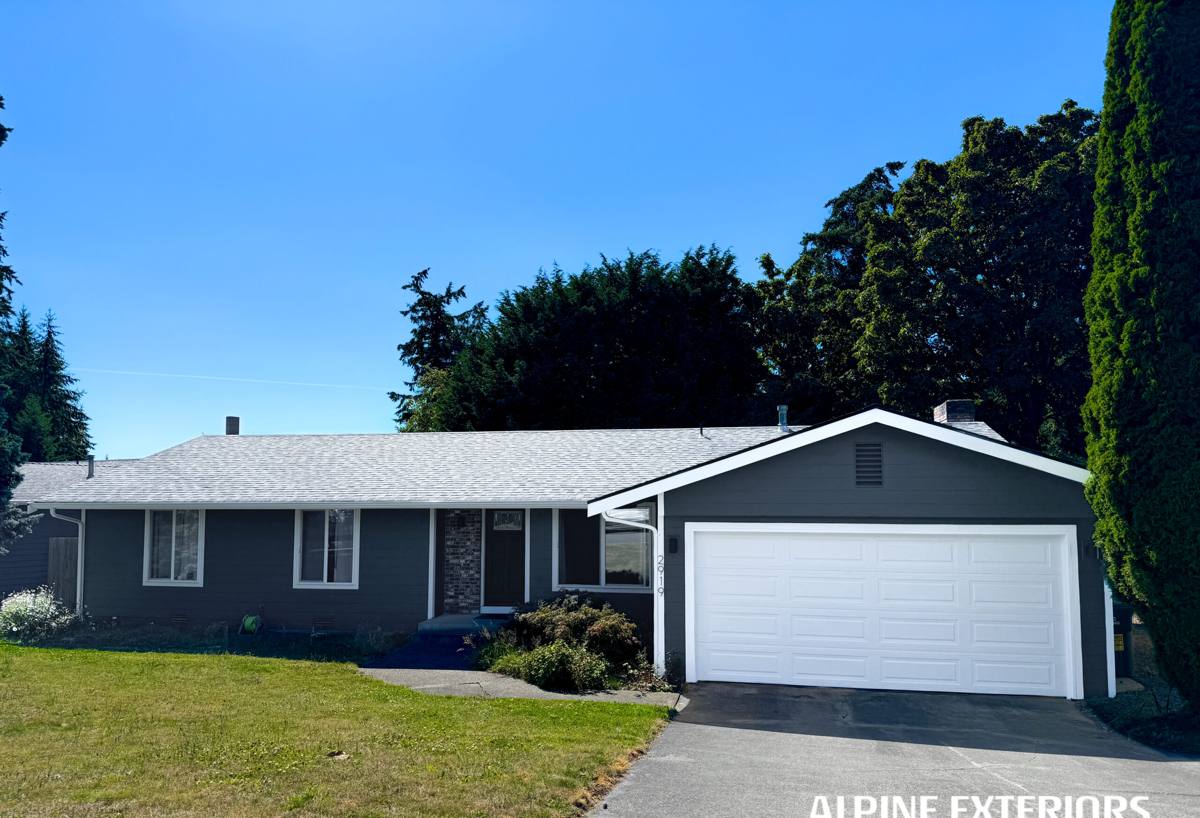
Signs Your Blaine Home Needs Siding Replacement, Not Just a Repaint
A lot of homeowners reach for a repaint first, and sometimes that's genuinely the right call. But there are signs that point to replacement instead:
- Soft or spongy spots when you press on the siding, especially near the bottom courses or below windows
- Visible cracking, buckling, or separation at panel seams
- Paint that won't hold — blistering or peeling again within a year or two of a fresh coat
- Persistent moss or algae growth that returns almost as fast as it's cleaned
- Rust streaking from fasteners or trim, a common tell in salt-air areas
- Rising energy bills with no other explanation, which can point to a failing weather barrier behind the siding
If you're only dealing with faded color and the material underneath is sound, a repaint or refinish may buy you more years. If you're seeing softness, persistent moisture problems, or repeated paint failure, that's usually the siding telling you the water-management layer behind it has already failed, and painting over that just hides the problem while it keeps working.
What a Correct Siding Replacement Actually Involves
It starts underneath, not on the surface
The siding itself is the part everyone sees, but the water-resistive barrier and flashing details behind it are what actually keep a Blaine home dry through driving rain. A correct tear-off means removing the old siding down to the sheathing, inspecting for hidden rot or moisture damage, repairing anything compromised, and installing a new weather-resistive barrier with properly lapped and sealed seams — not just stapling something up and covering it.
Flashing is where most failures start
Window and door flashing, kick-out flashing at roof-to-wall intersections, and z-flashing above horizontal trim are the details that separate a siding job that lasts from one that leaks within a few years. In a driving-rain climate, water finds the path of least resistance, and that path is almost always a flashing detail someone rushed or skipped. This is also where a crew's experience with this specific climate matters more than almost anything else on the job.
Then the siding goes on — to spec
Proper fastener placement, correct nailing patterns, the right gap and caulking at butt joints, and manufacturer-specified clearances from grade, decks, and roofing all affect how the siding performs over time. Fiber cement siding installed off-spec can still look fine on install day and cause problems years later — which is exactly why installation quality matters as much as the material choice itself.
Why We Install Only James Hardie Fiber Cement
We get asked why we don't offer vinyl, LP SmartSide, cedar, or other fiber cement brands. It's a fair question, and the honest answer is that we standardized on one product line because we'd rather stand behind one system we know performs in this climate than offer several and hope they all hold up equally well.
| Material | How it handles salt air & driving rain | Longer-term consideration |
|---|---|---|
| Vinyl siding | Can warp or become brittle with UV and temperature swings; seams are a moisture entry point | Lower upfront cost, but color is baked in and fading can't be refinished |
| LP SmartSide (engineered wood) | Performs well when detailing and maintenance are kept up; wood-based core is moisture-sensitive if seals fail | Requires consistent caulk and paint maintenance to protect the engineered wood substrate |
| Cedar / primed spruce | Natural material, attractive, but organic wood is inherently vulnerable to moisture, rot, and insects in wet coastal climates | Highest ongoing maintenance burden; refinishing and repair costs add up over the years |
| James Hardie fiber cement | Non-combustible, dimensionally stable, engineered moisture and freeze-thaw resistance for the specific climate zone | Factory ColorPlus finish reduces repainting cycles; strong transferable warranty |
James Hardie's HZ product lines are engineered for specific regional climate demands, and the Pacific Northwest HZ5 formulation is built around exactly the kind of wet, temperate coastal conditions Blaine sees. The ColorPlus factory finish is baked on under controlled conditions rather than field-painted, which matters in a climate where field-applied paint often struggles to cure and adhere properly during the wetter months. That combination — a non-combustible material, engineered for this climate, with a finish that doesn't rely on job-site paint conditions — is why we put it on homes instead of the alternatives.
Why a Local Bellingham Crew Matters in Blaine
Siding is a detail-sensitive trade, and the details that matter most are the ones specific to where the house sits. A crew that regularly works Blaine and the rest of Whatcom County already knows how aggressive to be with flashing at wall penetrations, how much clearance to leave near grade given local rainfall patterns, and which orientations on a house are going to fight moss no matter what. That's knowledge built from doing the work here repeatedly, not from a general installation manual.
There's also a practical side: a local crew can respond quickly if a question comes up during or after the job, understands Whatcom County permitting and inspection expectations, and isn't traveling in from out of the area to do warranty or follow-up work. For a coastal community like Blaine, where the climate punishes shortcuts, that local accountability is worth as much as the material on the wall.
Our Process, Start to Finish
1. On-site assessment
We walk the exterior, check for hidden moisture or rot, note trouble spots like north-facing walls or areas with heavy moss history, and talk through what's driving the need for replacement.
2. Honest scope and estimate
You get a clear, no-pressure estimate that reflects what your home actually needs — not an upsell, and not a shortcut around necessary repair work if we find deterioration behind the old siding.
3. Tear-off and substrate repair
Old siding comes off, sheathing gets inspected, and any compromised material is repaired before anything new goes up.
4. Weather barrier and flashing
This is the step that determines whether the job holds up through years of Blaine's driving rain. We install and detail it to spec, not to the minimum.
5. Hardie installation
Fiber cement siding installed to manufacturer specifications for fastening, clearances, and joint treatment.
6. Final walkthrough
We review the finished work with you and make sure everything meets the standard we set out to deliver.
What Drives Cost on a Blaine Siding Replacement
| Factor | Why it matters |
|---|---|
| Condition of the substrate | Hidden rot or water damage found during tear-off adds repair scope before new siding can go on |
| Home size and wall complexity | More corners, gables, and dormers mean more flashing detail and labor |
| Siding profile and trim choice | Lap width, trim style, and accent details affect material and labor cost |
| Access and site conditions | Tight lots, slopes, or landscaping near the house can affect staging and labor time |
| Existing exterior condition | Removal of multiple old siding layers or extensive caulk/paint buildup adds prep time |
We don't quote broad price ranges here because every Blaine home is different — the honest answer only comes from an actual on-site look. What we can tell you is that the biggest cost swings almost always come from what's found behind the old siding, not from the new material itself.
Caring for Your New Siding in a Blaine Climate
- Rinse siding periodically, especially north-facing and shaded walls, to keep moss and algae from taking hold
- Keep gutters clear so water isn't overflowing onto siding below
- Trim back vegetation and landscaping that keeps siding damp or shaded longer than necessary
- Inspect caulking at trim and penetrations every year or two and have any gaps addressed early
- Watch for any soft spots or discoloration after major storms and have them checked promptly
James Hardie's factory finish reduces how often repainting is needed compared to field-painted materials, but no siding is entirely maintenance-free in a coastal climate. A little routine attention goes a long way toward getting the full life out of the installation.
Timing a Siding Project Around Whatcom County Weather
Siding installation goes smoothest during drier, milder stretches of the year, which gives caulking and sealants time to cure properly before the wettest months arrive. That said, well-planned projects can move forward across a wider window than most homeowners expect — the key is scheduling tear-off and weather-barrier work for a run of workable weather, not necessarily waiting for a single "perfect" season. We'll talk through timing specifics when we look at your home.
If your Blaine home's siding is showing its age, or you just want an honest read on whether it needs repair, repainting, or full replacement, we're happy to take a look. Request a free, no-pressure estimate using the form below and we'll walk the property with you and lay out exactly what we'd recommend and why.