 Bellingham Window
 Storm Damage Roof Repair for Happy Valley Homes
Happy Valley sits close enough to Bellingham Bay that its homes take the full brunt of what Whatcom County winters throw at a roof: sideways rain off the water, gusty windstorms that come through in waves from fall through spring, and a moss season that never really ends. None of that is unusual for this part of Washington, but it does mean roofs here age differently than they would in a drier inland climate. A shingle that would last two more years in Eastern Washington might be showing granule loss, curling, or moss intrusion here well before that. Storm damage repair in this neighborhood isn't just about patching a hole after a bad night of wind — it's about understanding how salt air, standing moisture, and repeated freeze-thaw cycles compound on each other over a wet season.
This page covers what storm damage actually looks like on a Happy Valley roof, what a correct repair involves, how our process works, and why it matters to hire a crew that already knows this specific stretch of Bellingham rather than a general contractor working from a generic checklist.
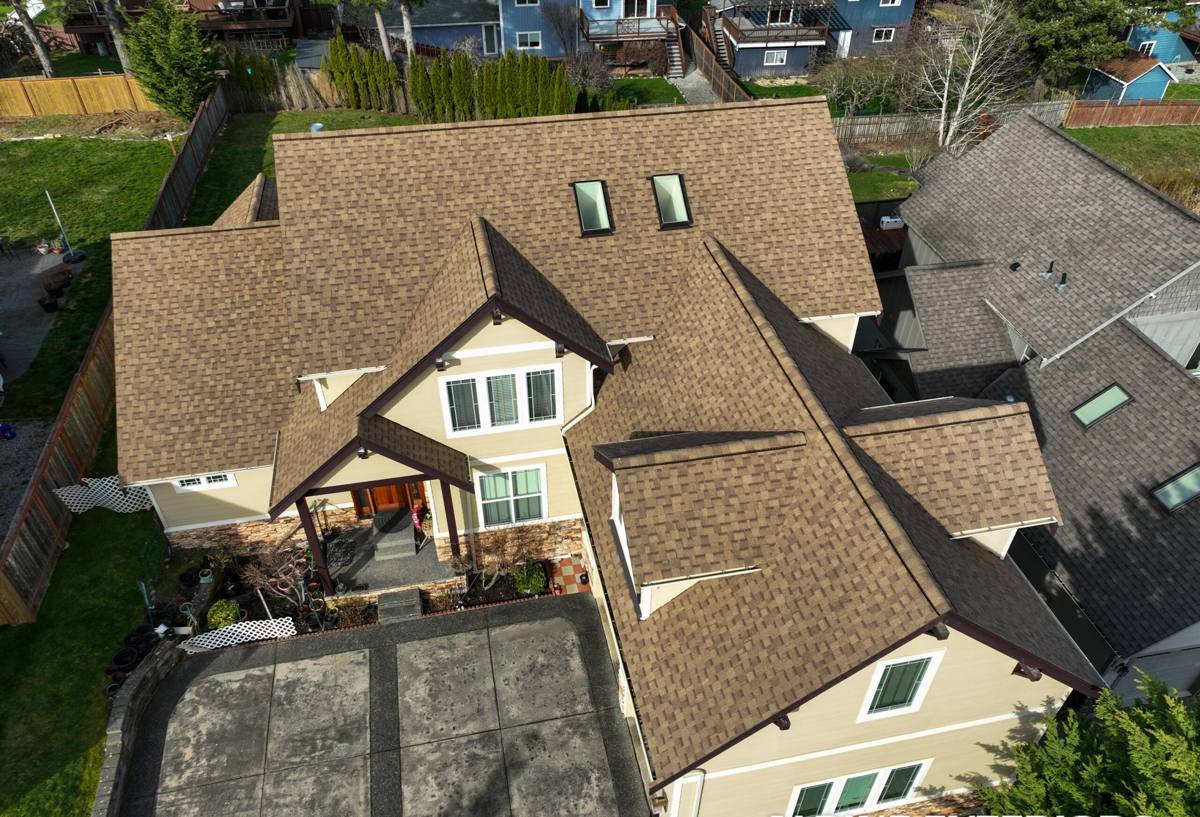
Why Happy Valley Roofs Take a Different Kind of Beating
Three things stack up on roofs in this part of Bellingham, and it's the combination — not any single factor — that causes most of the damage we see.
Salt Air and Metal Fatigue
Proximity to Bellingham Bay means a steady low-level exposure to salt-laden air, even on calm days. Salt accelerates corrosion on exposed metal roofing components — flashing, fasteners, vent caps, gutter hardware — faster than it would inland. A fastener that's rusted through is a leak waiting for the next windstorm to find it.
Driving Rain and Wind-Driven Water
Pacific storm systems moving through Whatcom County often bring rain at an angle, not straight down. Wind-driven rain finds its way under shingles, around flashing laps, and through any gap that would stay dry in a calmer climate. A roof that's watertight in a vertical downpour can still leak in a 40 mph gust because the water is being pushed uphill under the roofing material.
Moss and Trapped Moisture
Bellingham's long wet season — realistically stretching from fall through spring — gives moss and algae months of the moisture and shade they need to establish themselves, especially on north-facing slopes and under tree cover common in this neighborhood. Moss doesn't just look bad; it holds water against the roofing surface and lifts shingle edges as it grows, creating entry points for wind-driven rain that wouldn't exist on a clean roof.
What Actually Counts as Storm Damage
Homeowners often aren't sure whether what they're seeing is a maintenance issue or storm damage, which matters both for how we approach the repair and for insurance purposes. Storm damage is typically sudden and tied to a specific weather event: wind, hail, falling debris, or heavy rain overwhelming a roof that was otherwise sound. Gradual wear — moss buildup, granule loss from age, or flashing that's slowly corroded over years — is a maintenance issue, even though it often makes storm damage worse when a big weather event does hit.
In practice, most of the calls we get after a windstorm in Happy Valley are a mix of both: a pre-existing weak spot (aging flashing, a moss-lifted shingle edge, a fastener that had already started to back out) that a storm finally pushed past the point of holding. Part of a proper assessment is telling you honestly which is which, because it affects whether the repair is a straightforward fix or a sign that a larger section of the roof needs attention soon.
Common Storm Damage Signs
- Missing, cracked, or curled shingles, especially on the side of the roof that faces prevailing wind
- Lifted or bent flashing around chimneys, vents, skylights, or where roof planes meet
- Granules collecting in gutters or downspouts after a storm
- Water stains or discoloration on interior ceilings, especially near exterior walls
- Dented or dislodged vent caps and roof-mounted fixtures
- Debris — branches, needles, moss clumps — pooled in valleys where water should be draining freely
- Soft or spongy spots underfoot when walking the roof, indicating moisture has already reached the decking
What a Correct Storm Damage Repair Involves
A repair that only addresses the visible symptom — say, replacing a few missing shingles — without checking what's underneath is a repair that's likely to fail again in the next storm. A correct job in this climate has a few non-negotiable steps.
Full Inspection Before Any Repair Starts
We check the whole roof plane, not just the obviously damaged spot, because wind damage rarely stays confined to one area. We're also looking underneath lifted shingles and flashing for early water intrusion into the decking, since a leak that's been active even briefly can cause soft spots that won't show from the ground.
Decking Assessment
If water has reached the plywood or OSB decking, that material has to be addressed before new roofing goes back on. Covering damaged decking with new shingles just hides a problem that will resurface, usually as a soft spot or sag, sometimes months later.
Flashing and Underlayment, Not Just Shingles
Given how much of our storm damage traces back to flashing and wind-driven rain finding gaps, we treat flashing repair and underlayment condition as part of the job, not an upsell. Replacing shingles over failing flashing is a short-term fix.
Matching Materials Correctly
Repairs should match the existing roofing material in type, weight, and where possible, color and age-appropriate appearance, so the repaired section performs the same as the rest of the roof and doesn't stand out as a patch job.
Our Process for Happy Valley Storm Repairs
- Initial contact and scheduling. We ask what you observed — timing of the storm, where the damage is visible, whether there's an active interior leak — so we can prioritize urgent cases.
- On-site inspection. We walk the roof and check the attic or interior where accessible, documenting what we find with photos.
- Honest assessment and written estimate. You get a clear explanation of what's storm damage, what's pre-existing wear, and what the repair will involve — no pressure toward a bigger job than the roof actually needs.
- Repair work. We address decking, flashing, and underlayment issues alongside the visible roofing damage so the fix holds through the next storm season, not just until the next one.
- Cleanup and final check. We clear debris and confirm the repair is watertight before we consider the job done.
Repair or Replace: How We Help You Decide
Not every storm-damaged roof needs to be replaced, and not every roof that looks rough from the ground is actually in trouble. The table below outlines the general factors that push a decision one way or the other — it's not a substitute for an on-site look, but it's a fair starting point for thinking about your own roof.
| Factor | Leans Toward Repair | Leans Toward Replacement |
|---|---|---|
| Age of roof | Under roughly two-thirds of its expected lifespan | Near or past expected lifespan for the material |
| Extent of damage | Isolated to one section or slope | Spread across multiple roof planes |
| Decking condition | Solid, no soft spots found | Soft, delaminated, or water-stained in multiple areas |
| Moss and algae history | Recently treated, minimal buildup | Long-term heavy moss growth with repeated past treatment |
| Flashing condition | Sound apart from the storm-damaged area | Corroded or failing in several locations |
| Frequency of past repairs | First or second repair call | Recurring repairs in the same general area |
When a roof is borderline, we'll tell you that directly, along with what to watch for if you choose to repair now and hold off on full replacement.
Working With Insurance on Storm Claims
Many storm damage repairs in Whatcom County are at least partially covered by homeowners insurance, particularly when the damage is tied to a documented wind or hail event. We can provide the photo documentation and a written scope of damage that most insurers ask for, and we're glad to explain what we found in terms that make sense for a claim. We don't handle the claim itself or negotiate with your insurer — that's between you and your policy — but a clear, honest damage report from the contractor doing the work tends to make that process smoother.
Post-Storm Roof Checklist for Homeowners
After a significant windstorm or heavy rain event, it's worth doing a quick check before calling anyone, both for your own awareness and to help us prioritize if you do need service.
- Look at the roofline from the ground for obviously missing or displaced shingles
- Check gutters and the ground below downspouts for granules or shingle fragments
- Walk the attic (if accessible) with a flashlight, looking for new water stains, damp insulation, or daylight coming through the decking
- Check ceilings in upper rooms for new discoloration, especially near exterior walls or chimneys
- Note the date and general conditions of the storm — this matters for insurance documentation
- Avoid climbing onto the roof yourself, especially after wind or rain — wet, moss-covered roofing is genuinely dangerous underfoot
Why Hiring a Crew That Already Works in Happy Valley Matters
A roofer who works this neighborhood regularly already knows which slopes tend to hold moss the longest, how salt exposure from the bay affects fastener and flashing lifespan here compared to more inland parts of Whatcom County, and what wind direction typically causes the worst damage in a given storm pattern. That familiarity shows up in faster, more accurate assessments — we're not guessing at how this climate treats a roof, we're confirming what we've already seen on similar homes nearby. It also means we're realistic about timing: storm season here creates a real backlog for every roofing contractor in the area, and a crew that knows the area can usually give you a more honest sense of how urgent your specific repair actually is versus how urgent it feels.
Maintaining Your Roof Between Storms
The single best thing a Happy Valley homeowner can do to reduce future storm damage is stay ahead of moss and debris buildup during the drier months. Clearing gutters, removing overhanging branches where practical, and addressing moss before it spreads across a full slope all reduce the number of weak points a storm has to exploit. A roof that's been kept clear of moss and debris sheds wind-driven rain far better than one where growth has already lifted shingle edges. If it's been more than a couple of years since your roof was inspected outside of a storm event, that's also worth scheduling — catching a small flashing or fastener issue before a windstorm finds it is a lot less disruptive than an emergency repair after a leak has already started.
If you're dealing with storm damage in Happy Valley or just want an honest read on how your roof is holding up against another Bellingham wet season, we're happy to take a look. Reach out for a free, no-pressure estimate using the form below.