 Bellingham Window
 Board & Batten in a Community Like Sudden Valley
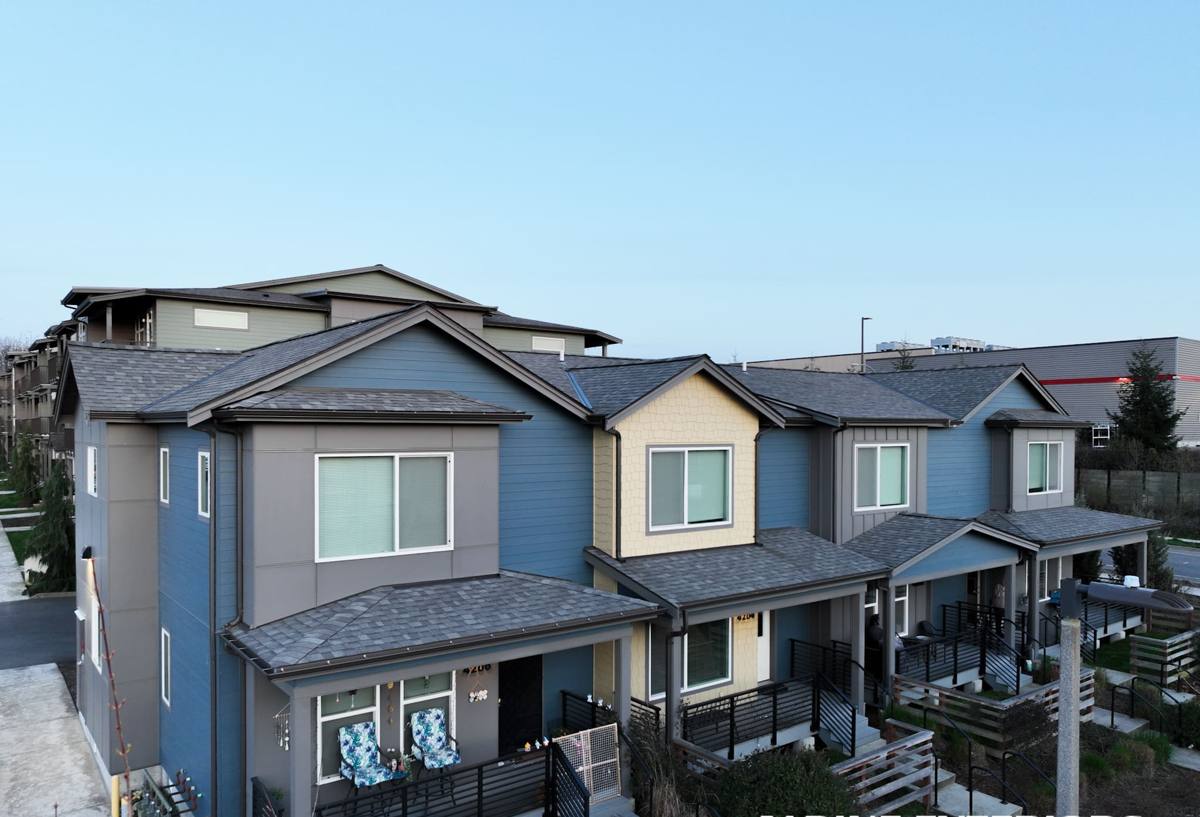
Sudden Valley sits in a different microclimate than a lot of Bellingham. Homes here are tucked among tall conifers, ringed by Lake Whatcom's humidity, and shaded for long stretches of the day. That combination — shade, tree cover, and lake moisture layered on top of Whatcom County's driving rain and long moss season — means siding here has to deal with slower drying times than a home out in the open. Board and batten is a popular look in this kind of setting because the vertical lines read well against the trees and the terrain, but it's also a style that punishes a sloppy install faster than standard lap siding does.
We install board and batten siding throughout Bellingham and Whatcom County, and Sudden Valley jobs get treated as their own category. The shade and moisture profile out here changes how we detail the rainscreen gap, how we plan drying time between coats and caulking steps, and how aggressively we push clients toward a maintenance schedule. This page is about what board and batten actually needs to hold up in Sudden Valley, not a generic rundown of the siding style.
Why This Style Is Riskier to Get Wrong
Lap siding sheds water down and away by design — each course overlaps the one below it. Board and batten works differently: wide vertical boards with narrower battens covering the seams between them. Water runs down the face of the boards and can find its way into the vertical joints if the battens, fasteners, and flashing details aren't handled correctly. In a sunny, dry location that forgiving margin might not matter much. In a shaded Sudden Valley lot where a wall can stay damp for days after a storm, small installation mistakes turn into real moisture problems.
Where Sudden Valley Homes Take the Most Punishment
- North- and east-facing walls that get the least direct sun and the most standing shade from surrounding trees
- Lower walls and foundation lines where lake-driven humidity and ground moisture linger longest
- Roof-to-wall intersections and dormers, where board and batten seams meet flashing and are easy to under-detail
- Areas under overhanging branches, where organic debris collects and holds moisture against the siding face
What a Correct Board & Batten Install Actually Involves
The finished look of board and batten is simple — vertical boards, evenly spaced battens, clean shadow lines. What's underneath that finish is where the job is won or lost.
The Rainscreen Gap
A proper install includes a drainable rainscreen — a vertical furring strip or engineered gap between the weather-resistant barrier and the siding — so any water that does get behind the boards can drain and the wall can dry on both sides. This matters more in Sudden Valley than almost anywhere else in our service area, because the shade here slows evaporation. A wall with no gap that stays damp for days at a time is a wall that eventually shows rot, mildew, or paint failure, even if the siding material itself is sound.
Fastening and Batten Placement
Battens need to land over real backing and be fastened with the right spacing and depth — not just decoratively nailed to the face. Fasteners that miss framing, or that are driven too deep and crack the substrate, create entry points for water right where the batten is supposed to be protecting the seam.
Flashing at Penetrations and Transitions
Every window, vent, light fixture, and roofline transition needs flashing detailed to shed water outward, layered correctly with the weather barrier — not caulk used as a substitute for flashing. Caulk breaks down; flashing doesn't.
Factory-Finished Material
Board and batten cut and finished on site, especially in raw wood, exposes cut edges and end grain that soak up water fastest. Factory-primed and factory-finished material with sealed edges, cut and coated correctly on site, holds paint and resists moisture far longer.
Why We Only Install James Hardie for This Look
Board and batten can be built in cedar, engineered wood like LP SmartSide, vinyl panel systems, or fiber cement. We install James Hardie fiber cement exclusively, and in a location like Sudden Valley the reasoning is more than a preference — it's about which material actually survives long-term shade and moisture without turning into a maintenance project.
Where the Alternatives Fall Short Here
Cedar board and batten looks excellent when new, but it's wood — it needs re-staining or re-painting on a real schedule, and in a shaded, damp setting like Sudden Valley that schedule gets shorter, not longer. Skip a cycle and cupping, checking, and rot follow. Engineered wood products use resin-treated wood strand cores that perform well when installed and maintained exactly to spec, but any breach in that engineered coating — a missed caulk line, a nick during install — gives moisture a path into a wood-based core, and shaded walls don't dry that damage out quickly. Vinyl board and batten is low-maintenance but it's a thin plastic product that flexes with temperature, can crack in cold snaps, and was never engineered as a moisture-management wall system — it's a cladding, not a rain-managed assembly.
Why Fiber Cement Holds Up
James Hardie board and batten is non-combustible fiber cement, engineered in HZ product lines for climates exactly like the Pacific Northwest's — sustained moisture, moderate temperatures, long wet seasons. It doesn't rot, it doesn't feed moss and mildew the way bare wood grain does, and the ColorPlus factory finish is baked on and warranted against fading and peeling, which matters on a shaded home where a painted finish already fights harder to look clean.
How the Materials Compare
| Material | Moisture behavior in shade | Maintenance burden | Typical lifespan (installed to spec) |
|---|---|---|---|
| Cedar board and batten | Absorbs moisture at cut edges and grain; slow to dry in shade | Re-stain/re-paint every few years | 15-25 years with disciplined upkeep |
| LP SmartSide (engineered wood) | Good if coating stays intact; vulnerable once breached | Moderate — inspect seams and touch up coating | 20-30 years if maintained exactly to spec |
| Vinyl board and batten | Doesn't absorb, but not a rain-managed assembly; can trap moisture behind panels | Low, but cracks and fades over time | 15-25 years, shorter in cold snaps |
| James Hardie fiber cement | Non-combustible, doesn't rot, engineered for wet PNW climates | Low — periodic wash, caulk checks | 30+ years with correct install |
Our Process on a Sudden Valley Job
1. Site and Shade Assessment
We walk the property and note which walls sit in constant shade, where tree canopy overhangs the roofline, and where past moisture or moss problems show up on the existing siding or trim. That shapes the rainscreen and flashing plan before a single board is ordered.
2. Tear-Off and Substrate Check
Once the old siding comes off, we check the sheathing and framing underneath for hidden rot, especially at the bottom plates and around windows — issues that are common on shaded walls that have been trapping moisture for years without anyone knowing.
3. Weather Barrier and Rainscreen Install
A correctly lapped weather-resistant barrier goes on first, followed by the drainable rainscreen gap, sized and installed to let the wall breathe and drain on the shaded sides of the home.
4. Board and Batten Install
Boards go up plumb and true, fastened into solid backing, with batten spacing planned for even shadow lines. Every cut edge gets sealed before it's closed up.
5. Flashing and Trim Detail
Windows, vents, and roof transitions get flashed correctly — caulk is the last line of defense, never the first.
6. Final Walkthrough
We walk the finished job with the homeowner, point out what a healthy wall looks like, and go over a maintenance schedule suited to a shaded, lake-humid lot.
Maintenance That Actually Matters Here
- Rinse siding and battens down at least once a year to clear pollen, needles, and organic debris that hold moisture against the surface
- Trim back branches and vegetation that keep any wall in constant shade or drip directly onto the siding
- Check caulk lines at window and trim transitions annually — replace anything cracked or pulling away before winter rains set in
- Watch north- and east-facing walls for early moss or mildew film, since these dry slowest in a Sudden Valley lot
- Clear gutters and downspouts before the wet season so roof runoff isn't dumping directly onto board and batten walls
Why Local Experience in Sudden Valley Matters
Sudden Valley's terrain is hillier and more wooded than most in-town Bellingham lots, which changes access, staging, and how a crew has to plan a multi-day install around tree cover and slope. A crew that already knows this community knows to expect longer drying windows between weather barrier and siding install, plans around limited driveway and staging space on tighter lots, and doesn't get caught off guard by how much longer a shaded wall takes to fully dry after a rain event before caulking or touch-up work. That's the kind of judgment that only comes from having actually worked the area — not from a general siding crew treating every Whatcom County job identically.
What This Means for Your Home
Board and batten can be one of the best-looking and longest-lasting siding choices for a wooded, lake-adjacent property like the ones in Sudden Valley — but only when the rainscreen, flashing, and material choice all account for how slowly these walls dry out. Get those details right with a material engineered for the climate, and it's a low-maintenance, decades-long investment. Cut corners on any one of them, and the same shade that makes the setting beautiful is what accelerates the damage.
If you're considering board and batten siding for a home in Sudden Valley, we're happy to walk the property, look at how your walls sit relative to sun and tree cover, and put together a straightforward, no-pressure estimate. There's a form below to get that started.