 Bellingham Window
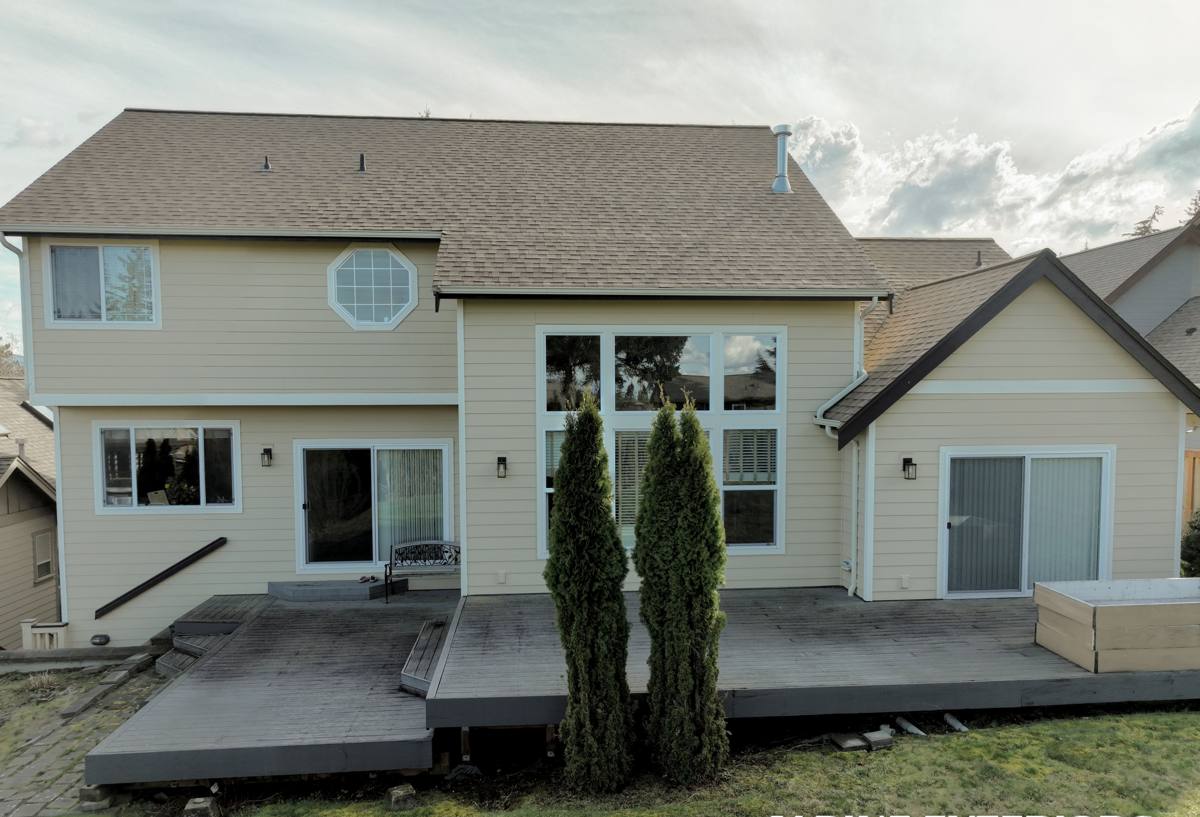
 Window Replacement for Barkley Homes
Barkley is one of Bellingham's newer planned neighborhoods, which means a lot of its homes are still in that 15-to-30-year window where original builder-grade windows start showing their age. Seals fail, frames sag, and the double-pane glass that looked fine at closing starts fogging up between the panes. If that's where your house is at, you're not alone — it's one of the most common calls we get from this side of town.
This page is specifically about window replacement in Barkley. Not a general "why replace your windows" pitch — the actual conditions this neighborhood deals with, what a correct replacement job looks like here, and how we handle it from first look to final caulk line.
What Bellingham's Climate Does to Windows
Whatcom County sits in a marine climate, and that cuts both ways for window longevity. On one hand, we don't get the freeze-thaw extremes that destroy window seals in colder inland climates. On the other, we get a long, wet season with driving rain that comes in sideways off Bellingham Bay, salt-laden air that speeds up corrosion on hardware and cladding, and enough shade and moisture to grow moss on just about anything that holds still — including window sills, tracks, and exterior trim.
For windows specifically, that combination causes a few predictable problems over time:
- Moss and organic buildup in sill tracks and weep holes, which blocks drainage and lets water sit against the frame instead of running off
- Wood rot at sills and jambs on older wood-framed windows, especially on north- and west-facing walls that stay damp longest
- Corroded hardware — locks, hinges, and balances — from months of damp salt air, especially on older aluminum-frame windows
- Seal failure in double-pane glass, showing up as fogging or a hazy ring between the panes, accelerated by constant humidity cycling
- Condensation on interior glass in winter, which is often a sign of poor thermal performance rather than a defective window
None of this means Barkley homes need anything exotic — it means the install has to account for drainage and sealing details that get skipped in drier climates without consequence.
Signs It's Time to Replace, Not Repair
Not every problem window needs full replacement. A stuck sash, a failed lock, or worn weatherstripping can often be repaired. Full replacement makes sense when the frame itself or the seal is compromised. Walk your house and check for these:
- Fogging or a visible haze between the panes of double-glazed glass — the seal has failed and can't be fixed, only replaced
- Soft, spongy, or visibly rotted wood at the sill or bottom corners of the frame
- Windows that won't stay open on their own, or that have become hard to open and close
- Noticeable draft or cold air near the frame even with the window fully latched
- Condensation forming on the inside of the glass regularly during cold, wet months
- Visible gaps between the frame and the siding or trim, or caulk that's cracked and pulling away
- A jump in heating costs with no other explanation
If you're only seeing one or two of these on isolated windows, a repair may buy you a few more years. If you're seeing several across multiple windows, or the home is original to its build date, replacement is usually the more cost-effective path long-term.
What a Correct Replacement Job Actually Involves
Window replacement is easy to do badly and hard to do well, because most of what determines whether it holds up is invisible once the trim goes back on. A window that looks fine the day it's installed can still leak in three years if the flashing and sealing weren't done right. Here's what we treat as non-negotiable on every job:
Removal and inspection
We pull the old window carefully and inspect the rough opening before anything new goes in. This is the point where hidden rot, water staining, or damaged sheathing gets found — and it's far cheaper to deal with then than after a new window is sealed over it.
Flashing and drainage
Given how much rain this area sees, proper flashing at the sill and sides isn't optional. Water needs a clear path to shed away from the wall assembly, not pool behind the new window. This is the single most common shortcut we see in past installs around Bellingham, and it's usually the root cause when a "new" window starts leaking a few years later.
Air sealing and insulation
The gap between the window frame and the rough opening gets sealed with proper low-expansion foam or backer rod and sealant — not just caulked shut on the outside, which traps moisture rather than managing it.
Exterior finish work
Trim, caulking, and touch-up paint are matched to the existing exterior so the new window doesn't look like a patch job. Given the moss and mildew this climate encourages, we also make sure sills and trim are shaped to shed water rather than collect it.
Choosing the Right Window for This Climate
Frame material matters more here than in drier climates, because whatever you choose is going to deal with sustained moisture and salt air for years. There's no single "best" option — it depends on your home's style, budget, and how much upkeep you want to take on.
| Frame Material | Moisture Resistance | Maintenance | Best For |
|---|---|---|---|
| Vinyl | Very good — won't rot or corrode | Low — occasional cleaning | Budget-conscious replacements, rental properties |
| Fiberglass | Excellent — dimensionally stable in wet/dry cycles | Low | Long-term ownership, larger or custom openings |
| Wood (unclad) | Poor without diligent upkeep | High — regular painting/sealing required | Historic homes prioritizing original appearance |
| Wood-clad (exterior aluminum or fiberglass shell) | Good on the exterior face; interior wood still needs care | Moderate | Homeowners wanting a wood interior look with better exterior protection |
| Aluminum | Fair — prone to condensation and corrosion in salt air over time | Moderate | Commercial or modern designs where thin sightlines matter more than thermal performance |
For most Barkley homes, we steer people toward vinyl or fiberglass for the bulk of the house, simply because they hold up to the wet season with the least amount of ongoing work. If your home has a specific architectural style that calls for a wood look, wood-clad options give you that appearance without putting bare wood directly in the weather.
Glass Performance
Double-pane, low-E glass is standard for this region and makes sense for most homes — it balances heat retention against our relatively mild but overcast climate. Triple-pane is worth considering on north-facing rooms or homes with higher heating bills, but it adds cost and weight that isn't always necessary here the way it might be in a colder inland climate.
Our Process
- Walkthrough and assessment. We look at every window you're considering, check for hidden moisture or rot issues, and give you a straight answer on what needs replacing versus what can wait.
- Written estimate. Line-item pricing so you know what you're paying for — window units, labor, any structural or trim repair, and disposal.
- Scheduling around weather. We plan installs to minimize how long a rough opening sits exposed, which matters more here than in drier climates.
- Install. Removal, inspection, flashing, setting, sealing, and insulating each opening — one window at a time, not rushed as a batch.
- Finish work and walkthrough. Trim and touch-up to match your home's exterior, then a final check with you before we call it done.
Cost Factors
Exact pricing depends on your home and the windows you choose, but the main variables are consistent from project to project:
| Factor | How It Affects Cost |
|---|---|
| Frame material | Vinyl is typically the most affordable; fiberglass and wood-clad cost more upfront but often less over the window's life |
| Window size and number | Larger openings and whole-house projects have better per-unit pricing than one-off replacements |
| Hidden repairs | Rot or water damage found during removal adds cost, but catching it now is far cheaper than ignoring it |
| Glass upgrade | Triple-pane or specialty coatings add cost per unit but can reduce long-term heating expense |
| Trim and exterior matching | Custom trim profiles or matching an existing exterior finish adds labor time |
We'd rather walk your home and give you real numbers than throw out a broad range that doesn't mean much until we've seen your windows.
Why a Local Crew Matters
Window replacement isn't just a product swap — it's a job that has to account for how this specific climate treats a house. A crew that works Bellingham regularly already knows which details get skipped by installers used to drier climates, what moss and moisture buildup actually looks like once it's caused damage, and how to sequence a job so an open wall isn't sitting exposed to a rain system rolling in off the water.
If your home is in a planned community like Barkley, it's also worth checking whether there are any architectural or exterior appearance guidelines that apply to window style or color before you order anything — that's a quick check that saves headaches later, and it's something we're happy to help you sort out as part of the estimate.
Get a Free Estimate
If your windows are fogging, drafting, sticking, or just past their prime, we'll come take a look, give you a straight read on what's actually needed, and put together a written estimate — no pressure, no upsell. Use the form below to get started.